Summer hat strategy separates the men who understand dressing from those who just throw on whatever's in the closet. I've spent the last fifteen years watching guys make the same mistakes: buying hats that don't match their face shape, choosing materials that trap heat instead of dispersing it, or worse, selecting styles that work against their lifestyle. This guide covers 23 specific hat options with real context about when and how to wear them.
the problem with summer hat shopping
Most men approach summer hats reactively. They get sunburned, panic, grab whatever's available at the airport, and end up with a logo-plastered cap that screams "I didn't plan this." The issue isn't finding hats—it's finding hats that actually work with your routine, your climate, and your personal style without making you look like you're perpetually on vacation.
Temperature matters more than people think. A hat that works in dry heat (Phoenix, Los Angeles) won't perform the same way in humid climates (Miami, New Orleans, Southeast Asia). Sweat management, breathability, and how quickly a hat dries become non-negotiable specifications, not afterthoughts.
classic straw hats: the foundation
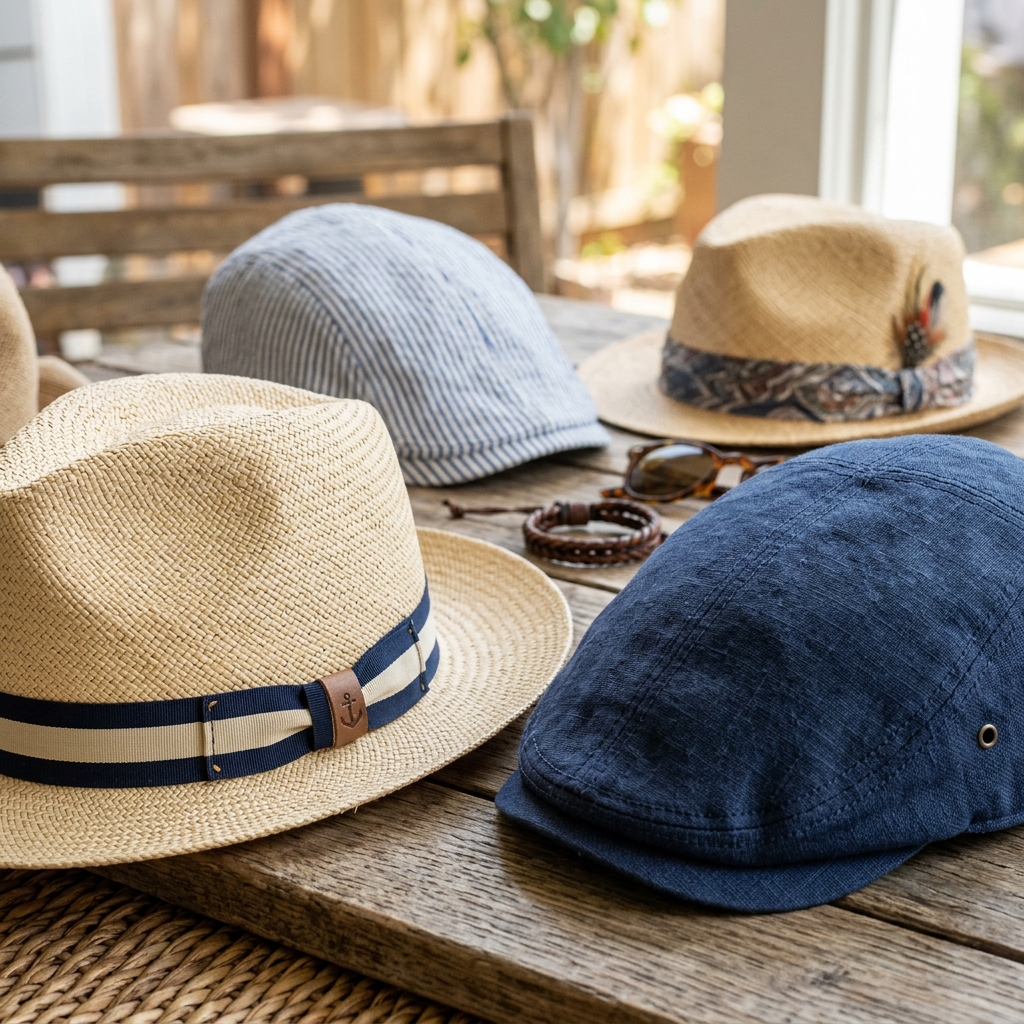
Panama hats remain the gold standard for a reason. Genuine Panama hats are woven from toquilla straw grown exclusively in Ecuador, and the quality difference between a $40 knockoff and a $300 legitimate hat is immediate. The weave density affects both durability and how the hat blocks UV rays. Look for hats with a weave count of at least 150 rows per inch for summer wear; anything less and you're getting gaps that defeat the purpose.
The key maintenance detail most men miss: Panama hats require reshaping after washing. Hand wash in cool water with mild soap, reshape while damp (using the original hat block or a similar-sized form), and air dry away from direct sunlight. Store them in a hat box with acid-free tissue, not crammed in a closet. A properly maintained Panama hat lasts 10-15 years.
Straw boater hats (also called straw skimmers) offer a more structured alternative. The flat crown and rigid brim work better if you have a rounder face or prefer a sharper silhouette. These were standard menswear in the 1920s-1950s and they're experiencing a genuine resurgence, not because of nostalgia but because the proportions actually work. Pair them with linen suits or lightweight cotton trousers.
Leghorn straw hats use a finer, more delicate weave than Panama. They're lighter and more packable, which matters if you travel frequently. The tradeoff is durability—Leghorn hats are better for occasional wear than daily use.
unstructured and semi-structured options
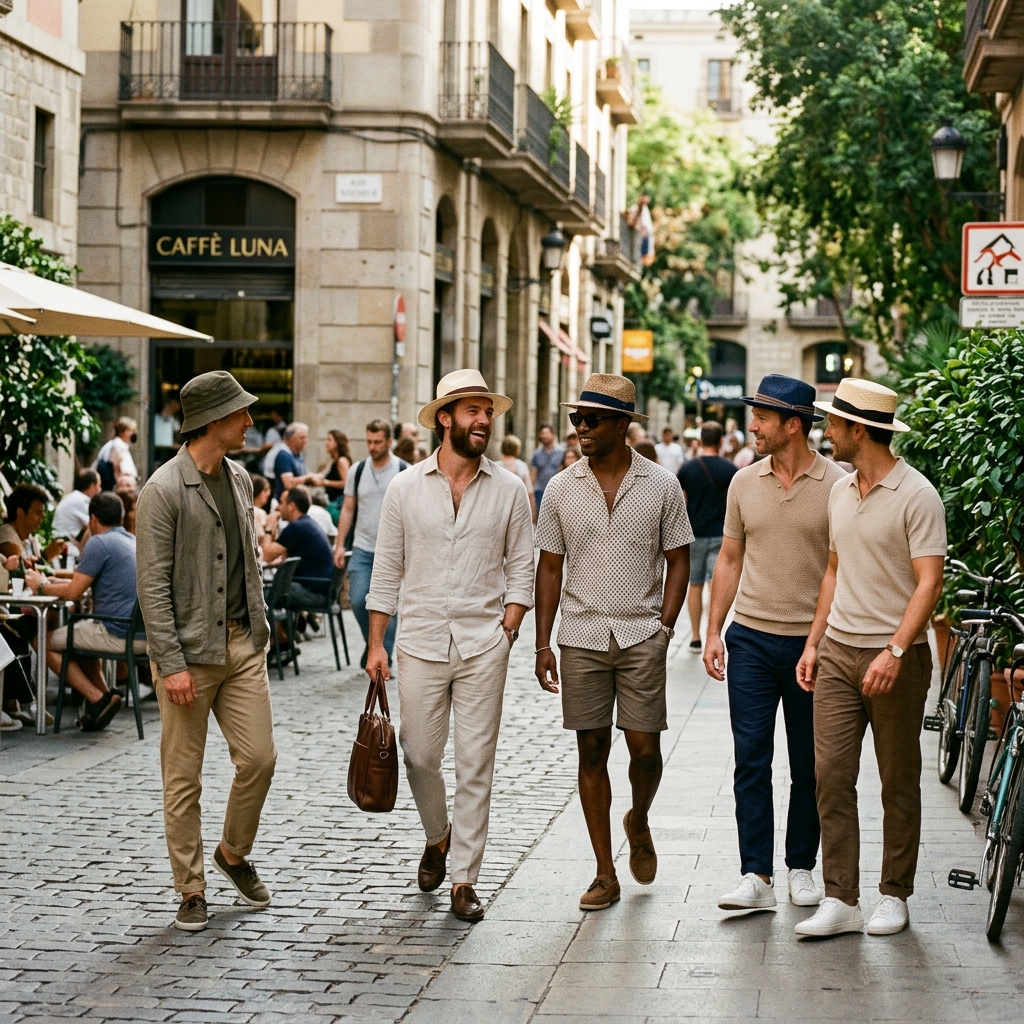
Bucket hats have moved past their 1990s cargo-shorts association. Modern bucket hats in linen or cotton canvas work if the proportions are right. The brim should be 2-3 inches, not the oversized 4-5 inch versions that look costume-like. Engineered Garments and Carhartt make versions that actually integrate into adult wardrobes. Wear them with tailored shorts and a simple t-shirt, not oversized everything.
Linen baseball caps function differently than cotton versions. Linen breathes better but wrinkles more noticeably, which some men see as character and others see as sloppy. If you choose linen, embrace the texture—don't try to iron it flat. Brands like Brunello Cucinelli make linen caps that cost $150+ because the fabric is pre-treated for consistency and the construction uses reinforced stitching at stress points.
Ivy caps and flat caps work in summer if you choose the right fabric. Most ivy caps are wool, which is insane for July. Look for linen versions or cotton twill in lighter weights (under 10 ounces). These suit men with smaller heads or narrower faces better than structured baseball caps do.
Trucker hats have legitimate functionality if you're actually doing outdoor work. The mesh back panel genuinely helps with heat dissipation. The problem is 90% of men wearing trucker hats aren't truckers, and the style reads as costume. If you need one, get a plain version without logos. Carhartt and Dickies make utilitarian versions that don't scream "ironic fashion."
structured and tailored options
Fedoras and wide-brimmed felt hats seem wrong for summer, but lightweight felt exists. Borsalino makes summer-weight felt hats (around 80 grams) that work in temperate climates. The brim should be 2.5-3 inches for proportion. Wear these with linen suits or tailored shorts and a linen shirt—not casual t-shirts. The formality of the hat demands equal formality in the rest of your outfit.
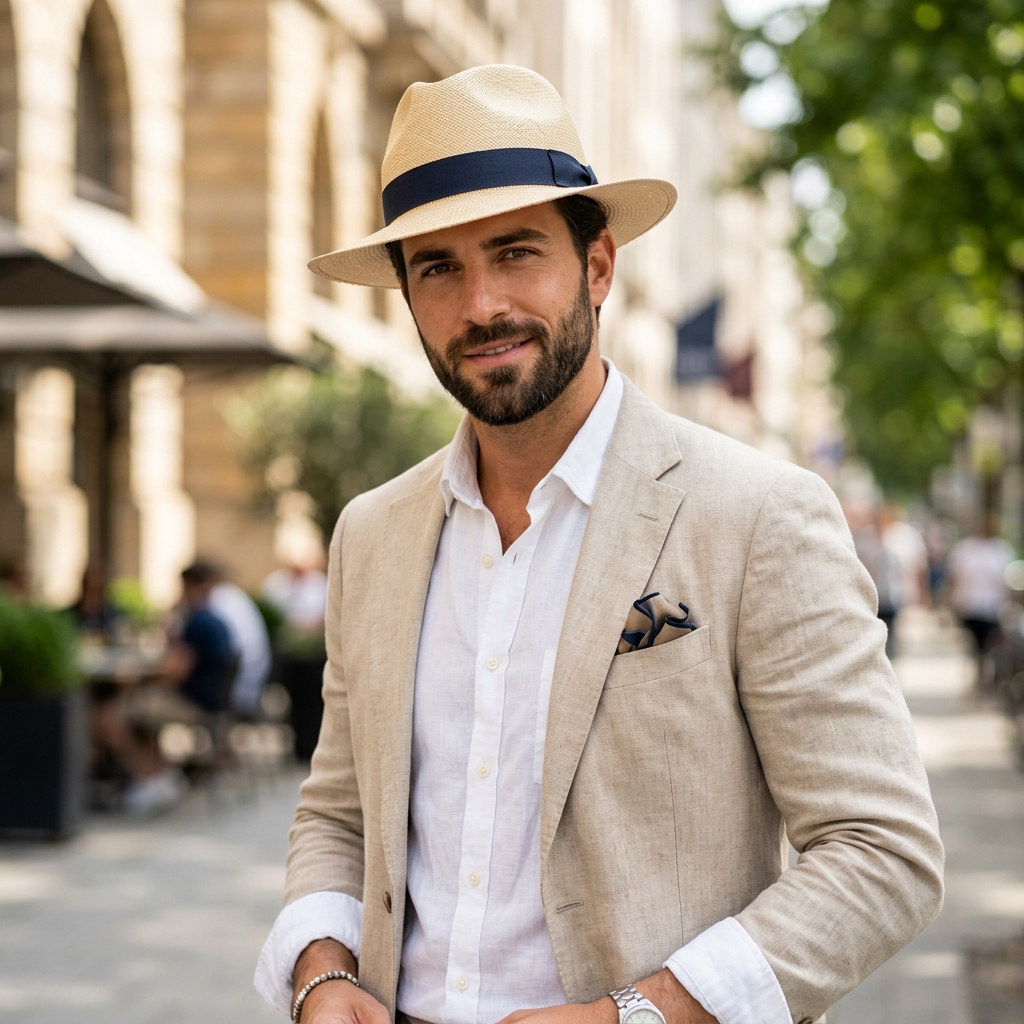
Straw fedoras bridge the gap between structure and breathability. The crown maintains shape while the material allows airflow. These work with both casual and semi-formal summer outfits. Avoid the overly floppy versions; you want a hat that holds its shape, not one that collapses when you move.
Wool felt caps in light colors (cream, light grey, tan) work better than you'd expect. The key is weight—look for hats under 150 grams. Loro Piana makes summer caps in ultrafine merino that actually breathe. Pair these with tailored shorts and leather shoes for a more refined look.
performance and technical options
Merino wool baseball caps sound contradictory but work surprisingly well. Merino regulates temperature better than cotton and resists odor. Icebreaker and Smartwool make versions that don't feel heavy. These suit active men who actually sweat rather than men who want to look casual.
Nylon and synthetic caps have improved dramatically. Technical fabrics from companies like Arc'teryx and Patagonia use moisture-wicking treatments and UV-blocking weaves. These aren't fashion statements—they're functional. Wear them if you're hiking, fishing, or spending extended time in direct sun. Don't wear them to dinner.
Cotton ripstop caps offer durability without the synthetic feel. Ripstop weave resists tearing and dries quickly. These work for travel or outdoor activities where your hat might get rough treatment.
the underrated options
Newsboy caps (also called driver caps or ivy caps with a button) work in summer if made from linen or lightweight cotton. They're more structured than baseball caps but less formal than fedoras. These suit men with oval or rectangular face shapes particularly well. Wear them with tailored shorts and a polo shirt or casual button-up.
Ascot caps (similar to newsboy but with a rounder crown) offer vintage appeal without looking costume-like if you choose the right proportions. The brim should be 1.5-2 inches. These work with linen suits or tailored casual wear.
Sun visors are functionally useful but aesthetically challenging. If you must wear one, choose a solid color in navy, khaki, or black—not bright neon. Pair it with athletic wear only, not casual street clothes.
Berets work in summer if made from linen or lightweight cotton. Traditional wool berets are too warm, but contemporary versions in breathable fabrics exist. These require confidence to pull off; they read as intentionally styled rather than casual. Pair them with tailored shorts and a simple shirt.
Bowler hats seem absurd for summer, but lightweight felt versions exist. These are purely a style choice—wear them if you're deliberately creating a specific aesthetic, not because you think they're practical.
maintenance and care specifics
Cotton and linen hats need regular washing. Hand wash in cool water with mild detergent, reshape while damp, and air dry. Machine washing breaks down stitching and causes shrinkage.
Straw hats require different care. Use a soft brush to remove dust weekly. For deeper cleaning, use a damp cloth with mild soap, then reshape and air dry. Never machine wash straw.
Sweat stains are inevitable. For light stains, use a mixture of equal parts white vinegar and water applied with a soft cloth. For stubborn stains, professional hat cleaning services exist in most cities and cost $15-30. It's worth it for hats you actually wear regularly.
UV protection degrades over time. Most hats lose effectiveness after 2-3 years of regular sun exposure. This isn't marketing—the straw or fabric genuinely becomes more transparent as UV rays break down the material.
choosing the right hat for your face shape
Round faces suit hats with height and structure: fedoras, newsboy caps, and structured straw hats. Avoid bucket hats or anything that adds width.
Oval faces can wear almost anything. You have the most flexibility. Experiment with different styles.
Square faces benefit from rounded crowns: Panama hats, bucket hats, and unstructured straw options. Avoid sharp angles.
Rectangular faces work well with wider brims and structured styles: wide-brimmed straw hats, fedoras, and boater hats.
Heart-shaped faces suit hats with width at the bottom: bucket hats and wide-brimmed options. Avoid tall crowns.
the practical reality
You don't need 23 hats. Most men function fine with three: a Panama hat for warm-weather formal occasions, a linen baseball cap for casual daily wear, and a technical cap for actual outdoor activities. The 23 options exist so you can choose based on your specific climate, lifestyle, and aesthetic preferences rather than settling for whatever's available.
The men who look best in summer hats are the ones who treat them as functional pieces that happen to look good, not as fashion statements that happen to block sun. Buy quality, maintain properly, and wear confidently. That's the entire strategy.