28 best big drip outfit men ideas: The complete guide to high-impact street style
Big drip isn't new, though the term is. What we're talking about is intentional, confident dressing that commands attention through quality, proportion, and deliberate styling choices. It's the opposite of trying hard while looking effortless—which is actually trying very hard. I've watched this aesthetic evolve from streetwear forums to mainstream acceptance, and there's real substance beneath the hype.
The phrase "big drip" emerged from hip-hop culture around 2019, referring to someone with exceptional style presence. But the actual practice goes back decades: think Run-DMC's Adidas tracksuit precision, or the calculated oversizing in 90s rap videos. What's changed is accessibility and the democratization of luxury aesthetics. You don't need a $3,000 designer piece to execute this look anymore—you need understanding.
what makes an outfit have "drip"
Drip is built on three non-negotiable foundations: intentional silhouette, quality materials you can feel, and confidence in wearing what you've chosen. It's not about logos or price tags. I've seen men in $80 outfits command more presence than someone in full designer because they understood proportion and fit.
The silhouette matters most. Big drip typically works with either oversized-but-structured pieces or perfectly tailored slim fits—rarely the middle ground of "normal" sizing. When you go oversized, you're committing: an oversized hoodie should hit mid-thigh, not just be "a little loose." When you go fitted, everything should skim your body without clinging.
Material quality is where budget meets execution. A $40 heavyweight cotton tee will hold its shape and look intentional. A $12 thin cotton tee looks like you grabbed it from a discount bin. Feel the fabric in person. Real linen has texture. Quality denim has weight. Synthetic blends feel plasticky—avoid them unless you're specifically going for a technical streetwear vibe.
the foundational pieces every man needs
oversized outerwear that actually fits your frame
An oversized coat or jacket is the anchor piece. This isn't about buying XXL when you wear M. It's about buying one size up in a structured fabric that drapes properly. A wool overcoat in camel or charcoal in a slightly oversized cut from brands like Everlane or COS ($150-250) will last years and work with everything. The key: it should hit your knuckles or slightly past, and the shoulders should sit about an inch past your natural shoulder point.
For something more casual, an oversized denim jacket in raw or medium indigo is non-negotiable. Naked & Famous or Levi's 551 in a size up gives you that structured oversizing without looking sloppy. Budget $120-180.
heavyweight basics in neutral colors
You need plain tees that actually weigh something. Uniqlo's Airism line feels cheap. Their regular cotton crew neck in white, black, and gray ($10-15) works because of the weight. Better: Reiss or J.Crew Factory basics ($25-35). These hold shape, don't pill, and look intentional after 50 washes.
The same applies to sweatshirts. An oversized crewneck in 100% cotton (not cotton-poly blend) in gray, black, or cream should be your baseline. Carhartt WIP makes excellent ones ($60-80). Wear them slightly oversized—one size up from your normal—and they become a statement piece rather than loungewear.
well-fitted trousers in structured fabrics
Big drip often pairs oversized tops with tapered or slim bottoms. Chinos in navy, olive, or cream in a 98% cotton, 2% elastane blend give you structure with slight movement. Uniqlo's stretch chinos work here ($40). Tailored trousers in wool blend ($80-150 from Banana Republic or Reiss) elevate the entire outfit.
Dark denim is the workhorse. A pair of raw or sanforized denim in a tapered fit (not skinny, not baggy) from Naked & Famous, Tellason, or even Levi's 511 in a dark wash ($80-150) will develop character and last. The weight matters—14oz minimum.
shoes that anchor the look
This is where I see men fail. Worn-out sneakers kill any outfit. Clean, intentional footwear is essential.
White leather low-tops (Common Projects, Axel Arigato, or even Greats) sit at the foundation. Budget $150-400. They're boring by design—they're the canvas. Keep them actually clean; scuffed leather looks careless, not vintage.
High-top leather sneakers in white or black add dimension. Vans SK8-Hi in leather ($80-100) or Converse Chuck 70 in canvas ($65-80) work. The key: no visible creasing, no dirt in the rubber, laces tied properly.
For dressier execution, leather loafers in brown or black (Cole Haan, Allen Edmonds, or Clarks at the budget end) pair with tailored fits and oversized sweaters for an unexpected combination that reads as intentional.
Avoid: worn-out running shoes, heavily branded athletic sneakers, anything with visible stains or odor.
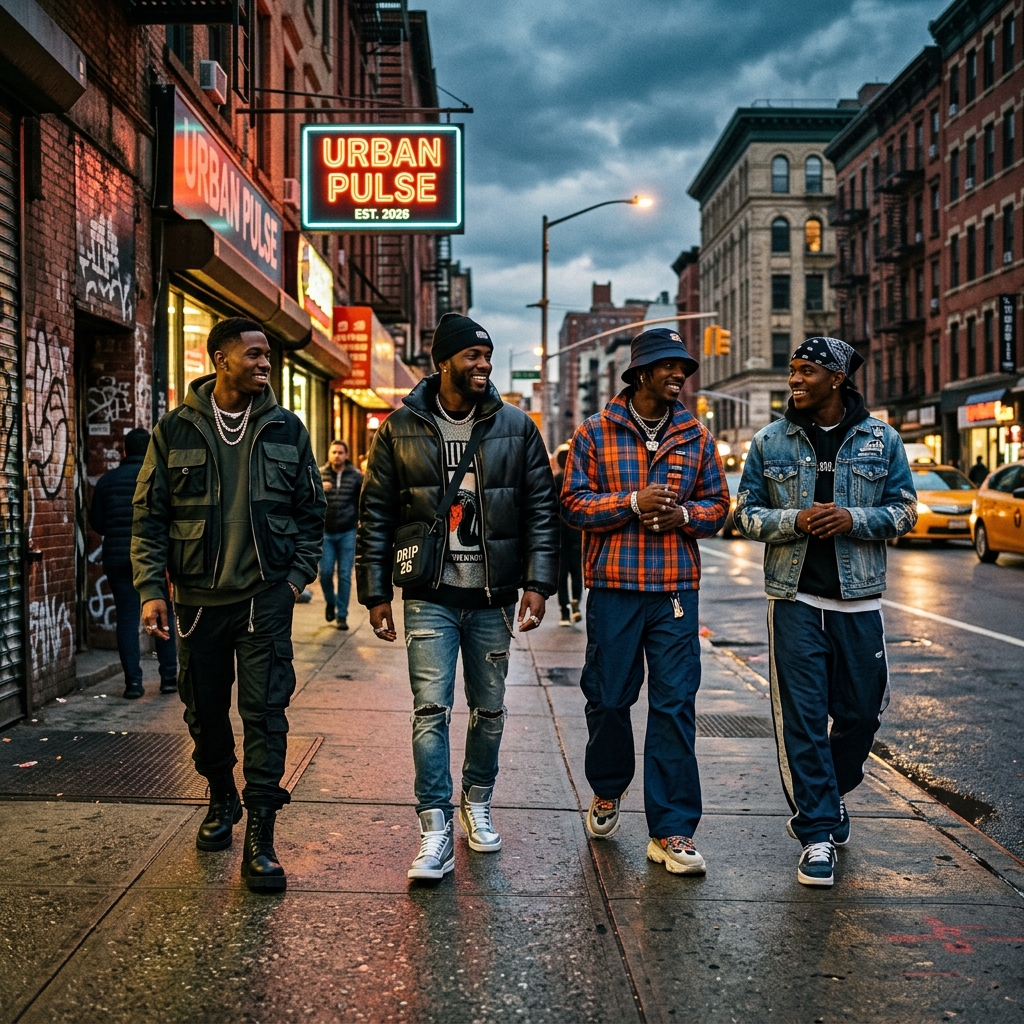
28 specific outfit combinations that work
I'm not listing these as "look 1, look 2"—that's lazy. Instead, here's how to build them:
the oversized-top, tapered-bottom formula (works 12+ ways)
- Oversized cream crewneck + navy chinos + white leather sneakers
- Oversized gray hoodie + black tapered trousers + brown loafers
- Oversized band tee (actually oversized, not just a regular tee) + olive chinos + high-top white sneakers
- Oversized wool sweater in charcoal + cream chinos + white sneakers
- Oversized linen shirt (unbuttoned over a white tee) + navy trousers + loafers
The principle: when the top has volume, the bottom is controlled. This creates visual balance and reads as intentional rather than accidental.
the structured-outerwear formula (works 10+ ways)
- Camel overcoat + black turtleneck + black trousers + black loafers (monochrome power)
- Oversized denim jacket + white tee + dark jeans + white sneakers (the classic)
- Wool blazer (slightly oversized) + cream tee + tapered trousers + loafers
- Technical nylon jacket + oversized hoodie underneath + cargo pants + high-tops
- Linen overshirt (oversized) + white tee + cream chinos + white sneakers
the all-neutral, texture-focused formula (works 6+ ways)
- Cream wool sweater + cream chinos + tan suede loafers + camel overcoat
- Gray oversized hoodie + gray trousers + white sneakers + gray overshirt
- Charcoal turtleneck + black trousers + black loafers + black coat
These work because texture becomes the visual interest: wool against cotton, suede against leather, matte against slight sheen.
the accessories that complete drip
Accessories separate competent dressing from actual drip. They're not afterthoughts.
watches: A clean, simple watch in stainless steel or leather strap. Timex Weekender ($35-50) or a basic Seiko ($150-300) work better than a busy multi-dial piece. The watch should disappear into the outfit while adding polish.
bags: A structured leather messenger bag or a minimal backpack in black or brown leather. Not canvas, not nylon—leather that will age. Budget $150-400 for something that lasts 10 years. Avoid anything with excessive branding.
hats: A wool beanie in winter, a linen bucket hat in summer, or a structured baseball cap in a neutral color. The fit matters enormously. A beanie should sit properly on your head without bunching; a baseball cap should have a structured front panel, not a flimsy one.
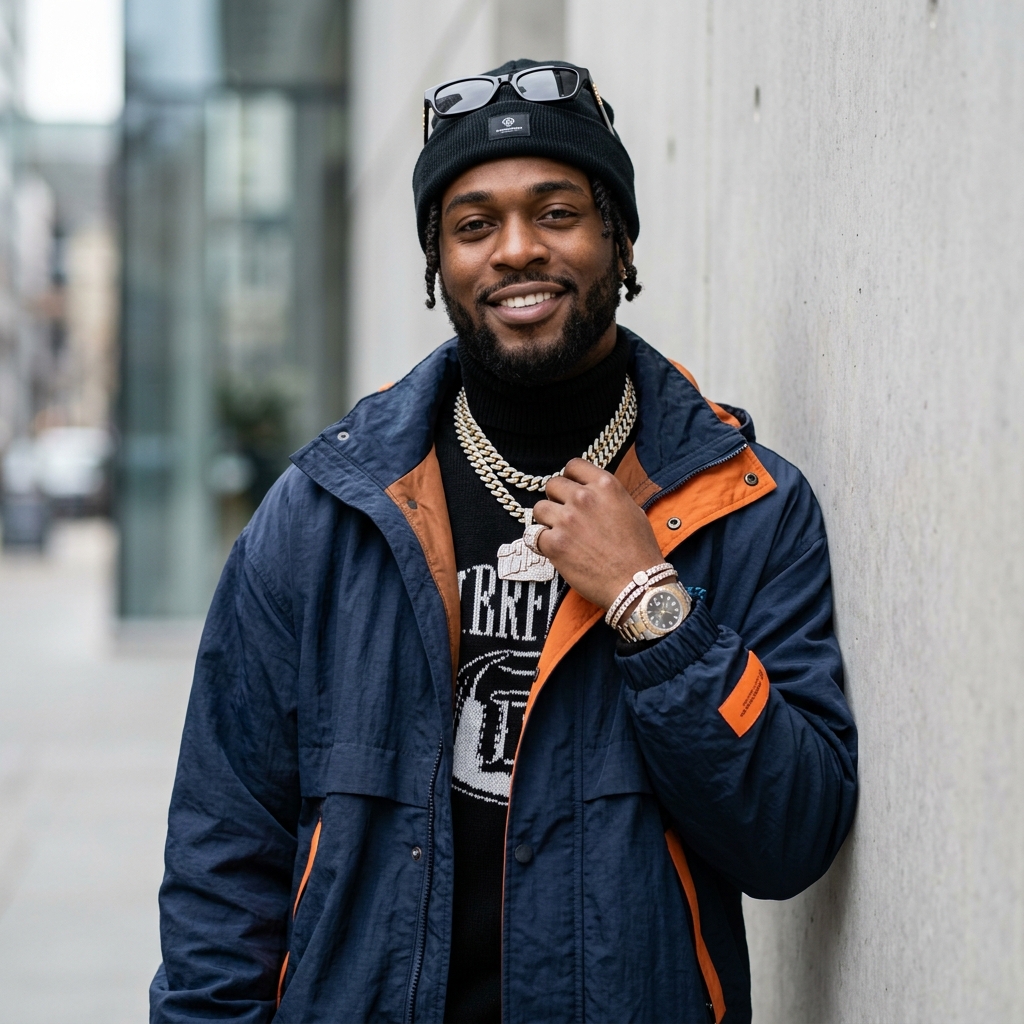
jewelry: Minimal. A simple chain or a single ring if you wear them. Most men look better without jewelry, honestly. If you do wear it, keep it understated.
maintenance: why your drip dies
I've seen men build perfect outfits then destroy them through poor maintenance. This matters.
washing and care: Wash heavyweight tees and sweatshirts in cold water, inside-out, with like colors. Dry on low heat or hang dry. This prevents fading and pilling. Jeans should be washed every 5-7 wears, cold water, inside-out. Hang dry always.
shoes: Clean white sneakers weekly. Use a soft brush and leather cleaner. Scuffed white leather looks abandoned. Leather shoes need conditioning every 3-4 months. Use actual leather conditioner, not random oils.
outerwear: Dry clean wool coats once per season, not after every wear. Spot clean minor stains. Store on proper hangers, not bunched up.
fit: As you age, your body changes. A perfectly fitted piece from five years ago might not fit the same way. Get things tailored. A $20 tailor adjustment on a $150 piece is worth it.
the psychology of drip
Here's what I've observed: men with actual drip dress for themselves, not for approval. They know why they chose each piece. They can articulate the fit, the fabric, the proportion. This confidence is what reads as drip, not the clothes themselves.
The worst big drip attempts come from men copying an Instagram photo without understanding the logic. They buy the exact same pieces in the exact same colors but look confused wearing them because they don't understand proportion or why those pieces work together.
Start with one outfit formula that works for your body type. Master it. Add variations slowly. Build from there.
where to actually shop for this aesthetic
Avoid fast fashion entirely—it falls apart and looks cheap immediately. Instead:
- Budget tier ($30-80 per piece): Uniqlo, Banana Republic Factory, J.Crew Factory, Gap, Everlane
- Mid-tier ($80-200 per piece): Reiss, COS, J.Crew, Banana Republic, Levi's, Carhartt WIP
- Investment pieces ($200-500+): Acne Studios, Raf Simons, Our Legacy, Lemaire
Buy less, buy better. One $150 piece you'll wear 100 times beats five $30 pieces you'll wear 10 times each.
the final point
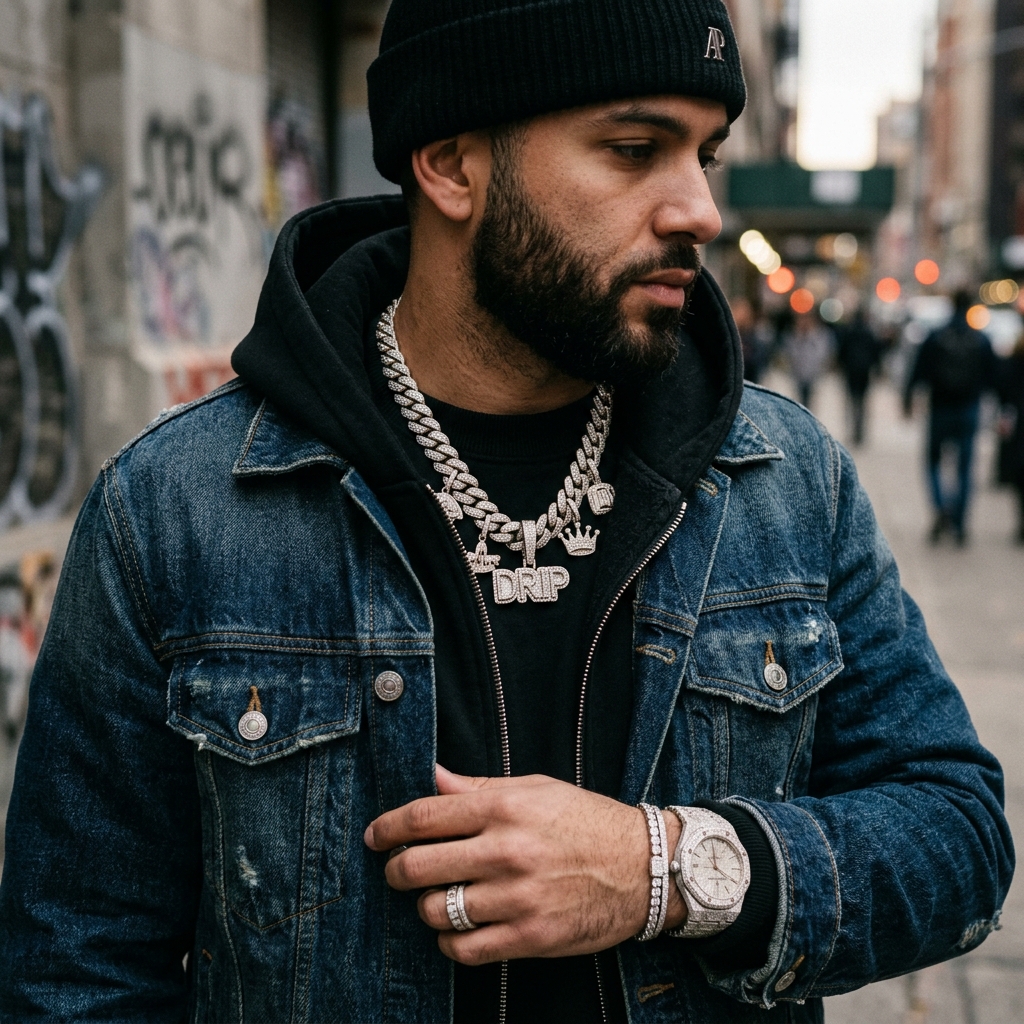
Big drip is about respect for the craft of dressing well. It's not expensive, but it requires attention. You're making choices about silhouette, material, color, and fit. You're maintaining what you own. You're building a wardrobe that works together rather than collecting random pieces.
Start now. Pick one outfit formula. Execute it perfectly. Then expand. That's how you build actual drip.