28 curly hair men's hairstyles: the complete guide to texture, maintenance, and execution
Curly hair on men has shifted from something many tried to flatten into submission to a legitimate style asset. I've watched this transformation happen over the last decade, and it's genuinely one of the better grooming trends I've covered. But here's the reality: curly hair requires actual knowledge to work with, not just letting it grow and hoping for the best.
This guide covers 28 specific hairstyles for men with curly hair, but more importantly, it explains how to actually achieve and maintain each one. We'll talk texture types, cutting techniques, product application, and the daily routines that separate men who look intentional from men who look like they just woke up.
understanding curl patterns before choosing a style
Before we get into specific cuts, you need to understand what you're working with. Curly hair isn't one thing. The difference between a loose wave and a tight coil determines which styles will actually work for your hair.
Type 2 waves are loose, almost straight-looking curls that sit close to the scalp. Type 3 curls are more defined spirals, usually medium density. Type 4 hair has tight coils or z-patterns and requires completely different handling than the others.
I mention this because I see men constantly trying styles that don't match their curl pattern. A tight fade with a long, textured top looks incredible on type 3 hair. On type 4 hair with very tight coils, the same cut can look matted and undefined unless you're using the right products and styling technique.
Get a proper assessment from a barber who works specifically with curly hair. Most traditional barbershops will cut your curls the way they'd cut straight hair—short and blunt—which actually works against the natural texture.
the foundational styles: where most men should start
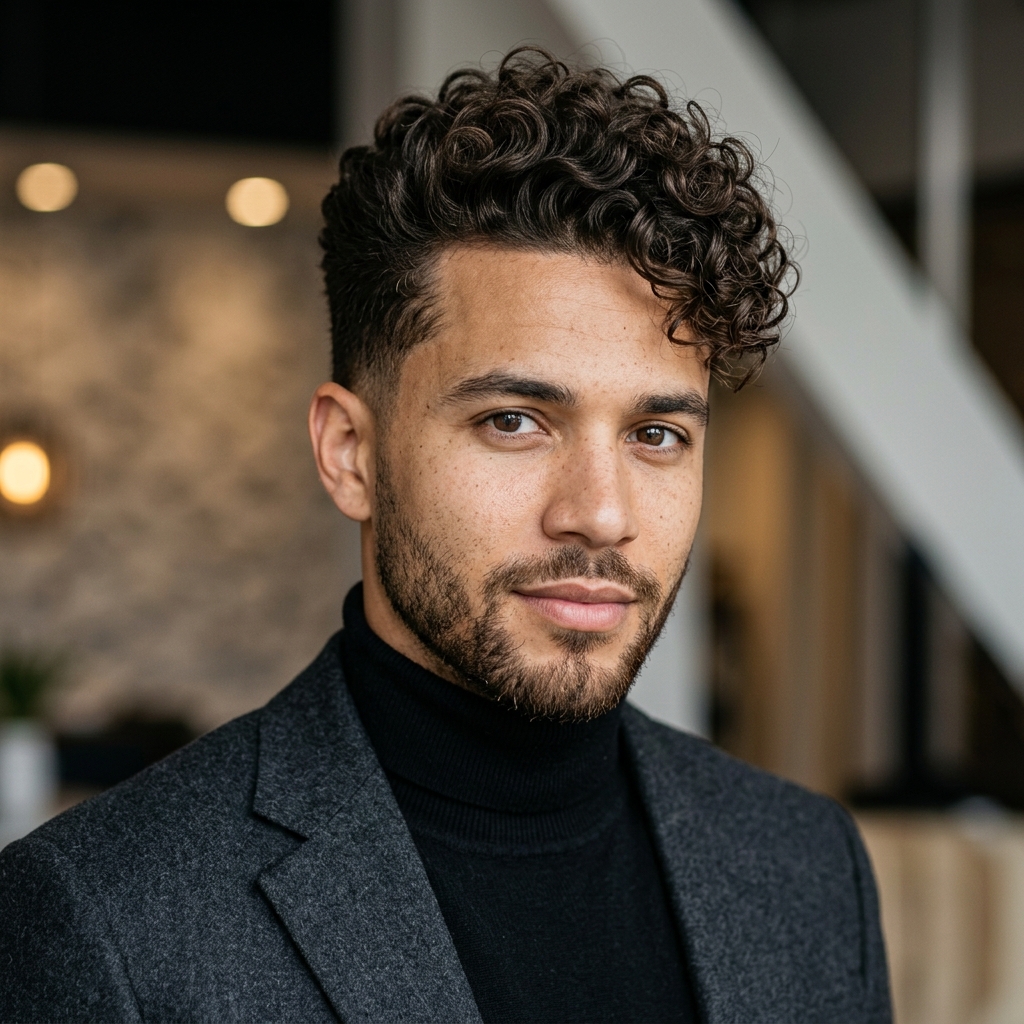
the textured crop with fade
This is the entry point for men new to styling curly hair. Keep the sides short (usually a 1 or 2 guard), fade it gradually, and leave 2-3 inches on top. The key execution detail: ask your barber to use a clipper-over-comb technique on top rather than a guard. This preserves the curl pattern while removing bulk.
Styling takes 90 seconds. Apply a light cream or mousse to damp hair, work it through with your fingers, and let it air dry or use a diffuser attachment on a blow dryer. The curls will define themselves.
the low fade with textured length
Similar to above but with more length on top—usually 3-4 inches. This works better if you have denser curls. The fade is where the technique matters. A good barber will cut the sides at an angle that follows your head shape, not just straight up.
This style requires a bit more product. I use a medium-hold cream or paste, applied to damp hair, then either air dry or blow dry with a diffuser. The result should look deliberate but not stiff.
the disconnected undercut
This is the style where the top and sides are completely separate—no fade. Sides are clippered very short (usually a 0.5 or 1), top is left long enough to show curl definition. It's bold and requires confidence to pull off, but when it works, it works.
The disconnect creates visual interest and actually makes maintenance easier because you can style the top independently. Just don't let the line between top and sides get too blurry. A good barber will maintain that clean separation every 3 weeks.
medium-length styles for fuller texture display
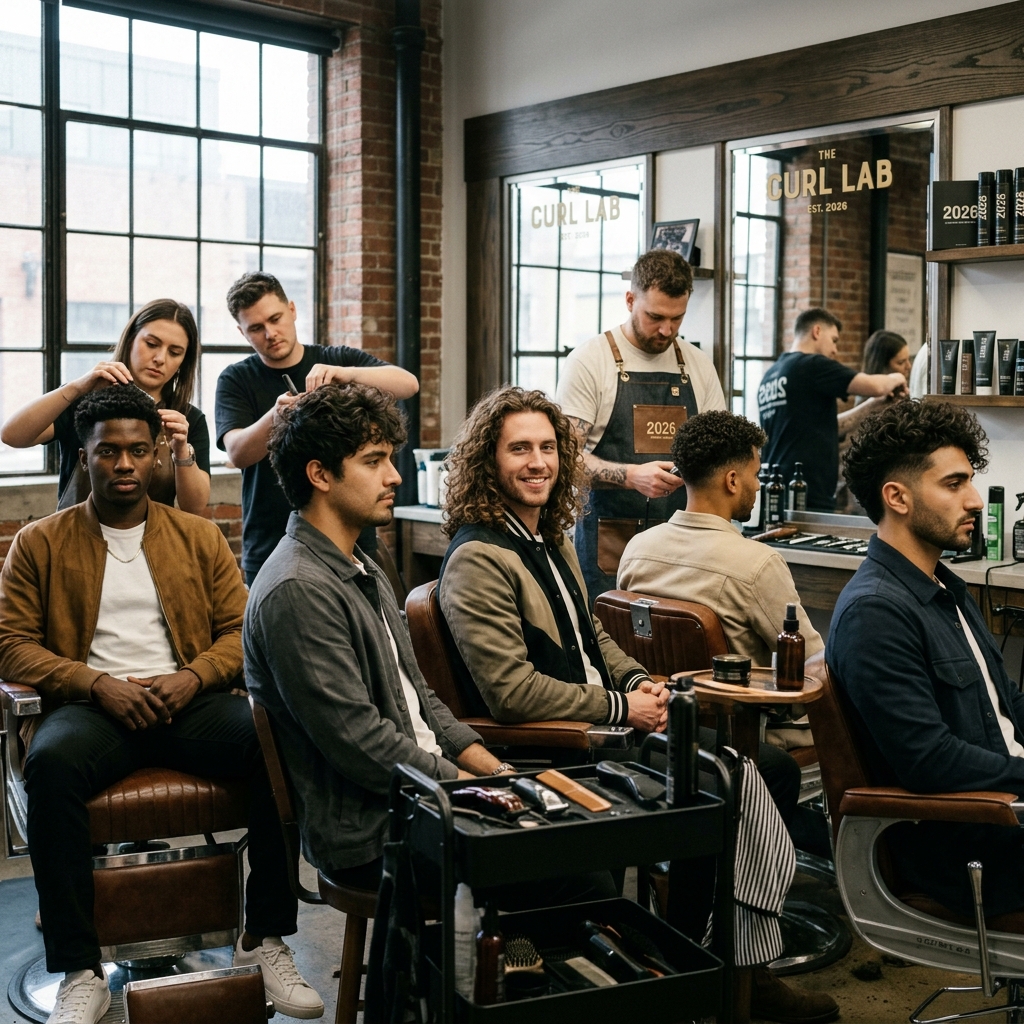
the textured quiff
This requires 4-5 inches of length on top and a fade on the sides. The quiff is a classic shape—voluminous at the crown, tapered toward the front. With curly hair, you're not creating the shape with product and blow drying like you would with straight hair. You're just letting the curls do the work while directing them.
Apply a medium-hold cream to damp hair, push the hair back and slightly to the side, and let it dry. The natural curl pattern creates the volume. This style suits men with type 2 or 3 curls particularly well.
the tousled textured top
This is intentional bedhead. 3-4 inches on top, faded sides, but the styling is deliberately undone. Apply a light cream or sea salt spray to damp hair, scrunch it with your hands, and let it air dry. The goal is to look like you didn't try, which is ironic because it requires knowing exactly how to make that happen.
This works best on men with naturally defined curls. If your curls are loose waves, this style can read as just messy rather than intentional.
the longer textured crop
4-5 inches all around with minimal fade, or no fade at all. This is for men confident in their curl pattern. The styling is simple—apply product to damp hair, work it through, and let it dry. The curls define the shape.
Maintenance is more involved because you need to trim every 3-4 weeks to prevent the style from becoming a shapeless mop. A good barber will remove bulk while maintaining length.
longer styles: 5+ inches
the shoulder-length textured flow
This requires commitment. You're looking at 6-8 inches minimum, usually with a fade or undercut on the sides to keep the proportions balanced. The top is completely free to express the curl pattern.
Styling requires a leave-in conditioner and a light-hold cream. Apply to damp hair, scrunch, and air dry. This style reads very intentional—there's no way to pull it off accidentally.
the textured man bun
This works on men with enough density and length. Usually 7+ inches on top, faded or undercut sides. The bun is functional and stylish if executed properly. Tie it high and tight, but not so tight that you're pulling hair out at the roots.
The bun works best on type 3 or 4 curls. On looser waves, it can look thin and straggly.
the coil-defined long top
For men with type 4 hair specifically. Keep the sides very short (0.5-1 guard), leave the top 6+ inches. Use a curl cream and a gel with light hold to define each coil. This requires daily styling but creates a striking look.
The key is not overloading with product. Too much product weighs down coils and creates a crunchy, unnatural appearance.
short styles: when less is more
the 1-inch all-over crop
Everything is the same length—about 1 inch. This works on men with tight, well-defined curls. Styling is minimal. A light cream applied to damp hair and air dried.
This style is low-maintenance but requires a good cut. A barber who doesn't understand curly hair will make this look shapeless.
the tapered textured crew
Similar to a crew cut but with texture. Sides are faded short, top is 1.5-2 inches. The difference from a traditional crew cut is that you're not flattening the curls—you're working with them.
This is a practical style for men who want something professional but still textured.
the buzz cut with defined edges
A very short all-over cut—usually a 2 or 3 guard—with clean, sharp lines around the edges. This works on men with very tight, well-defined curls. It's bold and requires confidence.
Maintenance is simple: trim every 3 weeks to maintain the shape. Styling is nonexistent.
styling products: what actually works
I'm going to be direct here: most men with curly hair are using the wrong products. Heavy pomades and waxes are designed for straight hair. They sit on top of curls and create a greasy, defined look that looks unnatural.
For curly hair, you want:
Leave-in conditioners are foundational. Apply to damp hair before anything else. This hydrates the curl and prepares it for styling.
Curl creams provide light hold and definition without crunch. These are water-based and work with the curl pattern rather than against it. Cantu, SheaMoisture, and Aunt Jackie's are solid budget options. Kinky-Curly and Camille Rose are higher-end but genuinely better formulated.
Light-hold gels are useful if you need more control. Water-based gels are better than alcohol-based ones, which dry out curls. Use sparingly—a dime-sized amount goes a long way.
Sea salt sprays create texture and definition, especially useful for longer styles. These work best on damp hair.
Avoid heavy pomades, thick waxes, and anything with silicones if you're trying to enhance your natural curl pattern. These products coat the curl and prevent moisture from getting in.
the maintenance routine that actually matters
Here's what separates men who have great-looking curly hair from men who don't:
Washing frequency: Curly hair doesn't need daily washing. 2-3 times per week is ideal. Over-washing strips natural oils that keep curls defined and hydrated.
Shampoo selection: Use a sulfate-free shampoo designed for curly or textured hair. Sulfates are harsh and drying. When you do wash, focus on the scalp, not the curls themselves.
Conditioning: This is non-negotiable. Deep condition once a week. A good deep conditioner should sit on your hair for 10-15 minutes.
Drying technique: This matters more than most men realize. Rough towel drying breaks the curl pattern. Use a microfiber towel or a cotton t-shirt to gently squeeze water out, not rub. If you blow dry, use a diffuser attachment and keep the heat on low.
Trimming schedule: Every 4-6 weeks, depending on how fast your hair grows and how much definition you want to maintain. Curly hair grows at different rates in different places, and regular trims keep the shape intentional.
Scalp health: Curly hair is more prone to dryness. Use a scalp oil or lightweight oil once a week if you have a dry scalp. This prevents flaking and keeps hair healthy.
the remaining 15 styles: quick reference
I could detail all 28 individually, but here's the honest truth: most variations are combinations of the foundational styles listed above. Different fade angles, different length combinations, different product choices.
The other 15 styles worth knowing about include: the textured mohawk, the high-volume textured top, the side-swept textured style, the defined coil style, the layered textured cut, the textured fade with length, the curly fringe style, the textured slicked-back look, the twisted style, the braided accent style, the textured pompadour, the curly shag, the textured fade with hard part, the curly wolf cut, and the textured buzz fade.
Each of these is a variation on fade placement, length distribution, and styling technique applied to the foundational principles we've covered.
finding the right barber
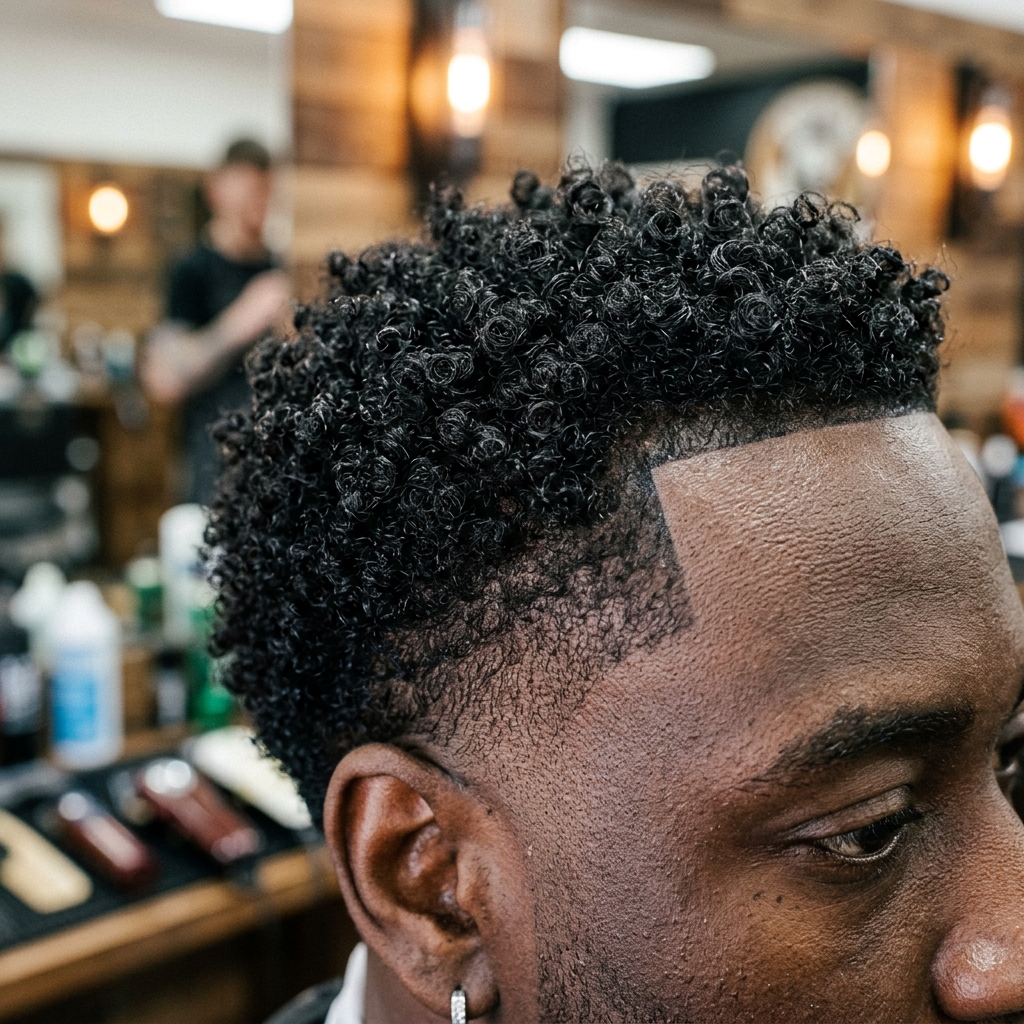
This is critical. Not every barber understands curly hair. Ask specifically if they have experience cutting curly hair. Look at their portfolio. If all their work is straight hair cuts, they're not your person.
A good curly-hair barber will:
- Use clippers-over-comb or scissors-over-comb techniques
- Understand that curly hair needs to be cut while dry or damp, not soaking wet
- Know how to work with your specific curl pattern
- Be able to explain what they're doing and why
Expect to pay more than you would for a basic haircut. A skilled curly-hair barber is worth the investment.
the practical reality
Curly hair requires more maintenance than straight hair. This isn't negotiable. If you're not willing to use the right products, follow a basic washing routine, and get regular trims, curly hair will look worse than if you just cut it very short.
That said, when you get it right, curly hair is genuinely more interesting than straight hair. It has texture, movement, and personality. The 28 styles in this guide are all achievable if you understand your curl pattern, use the right products, and find a barber who knows what they're doing.
Start with a textured crop or low fade. Get comfortable with the maintenance routine. Then experiment with length and styling. Your curls will tell you what works.