30 business casual men's summer fashion ideas for 2026: practical styling that actually works
Business casual in summer presents a real problem. You're caught between looking professional and not sweating through your shirt by 10 AM. The aesthetic has shifted significantly since 2020—remote work killed the rigid dress code, but offices are demanding presence again. What's emerged is something more forgiving but still intentional.
I've spent the last six months watching what actually works in real office environments, from finance firms in Manhattan to tech companies in Austin. The 30 ideas I'm laying out here aren't aspirational Instagram content. They're clothes you can wear repeatedly, wash without anxiety, and look composed in during a video call.
understanding business casual in 2026
Business casual used to mean "khakis and a button-up." That's dead. What we're seeing now is a spectrum. On one end, you have structured pieces that read formal. On the other, casual fabrics and cuts that feel relaxed. The trick is mixing these intentionally rather than defaulting to whatever's comfortable.
The shift happened because offices realized that rigid dress codes don't correlate with productivity. Simultaneously, men got better at dressing themselves. We stopped treating "business casual" as a punishment and started seeing it as a legitimate aesthetic category.
Summer complicates everything. Humidity, heat, and light colors that show sweat stains create practical constraints that don't exist in winter. The best summer business casual acknowledges these realities instead of ignoring them.
fabric selection: the foundation of summer dressing
This is where most men fail. They grab whatever's on sale without considering fiber content, weave structure, or care requirements.
Linen blends (55% linen, 45% cotton) are the workhorse of summer business casual. Pure linen wrinkles aggressively and reads too casual for most offices. The cotton blend adds stability while keeping breathability. Expect to pay $85–$140 for a quality piece. Brands like Banana Republic's linen collection and J.Crew Factory's summer line execute this well.
High-thread-count cotton (200+ count) in a poplin or oxford weave works year-round but shines in summer. The tighter weave resists wrinkling better than cheaper cottons. Lands' End and Brooks Brothers have maintained standards here when others haven't.
Moisture-wicking synthetics (polyester blends marketed as "performance" fabrics) are practical but feel cheap if you go below 60% natural fiber. Bonobos' stretch chinos use this approach effectively. The downside: they pill faster and feel plasticky against skin in high humidity.
Linen-cotton-silk blends (usually 40/40/20) represent the premium tier. They drape better, feel softer, and regulate temperature more effectively. You'll spend $160–$220. Reiss and Suitsupply offer versions worth the investment if you wear business casual daily.
Avoid 100% polyester, cheap rayon blends, and anything marketed as "wrinkle-free" with chemical finishes. These fabrics trap heat and deteriorate faster than natural fibers.
the 30 ideas: structured by outfit type
lightweight button-ups (ideas 1–8)
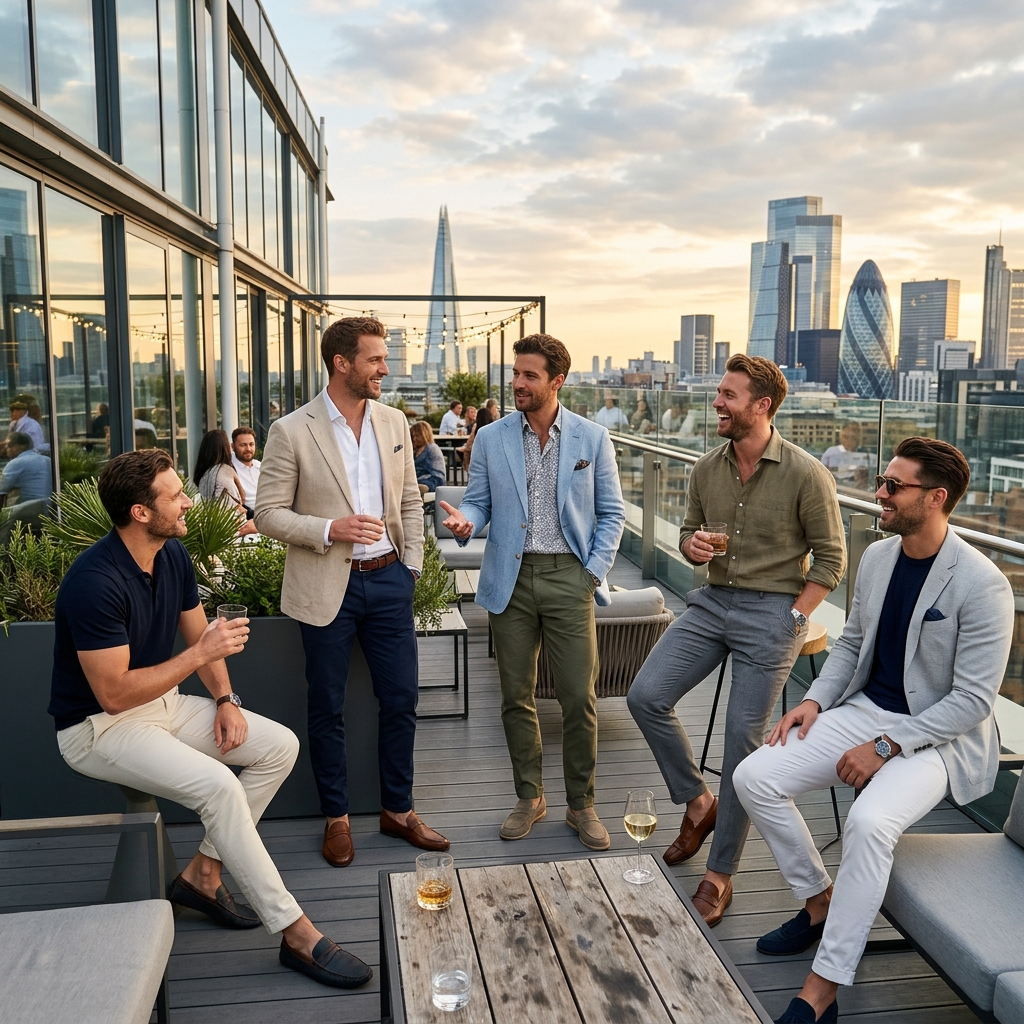
1. Cream linen-cotton camp collar shirt with tailored navy chinos. The camp collar (Cuban shirt style) reads less formal than a traditional collar but still professional. Pair with flat-front chinos in navy. Wear untucked or half-tucked depending on your office culture. This works in creative industries and finance alike.
2. Pale blue oxford cloth button-down with stone chinos. Oxford cloth is thicker than poplin—it breathes less but wrinkles less. The pale blue is forgiving with sweat marks. This is your safe choice when you're unsure about dress code.
3. White poplin shirt with lightweight wool trousers. Sounds counterintuitive for summer, but tropical-weight wool (around 9 ounces) breathes better than cotton chinos. The contrast feels elevated. Wear the sleeves rolled to mid-forearm.
4. Sage green linen blend with cream flat-front shorts (knee-length). Some offices allow shorts. If yours does, this pairing works. The sage green is specific enough to look intentional without being trendy. Pair with leather loafers, not sneakers.
5. Striped seersucker shirt (navy and white) with gray chinos. Seersucker's puckered weave creates air pockets for cooling. It's inherently casual, so pair with structured pieces elsewhere. Tuck it in fully.
6. Taupe linen shirt with white flat-front chinos. Monochromatic near-neutrals create sophistication. The taupe reads warmer than gray and pairs with brown leather accessories. This works across industries.
7. Light gray performance blend polo with navy chinos. Polos occupy a gray area in business casual. In tech and creative fields, they're standard. In finance, they're borderline. Know your office. Performance fabrics dry quickly if you're moving between meetings.
8. Pale yellow cotton poplin with khaki chinos. Yellow is underused in men's business casual. Pale yellow (not bright) pairs with khaki without feeling costume-like. Add a navy blazer if you need formality.
shorts and lightweight trousers (ideas 9–14)
9. Flat-front chino shorts (8-inch inseam) in stone with a white linen shirt. 8 inches hits just above the knee—professional without being prudish. Stone is neutral and pairs with any top.
10. Lightweight wool trousers (tropical weight) in charcoal with a cream shirt. Wool breathes better than you think. Tropical-weight wool is specifically designed for heat. The charcoal pairs with everything.
11. Linen shorts in natural tan with a navy camp collar shirt. Natural linen wrinkles aggressively, which reads intentional rather than sloppy if you own it. Pair with leather sandals (not flip-flops).
12. Pleated front chinos in navy with a pale blue shirt. Pleats went out of fashion in the 2010s, but they're returning in tailored contexts. They allow more movement and look less trendy than flat-front. Wear them with intention.
13. Tapered chino shorts (7-inch inseam) in olive with a white oxford shirt. The shorter inseam works if you have proportional legs. Olive reads more sophisticated than khaki.
14. Unstructured linen trousers in cream with a sage green shirt. Unstructured means minimal tailoring—they drape loosely. This reads casual but intentional. Pair with suede loafers.
layering and outerwear (ideas 15–20)
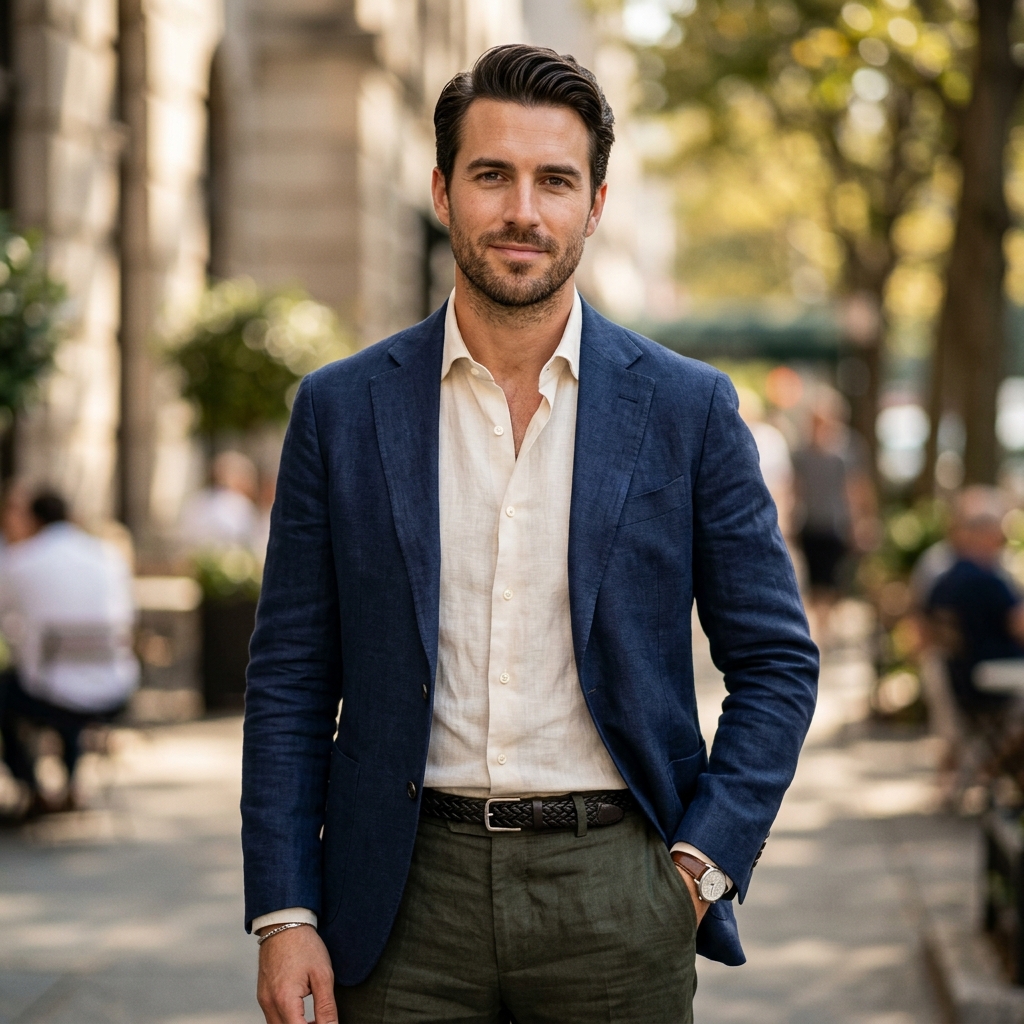
15. Unstructured cotton blazer in navy over a white t-shirt and chinos. The unstructured blazer (minimal padding, natural shoulders) feels modern. Wear it open. This works in most offices when you need formality without looking stiff.
16. Linen sport coat in natural tan over a pale blue shirt. Linen sport coats wrinkle by design. Embrace it. Pair with navy chinos. This reads sophisticated and intentional.
17. Lightweight cardigan in oatmeal over a white polo and chinos. Cardigans are underused in men's business casual. They layer without the bulk of a blazer. Look for merino wool blends that breathe.
18. Overshirt in cream linen-cotton over a white t-shirt and navy chinos. An overshirt is a shirt worn unbuttoned as a layer. It's less formal than a blazer. This works in creative industries.
19. Seersucker blazer in navy and white with white chinos. The seersucker pattern reads summery while the blazer structure stays professional. This is a statement piece that works in fashion, marketing, and creative fields.
20. Lightweight rain shell in navy over business casual basics. Function matters. A quality rain shell (not a cheap windbreaker) keeps you dry without overheating. Brands like Arc'teryx and Patagonia make versions that don't look athletic.
accessories and finishing details (ideas 21–30)
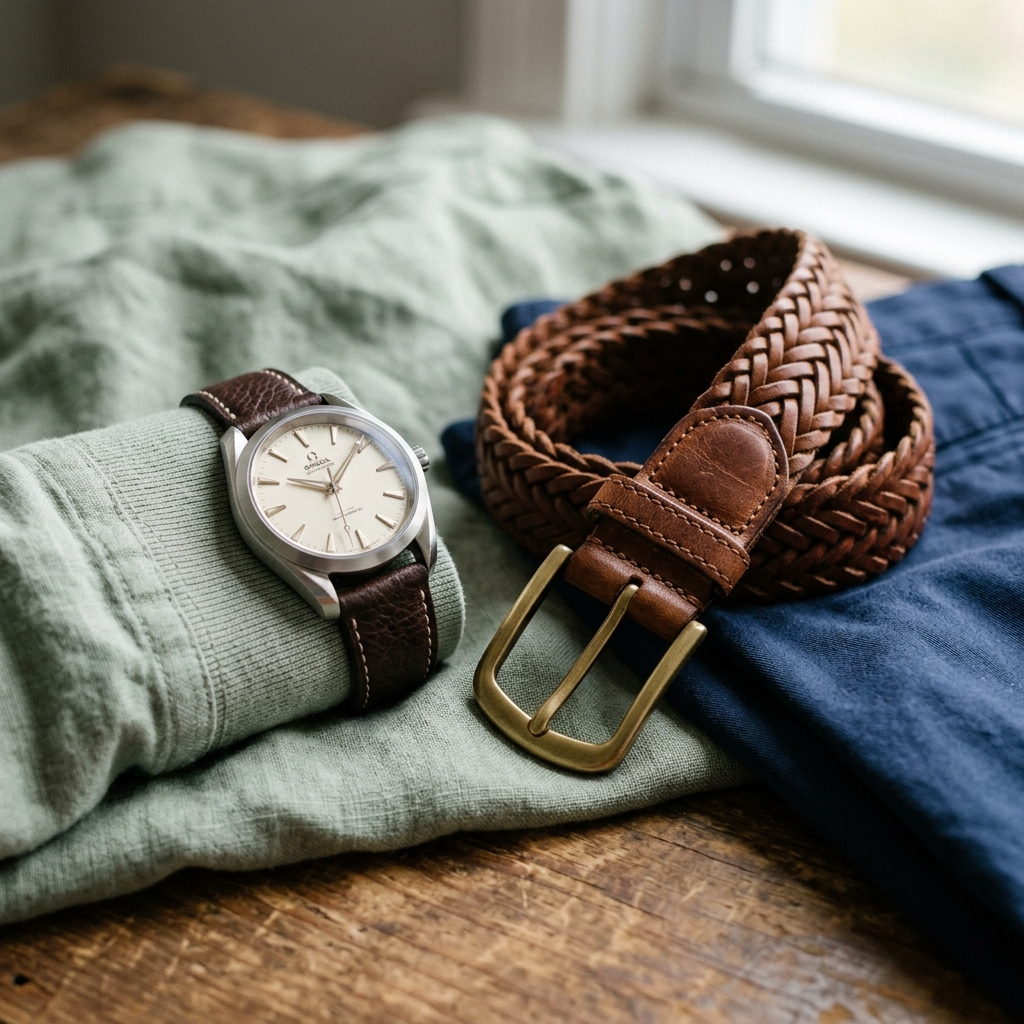
21. Leather belt in cognac with a subtle texture. A good belt costs $60–$100 and lasts years. Cognac pairs with navy, gray, khaki, and olive. Avoid shiny finishes.
22. Lightweight watch with a fabric strap. A fabric NATO or canvas strap looks less formal than metal. Brands like Timex and Seiko make reliable watches under $200. The fabric breathes better in humidity.
23. Suede loafers in taupe or brown. Suede is more breathable than leather and feels summery. Taupe is more versatile than brown. Expect to spend $120–$180. Maintain with a suede brush monthly.
24. Leather sneakers in white or cream. Clean leather sneakers work in tech and creative industries. They're more professional than canvas. Brands like Common Projects and Greats execute this well.
25. Pocket square in a complementary solid color. A pocket square adds intentionality without looking costume-like. Keep it simple: solid colors in cotton or linen. Fold it loosely.
26. Lightweight scarf in neutral tones (optional). Some offices allow scarves. A linen or cotton scarf in cream, taupe, or navy adds sophistication. Wear it loosely.
27. Sunglasses with quality frames. Sunglasses are functional and stylistic. Invest in frames with good proportions. Avoid oversized or trendy styles. Warby Parker and Ray-Ban make reliable options.
28. Minimal jewelry: simple bracelet or ring. A single piece of jewelry (not both) works. Keep it minimal. A simple silver or gold bracelet or a wedding band.
29. Socks that coordinate with trousers, not shoes. This is a detail most men miss. Socks should bridge the gap between shoe and trouser. Navy socks with navy chinos, gray socks with gray trousers. Avoid white athletic socks.
30. Lightweight bag in leather or canvas. A professional bag carries your laptop and documents. Leather messenger bags and canvas totes both work. Brands like Fossil and Everlane offer functional versions at reasonable prices.
maintenance and longevity
Summer fabrics require specific care. Linen wrinkles—that's not a flaw, it's the nature of the fiber. Embrace it or use a light steam before wearing. Wash linen in cool water and hang dry to prevent shrinkage.
Cotton poplin and oxford cloth handle regular washing better. Use warm water, mild detergent, and dry on low heat. High heat degrades fibers and sets wrinkles permanently.
Performance blends (polyester-cotton) dry quickly but pill if washed roughly. Turn them inside out before washing and use a gentle cycle.
Wool requires different care entirely. Spot clean when possible. Hand wash or use a delicate cycle with wool-specific detergent. Lay flat to dry. Tropical-weight wool is durable if treated properly.
Rotate your pieces. Wearing the same shirt three days in a row breaks down fibers faster than wearing three different shirts once each. A basic summer business casual wardrobe needs 5–7 tops and 3–4 bottoms to function without constant laundry.
the reality of business casual in 2026
Business casual isn't about following rules anymore. It's about understanding your specific office culture and dressing with intention within those parameters. Some offices are still rigid. Others have abandoned dress codes entirely but expect you to look professional on camera.
The 30 ideas here cover most scenarios. You don't need all of them. Pick 5–8 combinations that work for your body type, office culture, and climate. Invest in quality basics rather than trendy pieces. A $120 linen-cotton shirt worn 40 times a year costs less per wear than a $40 synthetic shirt worn 10 times.
Summer business casual works when you prioritize breathability, choose appropriate fabrics, and maintain your pieces. It fails when you treat it as a compromise between casual and formal rather than a legitimate aesthetic category.
Start with the basics: two pairs of chinos, three button-ups in neutral colors, one blazer, and appropriate shoes. Build from there based on what actually works in your environment. Adjust as you learn what you reach for repeatedly versus what sits unworn.