30 short beard styles for men: A practical guide to execution and maintenance
The short beard has become the default for men who want facial hair without committing to the full lumberjack aesthetic. It's practical, professional, and frankly easier to maintain than most people think. But there's a real difference between looking intentional and looking like you just skipped shaving for three days.
I've spent enough time in barbershops and grooming forums to know that most men treat their short beards as an afterthought. That's where the gap exists. A well-executed short beard requires understanding your face shape, knowing exactly what length works, and having a maintenance routine that actually fits your life.
what counts as a short beard
Before we list 30 styles, let's define the territory. A short beard typically measures between 1/4 inch and 1 inch in length from the skin. Anything shorter starts looking like stubble (which has its own category). Anything longer moves into the medium or full beard range.
The short beard sits in a sweet spot: it reads as intentional grooming without requiring the daily maintenance of a full beard, and it works in almost every professional setting. This is why it's become the default for men aged 25-45 who actually care about their appearance.
the practical foundation: face shape matters
Your face shape determines which short beard styles will actually work for you. I see men ignore this constantly, and then wonder why their beard looks off.
Round faces benefit from styles that add length at the chin and keep the sides tight. Think about creating vertical lines rather than following your natural face contours.
Square faces can handle fuller short beards because the strong jawline won't disappear. You're actually in the best position to experiment.
Oval faces have the most flexibility. You can go with almost any short beard style because your proportions are already balanced.
Rectangular faces need width, not length. Keeping your beard fuller on the sides while maintaining a clean cheek line creates the illusion of a wider face.
Diamond faces (wider at cheekbones, narrow at chin and jaw) need that length at the chin that round faces need, but with more control on the sides.
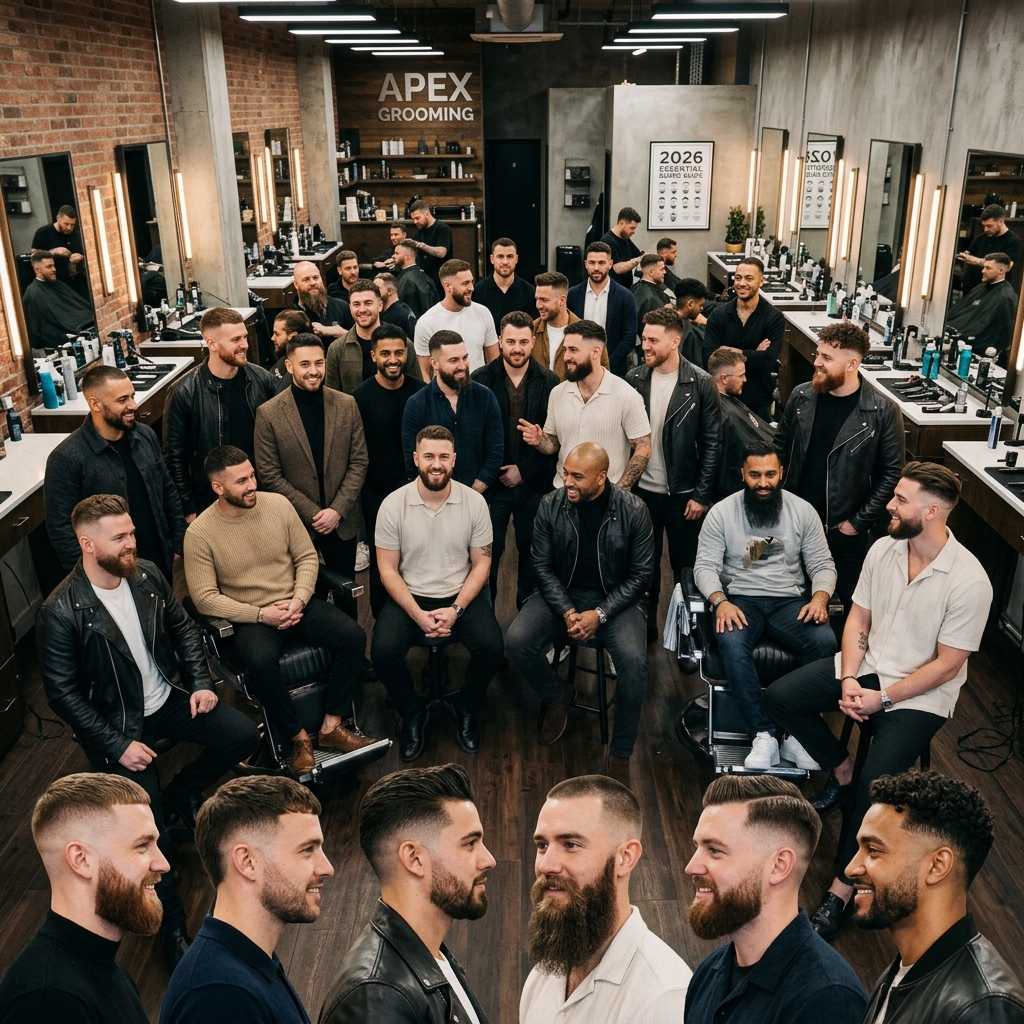
30 short beard styles explained
1. The stubble shadow (3-5 days growth)
This is the entry point. It requires zero maintenance beyond regular shaving, and it works if your facial hair grows in evenly. The catch: you need to shave every 3-4 days or it stops looking intentional.
2. The designer stubble (1 week growth, shaped)
Same length as above, but you're actually maintaining the neckline and cheek lines with a trimmer. This is what most men think they're doing when they're actually just being lazy.
3. The classic short box (1/4 inch uniform length)
Straight lines, squared-off chin, tight on the cheeks. This works for square and rectangular faces. Requires clippers every 7-10 days.
4. The rounded short (1/4 inch, curved edges)
Same length as the box, but you're following your natural beard growth pattern instead of fighting it. Less maintenance-intensive because you're not fighting your face shape.
5. The chinstrap variation (1/4 inch on chin, faded sides)
Draws attention to the jawline. Works well for men with weaker chins who want definition without a full beard.
6. The Van Dyke short (1/2 inch on mustache, 1/4 inch on chin)
The mustache is the star here. Requires daily grooming and a beard oil to keep the stache from looking scraggly.
7. The Hollywoodian (1/2 inch uniform, perfectly shaped)
Think Ryan Gosling in most of his recent films. This requires weekly trims and a barber who understands symmetry. It's not a DIY project.
8. The faded short (3/4 inch on chin, fading to stubble on sides)
Creates the illusion of a fuller beard without the maintenance. Works for men with patchy growth because the fade disguises it.
9. The anchor short (1/2 inch, shaped like an anchor)
Wider at the mustache, tapered to a point at the chin. This is a style statement. It requires precision and probably a barber.
10. The French fork (1/2 inch, split down the middle)
Requires beard balm and daily styling. Not practical for most men, but it photographs well.
11. The simple goatee (1/2 inch on chin and mustache, clean sides)
The goatee never really went away. It's polarizing, but it works if you commit to the maintenance.
12. The extended goatee (1/2 inch, extends down the sides slightly)
A softer version of the classic goatee. Less aggressive, more versatile.
13. The soul patch (1/4 inch directly under the lower lip)
This is a statement. It works if you're confident enough to pull it off. Most men aren't.
14. The stubble with defined mustache (1/4 inch beard, 1/2 inch mustache)
The mustache gets all the attention here. Requires daily grooming of the stache while keeping the beard minimal.
15. The tight fade (1/2 inch chin, 1/8 inch sides)
Creates dramatic contrast. Works best on men with strong jawlines and darker hair where the fade is visible.
16. The natural short (1/2 inch, following your exact growth pattern)
No shaping, no lines, just trimmed to length. This is the most forgiving style because you're not fighting your beard's natural direction.
17. The shaped shadow (1/4 inch with clean lines)
Stubble length with precision edges. Requires a trimmer with a 1/4 inch guard and steady hands.
18. The full short (3/4 inch, no fading)
Uniform length all over. This is what most men think they want but don't have the patience to maintain.
19. The cheek-line short (1/2 inch, with high, sharp cheek lines)
The cheek lines are the focal point. This requires monthly barber visits to keep them clean.
20. The neckline short (1/2 inch, with a defined neckline)
The neckline is where most men mess up. A proper neckline should follow your natural neck-to-jaw angle, about 1/2 inch below your jaw.
21. The blended short (1/2 inch beard, blended into sideburns)
Creates continuity from beard to hair. Works best if your sideburns and beard color match.
22. The textured short (1/2 inch, left slightly uneven for texture)
Intentionally imperfect. This actually requires more skill than it looks because the unevenness has to look deliberate, not neglected.
23. The tight mustache short (1/4 inch beard, 1/2 inch mustache, tight sides)
The mustache is prominent, the beard is minimal. Requires daily mustache grooming.
24. The rounded chin (1/2 inch, rounded at the bottom)
Softens the face. Works well for men with angular features.
25. The squared chin (1/2 inch, sharp 90-degree angle at the bottom)
Emphasizes the jawline. Works best on men with strong jaws.
26. The patchy solution (1/2 inch with strategic fading)
If your beard grows in patchy, a fade hides it. Keeps longer hair where growth is thick, fades where it's thin.
27. The connected mustache (1/2 inch beard, 3/4 inch mustache that connects)
The mustache extends down and connects to the beard. Requires daily styling and beard balm.
28. The stubble blend (1/4 inch on chin, fading to stubble on sides)
Creates depth without requiring a full beard. Low maintenance.
29. The professional short (1/4 inch, perfectly maintained)
This is what works in law offices and corporate settings. It's conservative but reads as intentional.
30. The personality short (1/2 inch, styled with personality)
This is whatever works for you after you understand the rules. Once you know what length suits your face and what maintenance you can actually commit to, you can break the rules intentionally.
maintenance: the part most men skip
Here's what separates a good short beard from a mediocre one: maintenance.
Trimming frequency: Every 7-10 days for most short styles. If you're at 1/4 inch, you can stretch it to 10 days. At 1/2 inch or longer, you're looking at weekly trims.
The right tools: Get a quality beard trimmer with adjustable guards. The Panasonic ER-GB80S or Philips Norelco 7100 are solid choices. Don't cheap out here. A $30 trimmer will frustrate you.
Neckline maintenance: This is where men fail most often. Your neckline should follow your natural jaw angle, about 1/2 inch below the point where your neck meets your jaw. Use a 1/8 inch guard or just your trimmer without a guard, and follow that line.
Cheek line maintenance: Keep it clean and high. Most men go too low. Your cheek line should be roughly where your sideburns naturally end.
Washing and conditioning: Use a beard wash 3-4 times per week. Regular shampoo strips the oils. Beard conditioner keeps it from getting wiry. For short beards, you don't need beard oil unless your skin is dry.
Combing: Use a beard comb (not a brush) to train the direction of growth. This takes 30 seconds in the morning.
the grooming timeline
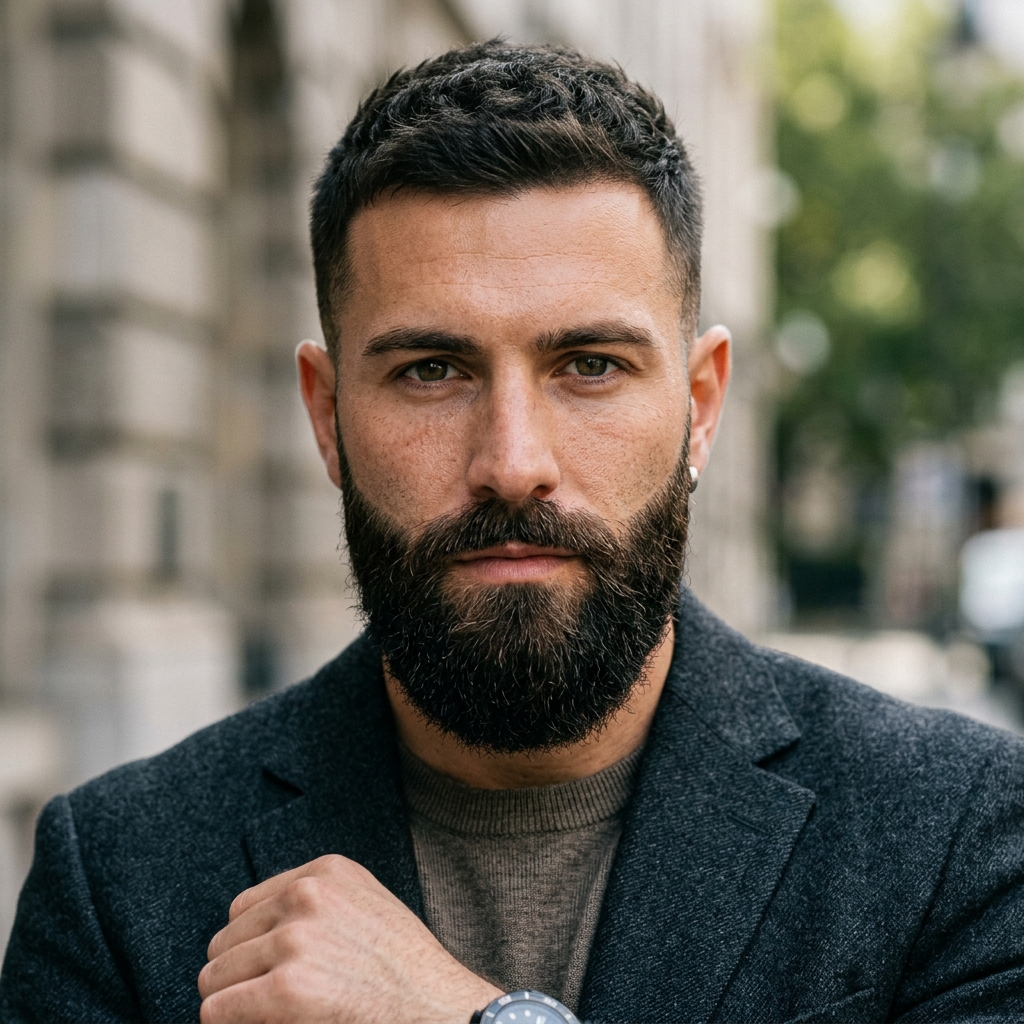
Week 1: Trim to your desired length. Establish your neckline and cheek lines.
Week 2: Light trim, maintaining shape.
Week 3: Another trim if you're at 1/2 inch or longer. If you're at 1/4 inch, you might skip this week.
Week 4: Full maintenance trim.
This assumes you're trimming yourself. If you're going to a barber, every 3-4 weeks is reasonable for a short beard.
common mistakes
Ignoring your growth pattern: Your beard doesn't grow straight down. It grows at angles. Fighting this creates an uneven look. Work with your growth pattern, not against it.
Trimming too short too often: You don't need to trim every 3 days. Once a week is plenty for most short styles.
Neglecting the neckline: A sloppy neckline makes even a well-maintained beard look unkempt.
Using the wrong guard size: Measure what you actually want. If you want 1/2 inch, use the 1/2 inch guard. Most men guess and end up shorter than intended.
Not conditioning: Conditioning doesn't make your beard soft in a feminine way. It makes it less wiry and easier to style. Use it.
choosing your style
Pick a style based on three factors: your face shape, your hair color and texture, and your maintenance commitment. If you're not willing to trim every 7-10 days, don't choose a style that requires it.
The professional short works for almost everyone. The Van Dyke requires more commitment. The natural short requires less.
Start with a barber who knows what they're doing. Show them a photo of the style you want. Let them recommend what works for your face. Then learn to maintain it yourself with a decent trimmer.
the reality
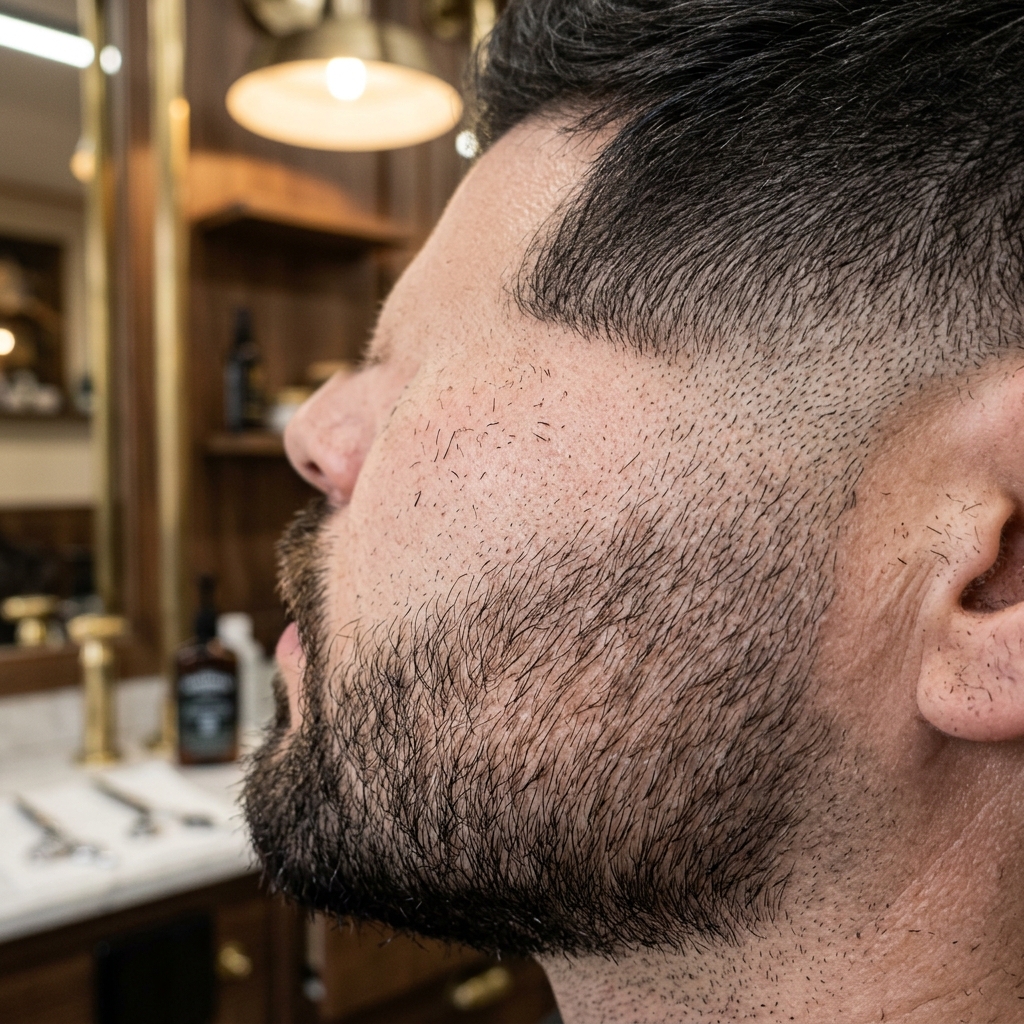
A short beard is achievable for almost every man. It requires a trimmer, 10 minutes every week, and the willingness to learn what works for your specific face. There's no magic. There's no secret product that makes it easier.
What there is: intention. A short beard that's maintained intentionally looks professional and put-together. One that's neglected looks like you forgot to shave.
Pick a style, commit to the maintenance, and actually do it. That's the difference between looking like you tried and looking like you didn't.