40 handsome mens hairstyles curly: working with curl instead of fighting it
Curly hair is either the best or worst thing that can happen to a man's grooming routine, depending entirely on whether he understands it or not. Most men with curly hair spend years fighting their natural texture—trying to flatten it, control it, or impose straight-hair styling systems on it. The results are consistently disappointing.
The turning point is accepting that curly hair operates by different physics than straight hair. What works isn't about controlling the curl. It's about cutting the hair in a way that lets the curl pattern express itself cleanly, and then maintaining that with the right products.
Here's a comprehensive breakdown of how curly men's hair actually works across different hair types and cut styles.
understanding curl types
Not all curls are the same, and the terminology matters when talking to a barber or shopping for products.
Type 2 (wavy): S-shaped waves that fall more vertically. Relatively easy to manage. Responds well to light creams and air-drying.
Type 3 (curly): Clear, defined curls ranging from loose loops (3A) to tighter corkscrews (3C). This is what most people associate with "curly hair." Responds best to curl-specific products and minimal heat.
Type 4 (coily/kinky): Very tight curl pattern, often with significant shrinkage. 4A and 4B are springy coils; 4C is the most tightly coiled and can appear almost without defined curl when dry. Requires the most moisture and the most careful product layering.
Most men with curly hair have a combination of types, varying by section.
the fundamental mistake: cutting curly hair dry vs. wet
Straight hair can be cut either wet or dry without significant difference in the outcome. Curly hair looks dramatically different wet versus dry because of shrinkage and curl formation—curls can shrink 30–50% of their actual length when dry.
If a barber cuts your curly hair while wet and tries to achieve the final look at wet-hair length, the result when dry will be significantly shorter than intended. Experienced curly hair barbers either cut dry or account for the curl shrinkage when cutting wet.
Ask your barber directly: do you cut curly hair wet or dry? If they say wet, ask how they account for shrinkage.
haircuts that work for curly men
the curly crop with skin fade
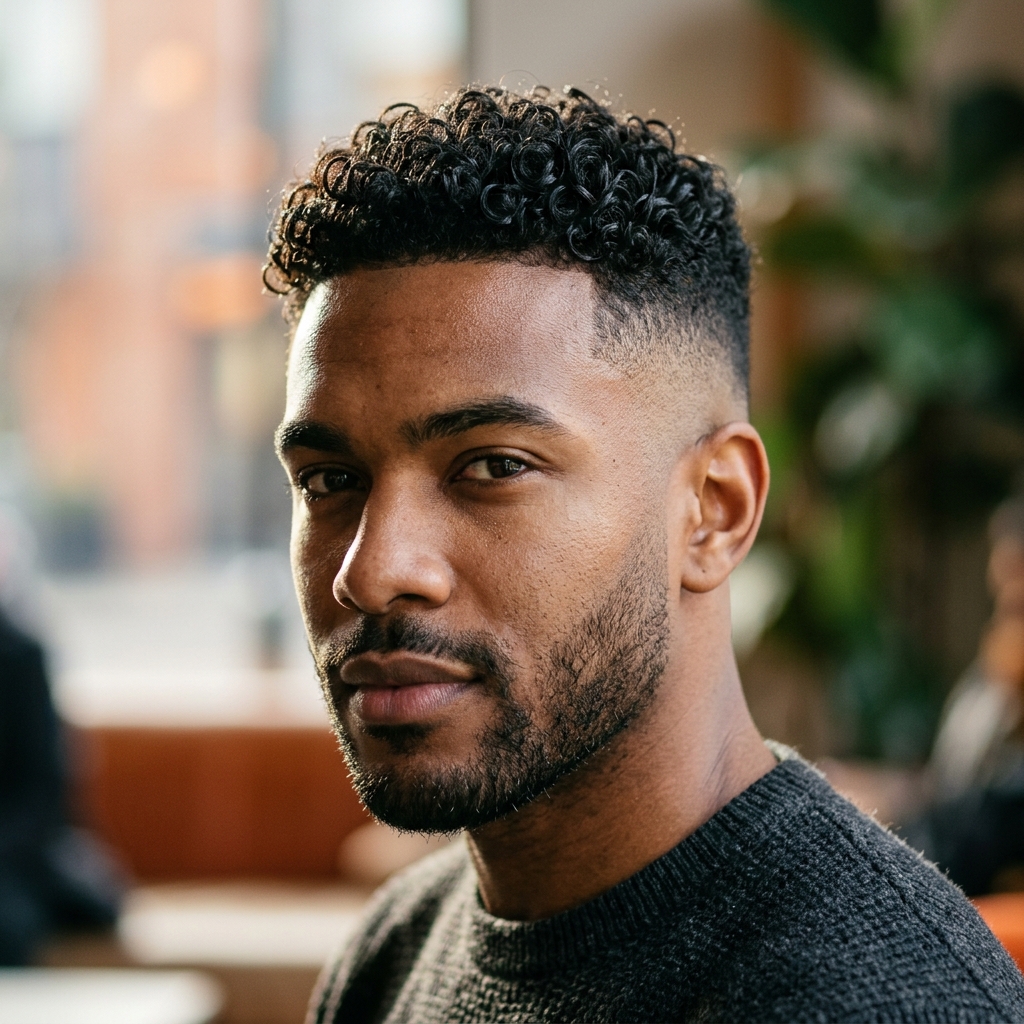
Short on the sides (skin fade or very close taper), with a contained curly crop on top. The top section typically sits 1–2 inches, with the curls allowed to form naturally. This is the most universally flattering curly cut for men, and for good reason—the fade provides structure while the curls deliver texture.
Product: a small amount of light curl cream or custard applied to damp hair, then air-dried. Do not touch it while drying.
the defined curl and taper
Slightly longer on top (2–3 inches) with a medium taper at the sides. This gives the curls more room to form and creates a fuller overall shape. Particularly good for men with looser curls (type 2–3A) where the length adds visible wave definition.
the longer curly quiff
For men with longer curly hair (3–4 inches on top), a quiff shape—where the front section is lifted and the rest settles behind—can work beautifully with natural curl. Requires slightly firmer hold than the cropped styles. A medium-hold curl defining cream or a light gel works.

the natural afro
A rounded afro requires minimal cutting—primarily shaping at the edges and perimeter rather than reducing length. The shape is maintained with a pick comb, consistent moisturizing, and occasional trims to maintain the round perimeter.
For men with 4A–4C hair, this is a genuinely low-effort option compared to cuts that require significant product work or heat styling.
the tapered afro
A medium-length afro (3–5 inches on top) with a tapered fade at the sides. The taper brings contrast to the full natural shape above while keeping the sides clean and defined. This is a popular choice in professional and creative environments—it reads as groomed without artificially smoothing the natural texture.
the curly undercut
Undercut sides (shaved or very short, with no gradual taper) beneath a full section of curls on top. The contrast is extreme and deliberate—this is a committed choice. Best for men with defined, consistent curl patterns (type 3B–3C) where the curls on top are visually cohesive.
the curly man bun
For men with enough length (4+ inches minimum), gathering curls into a bun is one of the most practical low-maintenance options. The bun keeps hair off the face and neck, requires no daily styling, and actually looks better in many cases than trying to style long curly hair.
The bun should sit naturally at whatever height the hair gathers comfortably. Don't force it—strained hair ties damage hair.
by face shape
Round face: Add height. A curly fade with the curls styled upward (a loose afro-quiff shape) elongates the face. Avoid cuts with width at the sides without height on top.
Square face: A mid-length curly crop with a mid or low taper softens the jaw. Avoid very tight, close cuts that emphasize angularity.
Oval face: The most flexible face shape. Nearly every curly cut works. This is where you can experiment most freely.
Long face: Width is beneficial. A fuller afro or a cut with volume at the sides balances vertical length. Avoid adding height.
Heart-shaped face: Avoid excessive volume at the top—it exaggerates the forehead. A mid-length crop with contained top volume and slightly more fullness through the sides works best.
the product reality for curly men
Curly hair needs moisture more than anything else. Curl definition is a secondary concern. Most men with curly hair use too little product and product that doesn't address moisture.
The basics that work:
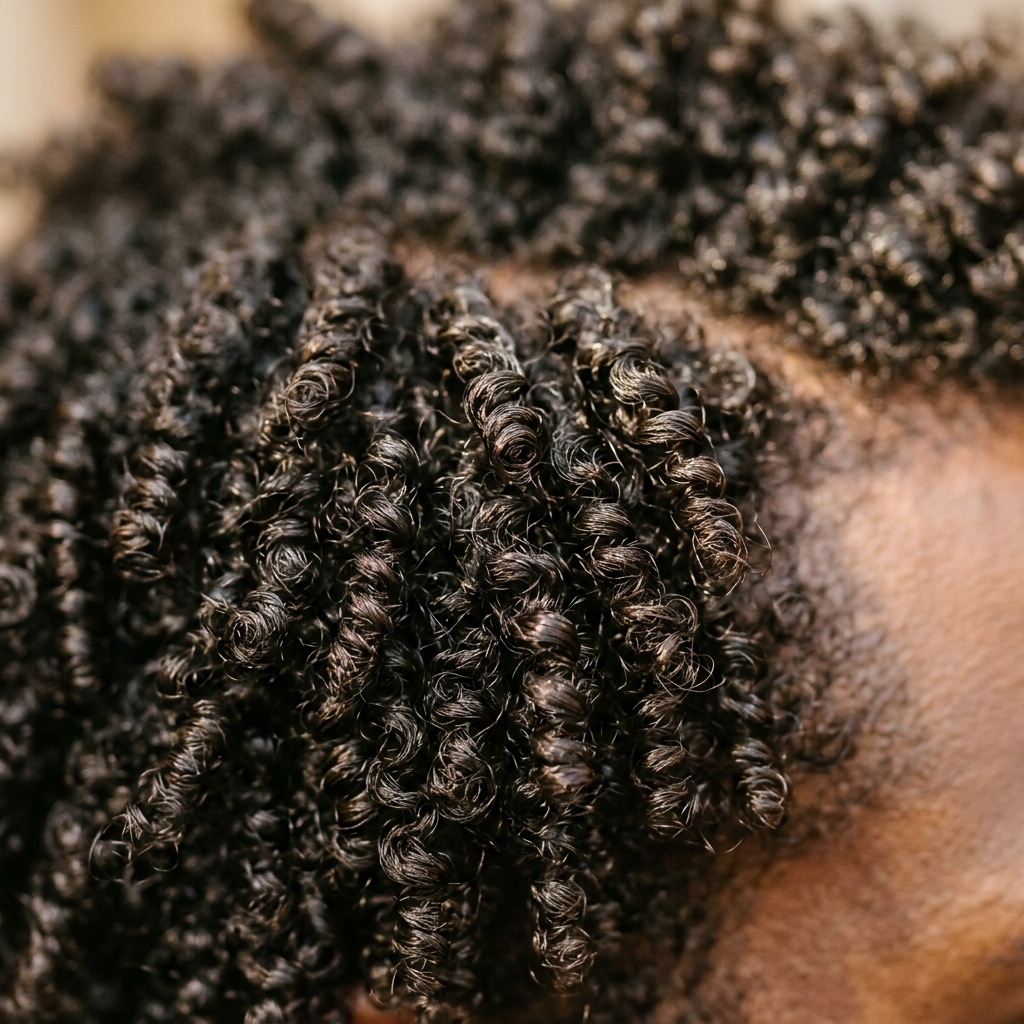
Curl cream: The fundamental curly hair product. A medium-weight cream applied to soaking-wet hair (at least 90% wet), worked through section by section with fingers. Brands like DevaCurl, Kinky Curly, or Pattern Beauty work well. Apply generously then don't touch it until completely dry.
Curl custard (gel): A light gel or custard on top of curl cream provides hold and definition. The "gel cast" (the crunchy feeling when dry) is then broken by scrunching the hair with hands or a microfiber towel. The curl definition beneath the cast remains.
Leave-in conditioner: Lighter than cream, applied to wet hair as the first step. Best for type 2–3B hair. Type 4 hair typically needs something heavier.
Hair oil: Seals moisture into the hair shaft and reduces frizz. Applied last, as a very small amount over the finished style. Argan oil, jojoba, or castor oil (for denser hair).
The routine that works:
- Wash with sulfate-free shampoo (sulfates strip moisture aggressively).
- Condition for at least 2 minutes.
- Apply leave-in or curl cream to wet hair in sections.
- Add custard or gel on top.
- Diffuse on low heat or air dry completely.
- Don't touch it until dry.
The "do not touch" instruction is the one most men ignore. Touching curly hair while it dries disrupts the curl formation and creates frizz.
common mistakes
Using regular shampoo daily. Curly hair dries out easily. Limit shampoo to 1–2 times per week. On other days, rinse with water or co-wash (conditioner wash).
Towel rubbing. A terry cloth towel rubbed against curly hair creates instant frizz by disrupting the cuticle and curl pattern. Use a microfiber towel or an old T-shirt by blotting or "plopping" (wrapping hair in the towel while tipping forward and letting it sit for 10–15 minutes).
Brushing dry. Never brush curly hair when dry unless you want a frizzy, structured-free mass. Detangle only when wet and conditioned.
Heat styling without protection. If using a blow dryer or diffuser, always apply a heat protection product first. Curly hair is more susceptible to heat damage than straight hair.
finding a barber who understands curly hair
This is genuinely difficult. Most barbers are trained primarily on straight hair cutting techniques. When curly hair clients come in, they often receive a straight-hair cut that produces unpredictable results because the barber isn't accounting for curl shrinkage or curl direction.
Look for:
- Barbers who specifically mention curly hair on their profiles or websites
- Photos of curly results in their portfolio
- A barber who asks about your curl pattern before starting
- Someone willing to cut dry or explain how they'll account for shrinkage
The men with genuinely great curly hair didn't get there by fighting their texture. They got there by learning enough about it to stop making the decisions that work against it. The cut, the product routine, and the barber selection are all part of the same system. Get all three right and curly hair becomes genuinely low-effort.