10 rules for stylish summer dressing: A practical guide to looking sharp when it's hot
Summer dressing sits in an uncomfortable middle ground. You're sweating through your shirt by noon, yet you still want to look intentional rather than like you grabbed whatever was clean off the floor. The problem is that most summer style advice treats heat like an excuse to abandon taste entirely. It's not.
I've spent the last fifteen years watching men solve this problem in different ways—some successfully, most not. The pattern is clear: the guys who look genuinely good in summer aren't following Instagram trends or buying expensive linen shirts they'll ruin by August. They're following a set of practical rules that actually account for how bodies work when temperatures spike.
Here are the ten rules that separate the sharp from the sloppy.
rule 1: choose fabrics that breathe, not fabrics that look like they breathe
This is where most men fail immediately. They buy a "summer" shirt made from a cotton-linen blend that photographs beautifully but clings to their torso like a second skin the moment humidity hits 60 percent.
The hierarchy matters:
100% linen works best if you accept the wrinkles as part of the aesthetic. Linen breathes aggressively—it pulls moisture away from skin and dries fast. The trade-off is that it wrinkles within minutes of sitting down. If you're okay with that (and frankly, you should be), linen is your best option for pure comfort.
High-quality cotton (140+ thread count, not the dense stuff) performs better than most people realize. It's not as breathable as linen, but it doesn't wrinkle as badly and it holds its shape through a full day. Look for fabrics labeled as "oxford cloth" or "poplin" rather than the thin, plasticky "summer cotton" blends.
Cotton-linen blends (60/40 or 70/30 cotton to linen) are the compromise. They're more forgiving than pure linen but still breathe reasonably well. The problem is that manufacturers often skimp on quality here, so you end up with something that's neither breathable nor durable.
Avoid: anything synthetic marketed as "moisture-wicking." These fabrics work for athletic wear because they're designed for sweat. For casual summer dressing, they feel clammy and often smell worse after a few hours because they trap bacteria.
rule 2: understand fit differently in heat
A well-fitted winter shirt has some structure. The fabric sits close enough to show your shape but loose enough to move. In summer, this same fit becomes a problem because fabric clinging to your body amplifies sweat marks and discomfort.
Summer fit should be slightly more relaxed—think 0.5 to 1 inch of additional ease through the chest and torso compared to your winter baseline. This isn't "oversized." It's the difference between a shirt that hugs your ribs and one that sits neutrally against your body.
Sleeve length matters more in summer than winter. Aim for sleeves that hit right at your wrist bone, not halfway down your hand. Longer sleeves trap heat; shorter sleeves look unfinished. This specific measurement is why off-the-rack shirts often fail—most manufacturers cut sleeves for men with longer proportions than average.
Length should be long enough to tuck if you want to, but short enough that untucked it doesn't extend past your hip. Aim for roughly 2-3 inches of drop from armpit to hem.
rule 3: color selection is about context, not personal preference
This is the rule that separates men who understand summer dressing from men who just wear light colors.
White, cream, and pale gray are technical choices, not aesthetic ones. They reflect heat. If you're spending time outside, this matters. Your body temperature will be measurably lower in a white shirt than a dark gray one, which means less sweating, which means you look fresher longer.
That said, white shows everything. Sweat, deodorant stains, food. If you're not willing to deal with that, move to cream or very pale gray.
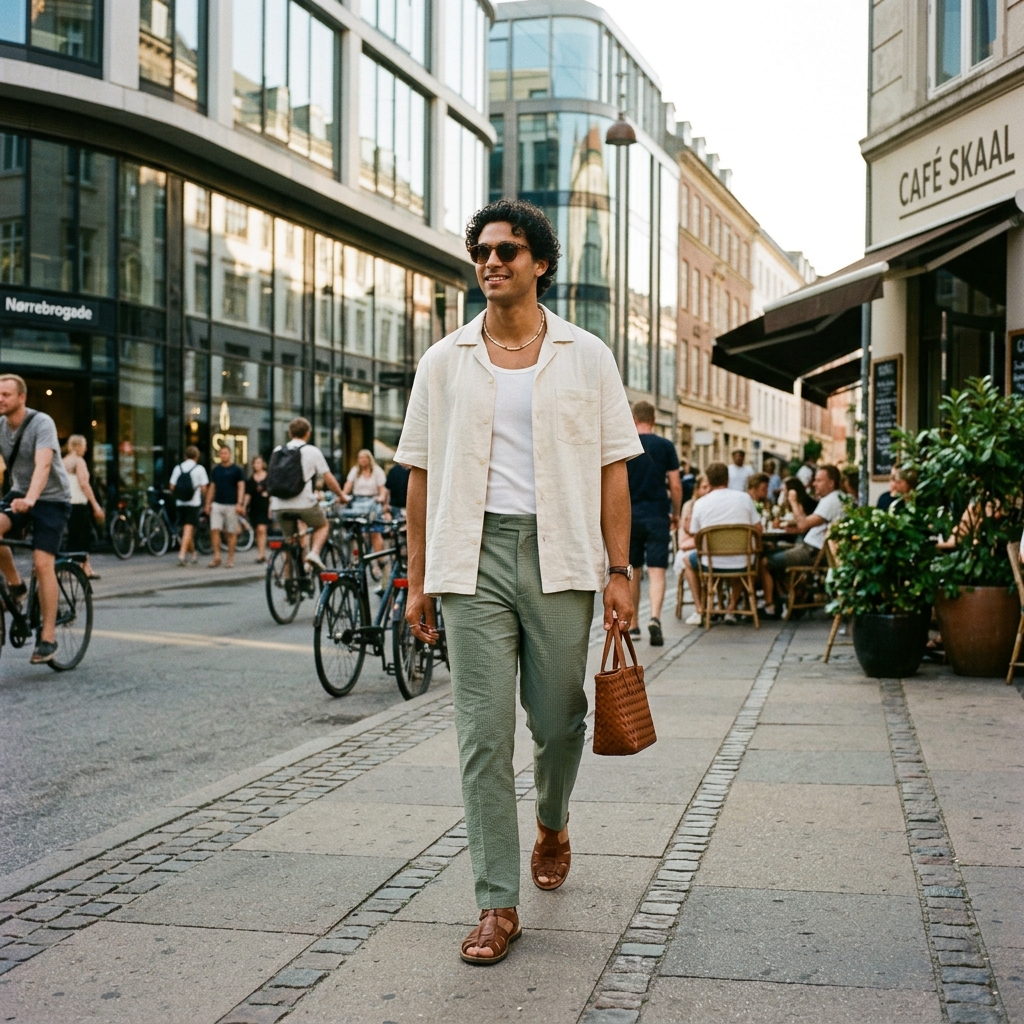
Soft pastels (pale blue, pale green, very light pink) work well because they still reflect heat while being more forgiving than white. The key is "pale"—anything with real saturation will absorb heat.
Navy, charcoal, and black absorb heat and should be reserved for evening wear or air-conditioned environments. I know this contradicts the "navy is versatile" advice you've heard. Navy is versatile in winter. In summer, it's a liability.
Pattern helps hide sweat and stains. Small-scale prints, subtle stripes, and micro-patterns are your friends. Large graphic prints and bold colors read as casual in a way that limits your options.
rule 4: shorts require the same attention as trousers
Most men treat shorts as an excuse to stop caring. They buy whatever's on sale, wear them at an awkward length, and wonder why they look sloppy.
Shorts should hit just above the knee—not at the knee, not two inches above, but right at that transition point. This is roughly a 9-10 inch inseam for most men, though this varies by torso length.
Fabric weight matters. Lightweight shorts feel good but often look baggy and shapeless. Medium-weight cotton twill or a cotton-linen blend holds structure better and looks intentional. Chino shorts in particular should have enough weight that they don't cling to your legs when you sit.
Fit through the thigh should be straight or slightly tapered, not loose. A loose short makes your legs look shorter and your body look wider. A slightly tapered short (about 0.5 inches narrower at the knee than at the hip) creates proportion.
Color rules are the same as shirts: light colors for heat reflection, patterns for practicality. Khaki, light gray, white, and pale blue are your foundation. Navy works if you're pairing it with a light shirt. Avoid black shorts unless you're specifically dressing for evening.
rule 5: shoes change the entire equation
This is where summer dressing either works or falls apart.
Heavy leather shoes generate heat and look wrong with shorts and light fabrics. Your brain knows this even if you can't articulate why.
White leather sneakers are the default for a reason—they're breathable, they look intentional, and they work with almost everything. The catch is that they need to be genuinely white, genuinely clean, and genuinely simple. A chunky, complex sneaker undermines everything else you've done.
Suede loafers in tan or brown work well with chino shorts and linen shirts. They're breathable, they look polished, and they're forgiving about minor stains. The downside is that suede requires maintenance—brushing, occasional cleaning, protection spray.
Sandals are legitimate if they're structured. I'm talking about leather sandals with defined footbeds, not flip-flops or slides. Brands like Birkenstock and Visvim make sandals that look intentional rather than like you grabbed them because your feet were hot.
Boat shoes and canvas shoes split the difference. They're breathable, they look casual but not sloppy, and they pair well with shorts and lightweight trousers.
Avoid: athletic shoes (unless you're actually exercising), anything with visible mesh or neon accents, and shoes that look like they belong at the beach.
rule 6: layering in summer is about strategy, not warmth
You can't wear a jacket in 95-degree heat. But you can wear a lightweight overshirt, and this changes everything about your options.
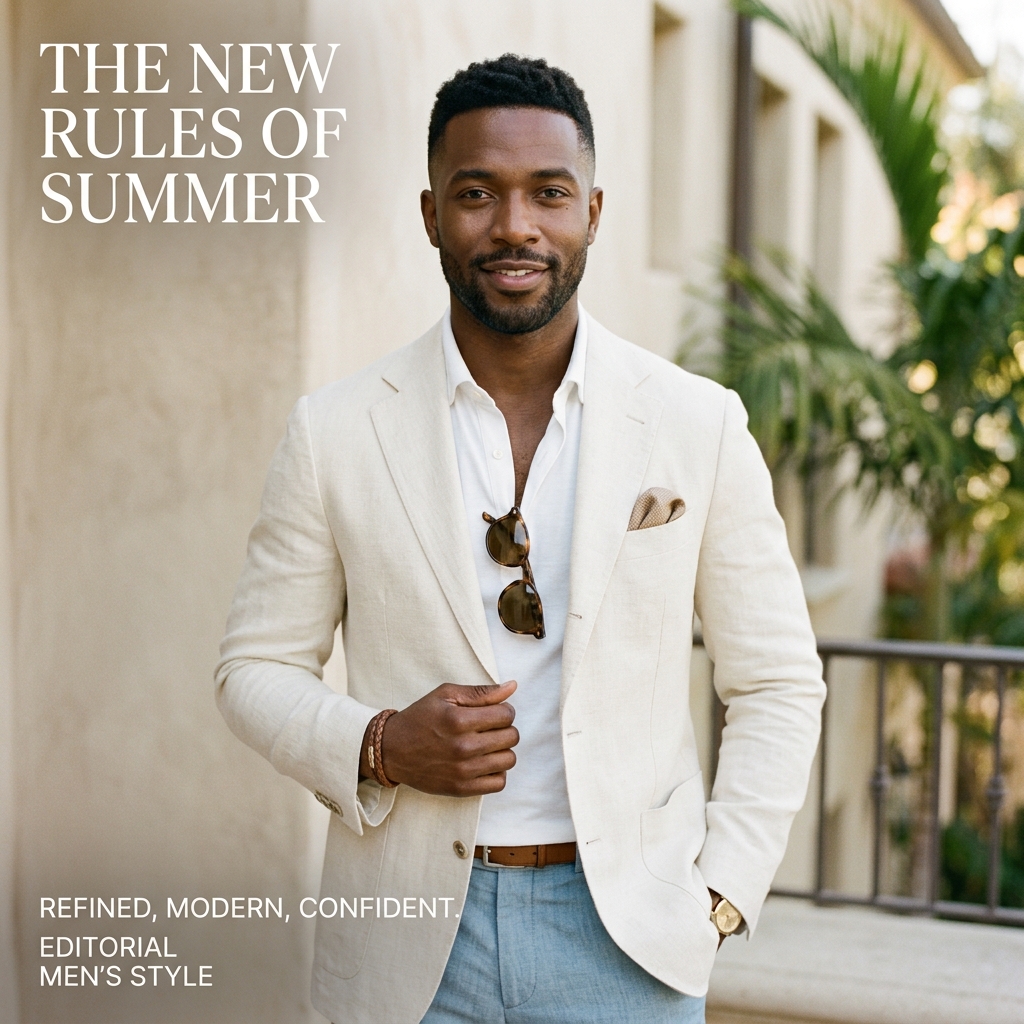
A linen or cotton overshirt in white, cream, or pale gray serves multiple purposes: it protects your skin from sun exposure, it adds visual structure to your outfit, and it gives you something to do with your arms when you're sitting in an air-conditioned space.
The fit should be noticeably looser than your base layer—think camp shirt proportions. Sleeves should roll easily and sit well when pushed up. This isn't a fitted garment; it's a functional layer.
Unbutton it over a t-shirt or a lightweight shirt. Wear it open. Let air flow through. The moment you button it up, you've negated the whole point.
A lightweight cardigan works similarly, though it reads more formal. Reserve it for evening or specific occasions.
rule 7: understand the role of texture
Smooth fabrics (silk, polished cotton) reflect light and can look slippery in summer. Textured fabrics (linen, oxford cloth, seersucker) diffuse light and look more substantial.
This is why seersucker—that puckered cotton fabric with built-in texture—actually works in summer despite looking decorative. The puckered surface creates air pockets that improve breathability while the texture prevents the fabric from clinging.
Linen's wrinkles serve a similar function. They're not a flaw; they're part of how the fabric works.
Look for fabrics with visible texture. They'll look better, feel better, and actually perform better in heat.
rule 8: maintenance becomes non-negotiable
Summer heat accelerates everything. Sweat breaks down fibers faster. Sun exposure fades colors. Humidity encourages mildew and odor.
Wash linen and cotton items after each wear. Don't let them sit in a hamper. Sweat dries and sets into fabric, becoming harder to remove.
Use cold water for colors, warm water for whites. Hang dry whenever possible—the dryer's heat degrades summer fabrics faster than you'd expect.
For white shirts, consider a whitening booster or oxygen bleach (not chlorine bleach, which yellows linen). White fabrics genuinely need maintenance to stay white.
Deodorant stains are a separate problem. Use an antiperspirant that actually works rather than fighting the stains after they set. If you do get stains, soak the area in white vinegar before washing.
Store summer clothes in breathable containers, not plastic bins. Moisture trapped in plastic creates mildew.
rule 9: grooming standards shift with the season
Summer heat changes how your hair and skin look. Your usual haircut might feel too heavy.
Consider a slightly shorter cut in summer—not drastically different, but maybe 0.25 inches shorter overall. This reduces the weight of hair on your scalp and allows better air circulation. A fade or undercut works better in summer than a full head of longer hair.
Styling products matter. Heavy pomades and creams become greasy in heat. Switch to a lighter hold product—a cream pomade or a matte paste designed for warm weather. These provide enough hold without the weight.
Facial hair requires more maintenance in summer. Sweat and heat make beards itch and smell worse. If you keep a beard, trim it shorter and wash it separately from your hair using a beard-specific cleanser.
Skin care becomes essential. Heat and sun exposure increase oil production. Use a lightweight, non-comedogenic moisturizer and apply sunscreen daily—not just when you're at the beach, but every day.
rule 10: occasion dictates the entire approach
Summer dressing changes based on context. What works for casual weekend errands doesn't work for a business lunch, and neither works for evening.
Casual daytime: light shirt or t-shirt, shorts or lightweight trousers, simple shoes, minimal accessories.
Business casual: lightweight chino trousers or linen trousers, pale shirt in cotton or cotton-linen blend, loafers or boat shoes, minimal jewelry.
Evening: lightweight trousers in a neutral color, a structured shirt (linen wrinkles are acceptable here), leather shoes, optional lightweight overshirt.
The common thread is intentionality. You're making choices based on function and context, not just grabbing whatever's light.
the practical reality
Summer dressing isn't complicated once you stop treating heat as an excuse. It's about understanding how fabrics work, how fit changes in warmth, and how maintenance prevents everything from falling apart by July.
Start with the basics: two or three lightweight shirts in white, cream, and pale blue. A pair of chino shorts. White sneakers. Build from there based on your actual life and the occasions you actually dress for.
The guys who look genuinely good in summer aren't following trends. They're following these rules consistently, which means they look the same in July as they do in June—sharp, intentional, and comfortable. That's the entire point.