25 Best Eyebrow Piercing Ideas for Men: A Complete Style & Maintenance Guide
Eyebrow piercings on men have moved beyond shock value into legitimate style territory. What started as a counterculture statement in the 1990s has evolved into a nuanced grooming choice that works across different aesthetics—from minimalist professionals to full-blown alternative looks. The key difference between a thoughtful eyebrow piercing and a regrettable one comes down to placement, jewelry selection, and maintenance. I've spent years watching men navigate this decision, and the results range from genuinely striking to genuinely problematic.
Understanding eyebrow piercing placement and anatomy
Before we talk about specific styles, you need to understand where these piercings actually sit on your face. The standard eyebrow piercing (called a vertical hood piercing in technical terms) goes through the skin above the eyebrow, typically at a slight angle. The placement matters enormously because it interacts with your natural brow shape, face width, and forehead structure.
Most piercers work within a 2-3 inch zone along the brow line. Placing the piercing too far toward the inner brow (near the bridge) creates an unbalanced look and increases rejection risk because that skin is thinner and moves more. Placing it too far toward the temple makes it disappear visually. The sweet spot for most men is roughly over the arch of the natural eyebrow or slightly toward the outer third.
Your face shape matters here. Men with wider faces and broader foreheads can handle piercings placed slightly more toward the outer brow. Narrower face shapes work better with placements closer to center. A good piercer will assess this before marking you up.
The 25 best eyebrow piercing styles for men
1. Single vertical placement with surgical steel
The classic choice. A single 16-gauge or 14-gauge vertical piercing with a basic surgical steel barbell. This works on almost every face shape and reads as intentional without being aggressive. The jewelry sits flush against the skin, minimal visual weight.
2. Anodized titanium with matte black finish
Surgical steel can look cheap. Anodized titanium in matte black or gunmetal creates visual sophistication. The finish absorbs light rather than reflecting it, which makes the piercing feel more integrated into your appearance rather than sitting on top of it.
3. Double vertical piercings (bilateral)
One piercing on each eyebrow. This requires facial symmetry to work—if your brows are naturally uneven, this amplifies that problem. Works exceptionally well on men with strong, symmetrical features. Requires commitment to healing two sites simultaneously.
4. Single piercing with minimalist gold barbell
14K gold or gold-plated titanium creates a warmer aesthetic. Gold piercings read differently than silver—slightly more refined, less punk. Use actual gold (not plating that will wear off in months). This works particularly well for men in professional environments who want subtle edge.
5. Horizontal surface piercing
Runs horizontally across the brow rather than vertically. Rarer, more striking, higher rejection rate. Only attempt this with an experienced piercer. The jewelry sits differently—typically a small surface bar rather than a traditional barbell. High-risk aesthetic choice.
6. Vertical with internal threading jewelry
Standard barbells have threading on the ends (external threading), which means the threads sit against your skin during healing. Internal threading keeps threads inside the jewelry. This reduces irritation during the critical healing phase. Worth the extra cost for initial jewelry.
7. Offset double piercings
Two vertical piercings on the same brow, staggered vertically rather than horizontally. Creates visual rhythm. Requires precise placement to avoid looking accidental. Best suited for men with larger brow areas.
8. Single piercing with opal or stone setting
Jewelry with a small opal, diamond, or gemstone top. Most men should avoid this—it reads feminine in most contexts. Exception: very minimal settings (small diamond, understated mounting) can work in specific style contexts.
9. Rook-style brow piercing
A curved barbell instead of straight. Creates a subtle arch that follows your natural brow curve. Requires precise angle during piercing. Looks more organic than a straight bar on some face shapes.
10. Vertical with captive bead ring
Captive bead rings have a small bead held between the ends of the ring. Unusual for eyebrow piercings but creates visual interest. Harder to clean during healing. Not recommended for first piercings.
11. Single piercing, slightly angled inward
Rather than perfectly vertical, angled slightly toward the center of your face (maybe 10-15 degrees). Follows the natural direction of hair growth. Looks less clinical than a perfectly vertical piercing.
12. Stacked piercings with different gauges
One 16-gauge and one 14-gauge piercing, close together. Creates visual depth. Requires very precise spacing. Only works on larger brow areas.
13. Vertical with horseshoe ring
A U-shaped ring worn with the opening pointing down. Unconventional for eyebrow piercings but creates bold visual statement. High rejection risk because of the ring's shape and movement.
14. Single piercing with blackline design barbell
Jewelry with a thin black line or stripe running along the bar. Subtle detail that adds visual interest without being obvious.
15. Vertical with pearl or mother-of-pearl top
Understated luxury option. Pearl catches light differently than metal. Works for men who want something that reads as refined rather than edgy.
16. Asymmetrical double piercings
Two piercings on one brow at different heights, creating intentional imbalance. Requires confidence and strong facial features. Works well with alternative or artistic aesthetics.
17. Vertical with rose gold jewelry
Rose gold sits between warm and cool tones. Works particularly well on men with warm skin undertones. Less common than silver or yellow gold, which makes it feel more distinctive.
18. Single piercing with minimal shield design
A small shield-shaped top rather than a simple ball. Adds geometry without bulk. Works well for men who want something beyond basic but not ornate.
19. Vertical with colored anodized titanium
Anodized titanium comes in blues, purples, golds, and reds. Subtle color works better than bright. A deep blue or burgundy can create interesting visual effect without screaming "piercing."
20. Double piercings with matching jewelry
Both brows pierced with identical jewelry in identical placement. Creates symmetrical, intentional look. Requires perfectly balanced facial features or it looks off.
21. Vertical with threadless/push-fit jewelry
Jewelry that clicks into place rather than screwing. Easier to change, less irritation during healing. Slightly more expensive but worth it for comfort.
22. Single piercing positioned slightly higher
Rather than directly over the arch, placed slightly above the natural brow line. Creates a lifted, almost quizzical expression. Works on specific face shapes.
23. Vertical with mixed metal barbell
Top in one metal (gold), post in another (titanium), bottom in a third. Requires careful coordination to avoid looking chaotic. Best left to men with strong style sense.
24. Rook-style with larger gauge
14-gauge or even 12-gauge curved barbell. Creates more visual presence. Requires larger initial piercing, longer healing time. Statement-making choice.
25. Single piercing with matte black titanium and minimal design
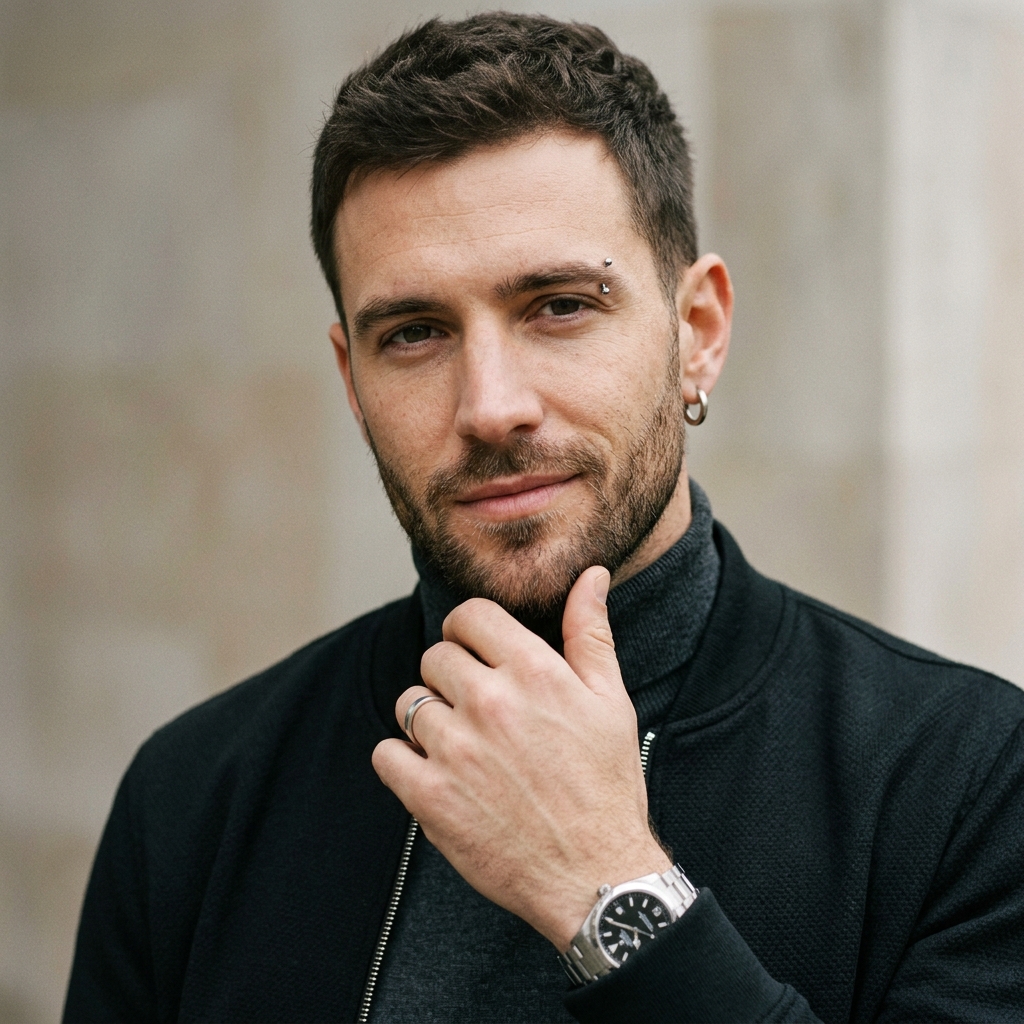
The refined version of eyebrow piercing. Matte finish, simple barbell, proper placement. Works across more contexts than any other option. This is what I'd recommend if you're unsure.
Healing timeline and realistic expectations
Most eyebrow piercings take 6-12 weeks to heal completely. The initial healing (when the piercing stops oozing and crusting) happens in 2-3 weeks. Full internal healing takes much longer.
During the first week, expect swelling. Your eyebrow area will puff slightly. This is normal. Wear the initial jewelry for the full healing period—changing it early causes problems. Most piercers use either surgical steel or titanium for initial jewelry. Titanium is better (less reactive, lower infection risk), but costs slightly more.
Clean with saline solution twice daily. Not salt water you make yourself—actual sterile saline solution from a pharmacy. Soak a clean paper towel, hold it against the piercing for 5 minutes. That's it. No touching, no twisting the jewelry, no aggressive cleaning. The worst thing men do is over-clean their piercings.
Avoid sleeping on that side for the first month. Pressure and friction cause problems. Your pillow will irritate the piercing constantly if you sleep on it.
Jewelry materials and why they matter
Surgical steel: Cheap, durable, but contains nickel. If you have any nickel sensitivity, this causes problems. Many people don't know they're sensitive until they get a piercing.
Titanium: Better choice. Hypoallergenic, lightweight, won't corrode. Costs 20-40% more than steel but worth it. Implant-grade titanium (ASTM F136) is the standard.
Gold: 14K or higher only. Anything less corrodes and causes irritation. Real gold costs significantly more but looks better and lasts longer. White gold, yellow gold, and rose gold all work—choose based on your skin tone.
Avoid: Acrylic, wood, bone, or cheap plated jewelry. These harbor bacteria, corrode, and often cause infections or rejection.
Rejection and when to remove the piercing
Eyebrow piercings reject more often than ear piercings because the skin is thinner and moves more. Signs of rejection: the jewelry slowly moves toward the surface, the piercing becomes red and irritated, or you see the bar starting to show through the skin.
If rejection starts, remove the jewelry immediately. Waiting makes scarring worse. You can re-pierce after 3-4 months once the skin fully heals.
Rejection doesn't mean you did anything wrong—sometimes your body just doesn't accept the piercing. This happens to maybe 15-20% of men who get eyebrow piercings.
Styling considerations and professional contexts
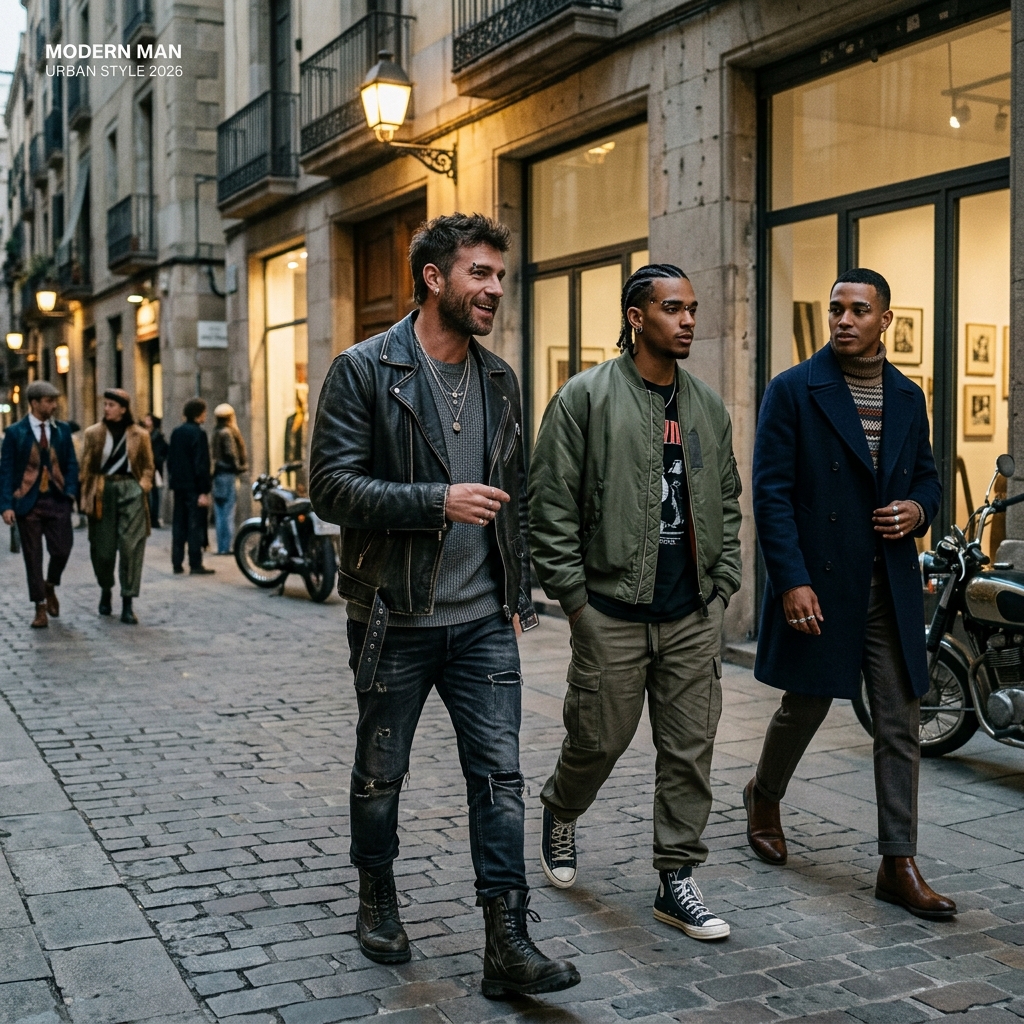
An eyebrow piercing changes how people read your face. It draws attention to that area. In professional environments, this matters. A subtle matte black titanium piercing reads differently than a shiny steel one.
If you work in finance, law, or corporate environments, consider whether this fits your industry culture. Some workplaces genuinely don't care. Others do. Know your context before committing.
The piercing works better with certain grooming styles. Keep your eyebrows groomed—clean lines, shaped but not over-plucked. A piercing on an unkempt brow looks accidental. A piercing on a well-maintained brow looks intentional.
Facial hair changes how the piercing reads. Heavy beards draw attention downward, making the eyebrow piercing less prominent. Clean-shaven faces make the piercing more obvious. This is worth considering based on your typical grooming routine.
Finding a quality piercer
This matters more than you think. A bad piercer creates problems that take years to resolve. Look for piercers who:
- Have a portfolio of eyebrow piercings (not just ear piercings)
- Use internal threading or threadless jewelry for initial piercings
- Mark the placement and let you approve before piercing
- Use a piercing gun (bad) or a needle (good)—always needle
- Provide written aftercare instructions
- Charge $40-80 for the piercing (less suggests corners being cut)
Ask about their infection rate and rejection rate. A good piercer knows these numbers.
Changing jewelry and long-term care
After full healing (12+ weeks), you can change jewelry. Do this carefully. Use clean hands, work in good lighting, and don't force anything. If it's stuck, apply saline solution and wait 10 minutes before trying again.
Once healed, the piercing is relatively low-maintenance. Clean occasionally with saline, avoid sleeping on it regularly, and watch for any signs of irritation.
The realistic assessment
Eyebrow piercings work. They're not for everyone, and they require actual commitment to healing and maintenance. The men I've seen pull them off successfully treat the piercing like any other grooming choice—thoughtful placement, quality jewelry, proper care.
If you're considering one, get it done by someone who knows what they're doing, choose jewelry that matches your aesthetic (probably matte black titanium if you're unsure), and commit to the cleaning routine for 12 weeks. After that, you'll know whether it was the right choice.