25 Men's Suit Ideas for Prom: Practical Styling, Fit Fundamentals, and What Actually Works
Prom suits have become genuinely complicated. You're facing pressure to look distinctive without looking like you're trying too hard, to honor tradition while appearing contemporary, and to spend money you may not have on something you'll wear once. I get it. The reality is that most prom suit advice online is either aggressively safe or aggressively trendy—rarely both.
This guide focuses on what actually works: suits that photograph well, feel comfortable for six hours of standing and dancing, and won't look dated in photos you'll revisit for decades.
understanding prom suit fundamentals before you buy
The first mistake most guys make is treating prom like a costume event. It's not. You're wearing a suit. The suit should fit your body, not fight it.
A proper suit jacket should have a button stance (the distance from the top button to the bottom button) that sits roughly in the middle of your torso. Your shoulders should be the widest part of the jacket—not hanging off them, not pinching them. The sleeve should end at your wrist bone with a quarter-inch of shirt cuff visible. The jacket length should cover your backside completely; measure from the back of your neck to the floor, then divide by two. That's roughly your jacket length.
Trousers matter more than most guys realize. They should break slightly on your shoe—meaning the fabric just kisses the top of your shoe without bunching. A half-break is standard and photographs well. The rise (the distance from the crotch seam to the waistband) should sit at your natural waist, not your hips. Most rental shops get this wrong, which is why rented suits look rented.
the five foundational suit silhouettes for prom
Single-breasted two-button suits remain the most functional choice. They're forgiving on different body types, they photograph cleanly, and they won't look dated in five years. This is 60% of what you should consider.
Single-breasted three-button suits work if you're tall and lean. They elongate your frame. They also require better posture—slouching in a three-button reads as sloppy rather than relaxed.
Double-breasted suits are having a moment, but they're genuinely difficult to wear at prom. They require specific body proportions and they read formal in a way that can feel costume-y at a high school event. Skip unless you're naturally broad-shouldered and tall.
Peak lapel suits (the lapel points upward toward your shoulders) are slightly dressier than notch lapels. They suit angular faces and taller frames. Notch lapels are more versatile.
Shawl collar dinner jackets work for black-tie optional prom events, but they're genuinely formal. Only choose this if your prom specifically calls for it or if you're comfortable being the most dressed-up person in the room.
25 specific suit combinations that work for prom
Classic foundations (wear these and you cannot fail)
Charcoal two-button with white dress shirt and navy tie: The safest choice exists for a reason. It works with every skin tone, every body type, and every date. Pair with black oxfords.
Navy two-button with light blue shirt and burgundy knit tie: Slightly warmer than charcoal, still completely traditional. The knit tie adds texture without being trendy.
Medium gray two-button with white shirt and black knit tie: Modern without trying. The black tie grounds it.
Black two-button with white shirt and silver tie: Formal but not stuffy if the tie is silk rather than satin.
Charcoal with white shirt and no tie, top button undone: Works only if your suit jacket is tailored perfectly. One unbuttoned shirt button, nothing more.
Subtle color plays (still safe, slightly more interesting)
Olive-gray suit with cream shirt and olive knit tie: Uncommon enough to be noticed, neutral enough to be wearable.
Warm gray suit with pale pink shirt and gray tie: The pink reads sophisticated, not costume-y, if the shirt is oxford cloth and the tie is matte.
Charcoal suit with pale yellow shirt and navy tie: Yellow photographs exceptionally well under prom lighting.
Navy suit with white shirt and forest green tie: The green is deep enough to feel intentional.
Medium gray with pale blue shirt and burgundy pocket square, no tie: Requires a perfectly fitted jacket. The pocket square does the work.
Textured fabrics (where you add visual interest without color)
Charcoal herringbone two-button with white shirt and navy tie: The weave adds dimension without being loud.
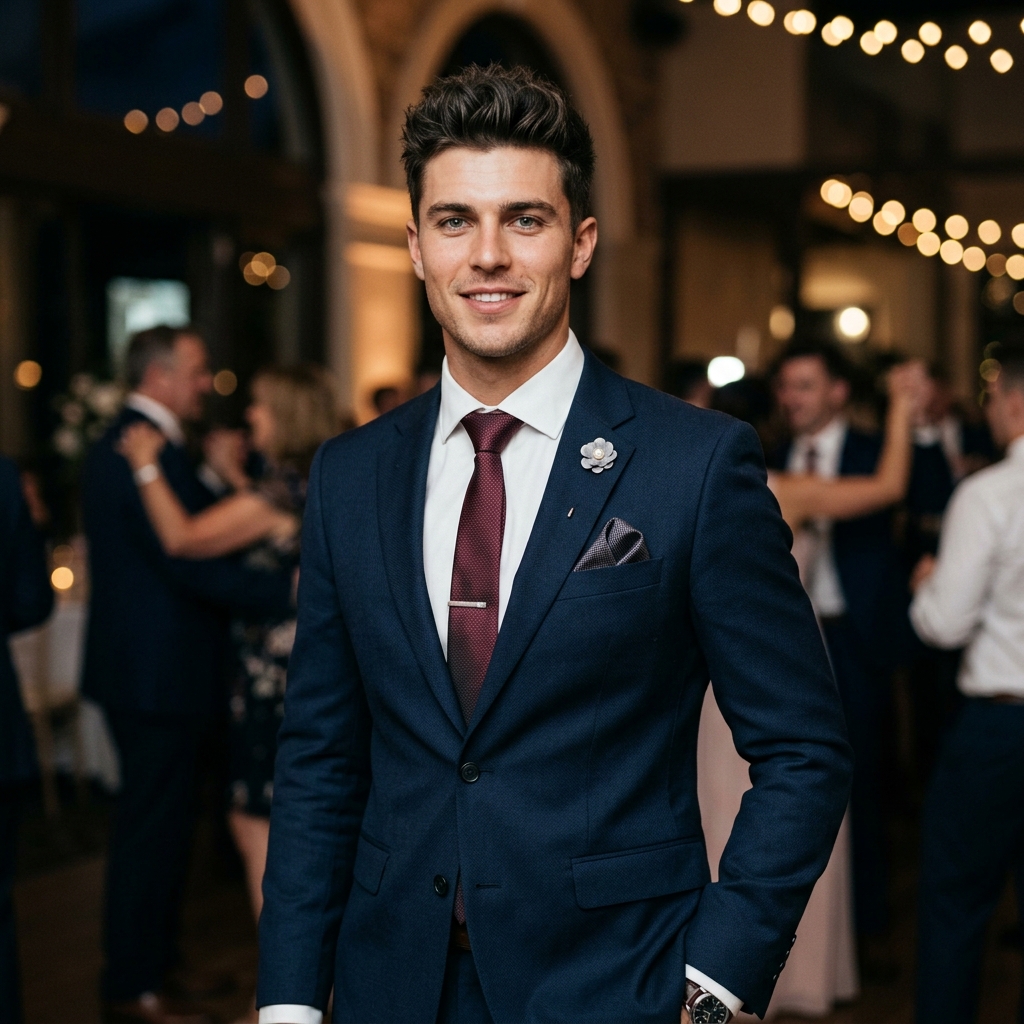
Navy hopsack weave suit with white shirt and burgundy tie: Hopsack has visible texture—it photographs well and feels substantial.
Charcoal with subtle pinstripe, white shirt, burgundy tie: The pinstripe should be thin enough to read as texture, not pattern.
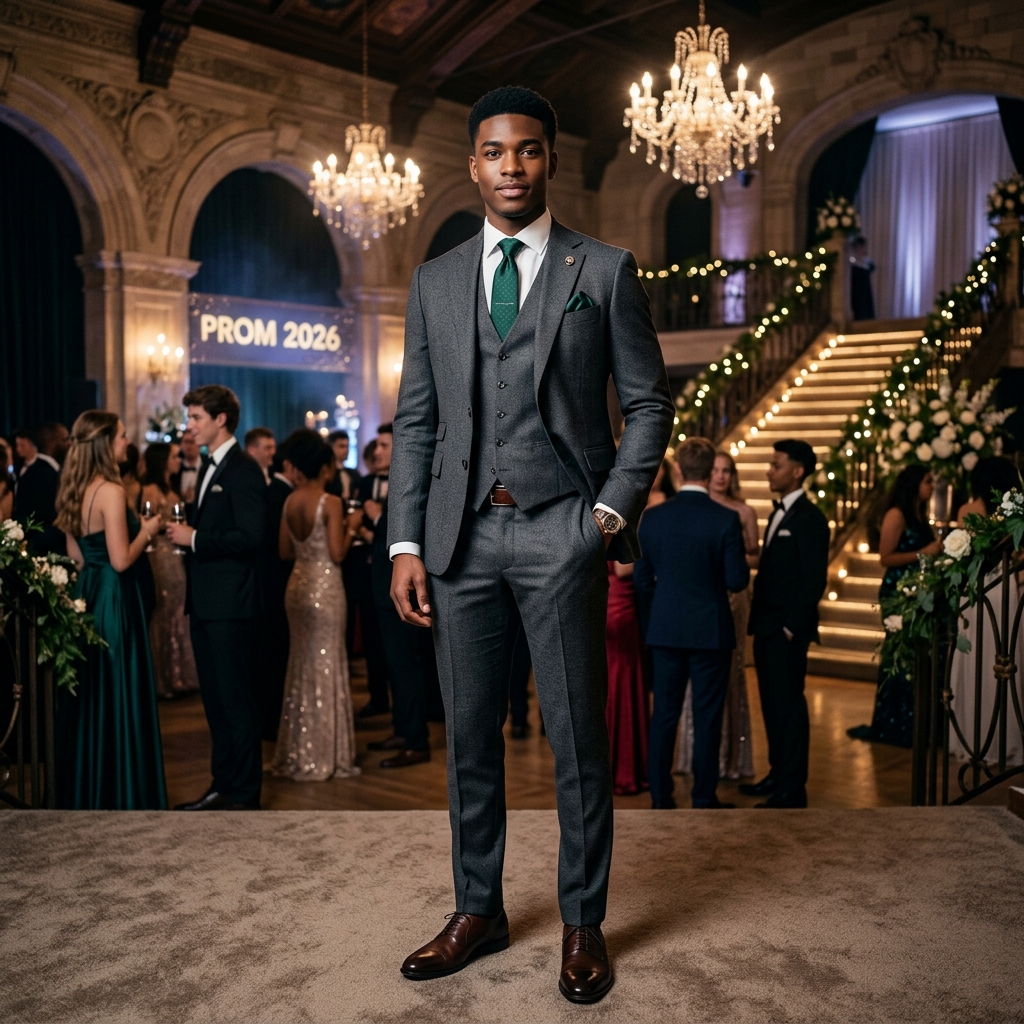
Gray tweed-look suit with cream shirt and brown knit tie: Requires confidence but works if you have the build for it.
Navy suit with subtle windowpane check (barely visible), white shirt, navy tie: The check should only be visible up close.
Slightly bolder moves (only if you're comfortable standing out)
Burgundy suit with white shirt and burgundy tie in different shade: Monochromatic dressing works if executed carefully. The tie should be slightly darker.
Slate blue suit with white shirt and knit tie in matching blue: Similar principle—tonal dressing feels intentional.
Charcoal suit with pale lavender shirt and gray tie: The lavender is unusual but photographs beautifully under warm lighting.
Navy suit with white shirt and printed silk tie (subtle geometric): The pattern should be small-scale and muted.
Tan suit with white shirt and brown knit tie: Requires warm skin tone and confidence. Photographs exceptionally well in natural light.
Unconventional but wearable options
Midnight blue suit with white shirt and white tie: High contrast, formal, slightly fashion-forward.
Charcoal suit with white shirt and knit tie in rust: Rust is warmer than burgundy, less common.
Navy suit with pale gray shirt and navy tie: Requires good tailoring to avoid looking monochromatic.
Charcoal suit with very pale blue shirt and silver-gray tie: Subtle but noticeably different.
Three-piece suit in charcoal with vest and white shirt, no tie: Only if you're tall and lean. The vest adds formality and visual interest.
fabric selection and what actually lasts
Most prom suits are either rental or budget purchase. Understand what you're getting.
Wool blends (80% wool, 20% polyester) are standard for good reason. They hold shape, they breathe, and they're durable. Pure wool is better but costs more and requires more care.
100% polyester suits are cheap for a reason. They shine under fluorescent light, they wrinkle easily, and they trap heat. Avoid if you can.
Cotton blends (usually 55% cotton, 45% polyester) are comfortable but wrinkle more easily. They work for summer prom.
Linen blends are genuinely uncomfortable for formal wear. They wrinkle dramatically and they read too casual.
For prom specifically, you want a suit that photographs well under mixed lighting (natural light for photos outside, fluorescent or LED inside). Wool and wool blends handle this best because they have natural sheen without looking shiny.
fit adjustments that matter for prom
If you're renting, request alterations. Most rental shops include basic hemming. Request:
- Trouser hemming to your actual break (usually 0.5 inches)
- Jacket sleeve shortening if needed (most rental jackets have long sleeves)
- Jacket tapering at the sides if the waist is loose
If you're buying, budget for tailoring. A basic alteration package (hemming trousers, shortening sleeves, minor waist adjustment) costs $60-$120. It's worth it.
The most common fit problem I see: jackets that are too large in the shoulders. This makes you look smaller and photographs poorly. If the shoulders don't fit, the suit doesn't fit. Don't buy it.
shirt and tie selection for your suit
Dress shirts should be 100% cotton or cotton-blend. Avoid 100% polyester—it doesn't breathe and it looks cheap.
White is always correct. Light blue works. Pale pink, pale yellow, and pale lavender work if you're confident. Anything darker or more saturated usually reads costume-y.
Collar styles: Spread collar is most versatile. Point collar is slightly more formal. Cutaway collar requires a specific tie knot and face shape. Stick with spread or point.
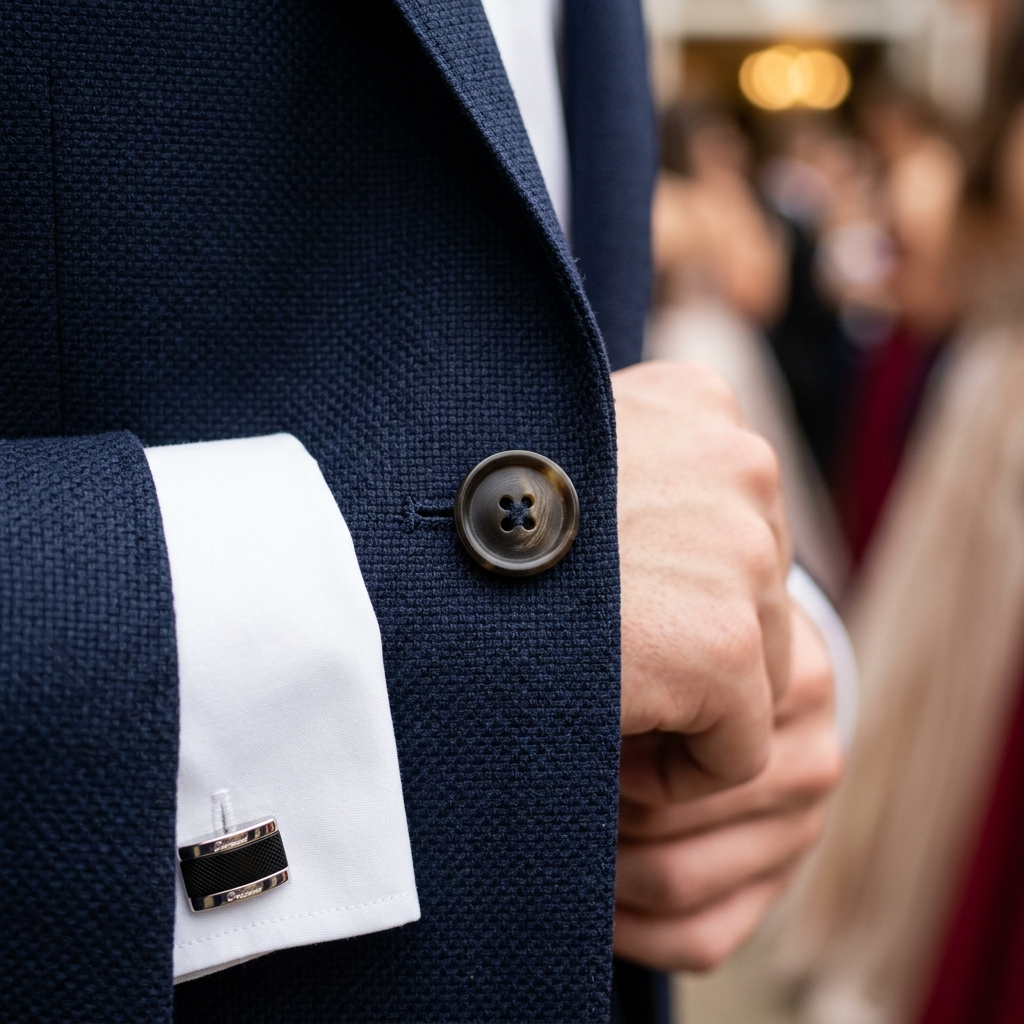
Cufflinks or buttons: French cuffs (cufflinks) are more formal. Button cuffs are standard. If you wear French cuffs, the cufflinks should be simple—silver or gold, not novelty.
Ties: Silk is standard. Knit ties are slightly less formal but add texture. Width should be 2.5 to 3.5 inches. Avoid anything wider or narrower.
Pocket squares: Optional. If you wear one, it should coordinate with your tie, not match it exactly. Fold it in a simple triangle or square—no elaborate folds.
shoes and accessories that complete the look
Black oxfords are correct with almost every prom suit. They're formal, they photograph well, and they're comfortable for dancing.
Brown oxfords work with tan, olive, or warm gray suits.
Burgundy or oxblood shoes work if you're confident, but black is safer.
Patent leather looks formal but can feel costume-y. Matte leather is better.
Socks should be dark (black, navy, or charcoal) and long enough that no leg shows when you sit. Avoid novelty socks—they're distracting in photos.
Pocket watch chain is optional and genuinely unnecessary. Skip it.
Boutonniere should be simple—a single white flower or a small spray. Coordinate with your date if possible, but don't overthink it.
maintenance and care for your prom suit
If you're renting, you don't need to worry about this. Return it clean.
If you're buying, understand that a suit is an investment:
- Dry cleaning after prom is standard. Don't wash it yourself.
- Hanging storage on a wooden hanger, not plastic. Plastic stretches the shoulders.
- Garment bag protects it from dust and light.
- Spot cleaning for minor stains before dry cleaning.
- Pressing before each wear. Home iron on low heat or professional pressing.
A well-maintained suit lasts years. You might wear it to weddings, job interviews, or formal dinners. It's worth the care.
the practical reality of prom suit shopping
You have three options: rental, budget purchase ($150-$300), or investment purchase ($400+).
Rental makes sense if you're 17 and growing. You'll wear it once. Rental shops handle cleaning. The downside: limited customization, fit is often compromised, and you have zero ownership.
Budget purchase makes sense if you want to own it but don't want to spend significantly. You'll find decent suits at department stores, online retailers, and discount menswear shops. Expect to spend $50-$100 on tailoring.
Investment purchase makes sense if you plan to wear it multiple times. A $500 suit with $100 in tailoring is a $600 investment in something you'll wear for years.
For prom specifically, I recommend rental if your school is formal and you won't wear a suit again soon. Buy if you're already thinking about future formal events.
final thoughts on standing out without looking ridiculous
The best prom suit is the one that fits your body perfectly and makes you feel confident. Every other consideration is secondary.
Avoid:
- Anything too trendy (fashion moves fast; photos last forever)
- Anything that requires constant adjustment (you'll be fidgeting all night)
- Anything that photographs poorly under mixed lighting
- Anything you're not genuinely comfortable wearing
Choose:
- Proper fit over brand name
- Classic silhouettes with subtle personality
- Fabrics that handle movement and heat
- Accessories that enhance rather than distract
Your prom suit should make you feel like a better version of yourself, not like you're playing dress-up. If you're uncomfortable, it shows in photos. If you're confident, it shows too.
Start shopping six weeks before prom. Get tailoring done four weeks before. Try everything on under the actual lighting where your prom will happen if possible. And remember: the suit serves you, not the other way around.