25 men's summer suit outfits: the complete styling and maintenance guide
Summer suits require a different approach than their winter counterparts. The fabrics breathe differently, the colors shift, and the entire construction philosophy changes. I've spent years watching men get this wrong—they either abandon tailoring entirely or they show up in wool that belongs in January. Neither works.
The reality is that summer suiting isn't about looking less formal. It's about understanding weight, weave, and humidity management while maintaining structure. Let me walk you through how to actually build these outfits and keep them functional through August.
the history of summer suiting and why it matters
Summer suits didn't emerge from fashion magazines. They came from necessity. In the 1920s and 1930s, businessmen in tropical climates needed to maintain professionalism without overheating. The British adapted their tailoring traditions to linen and cotton blends. The Italians developed unlined jackets. The Americans, ever practical, started experimenting with lighter wools and open weaves.
What we inherited is a set of construction principles that actually work. When you understand why a suit is made a certain way—why the lining is partial, why the fabric weight matters—you stop making mistakes.
The modern summer suit isn't a compromise. It's a refined solution to a specific problem: how to look composed in heat.
fabric selection: the non-negotiable foundation
You cannot build 25 summer suit outfits without understanding fabric first. This is where most men fail.
Tropical weight wool (around 150-170 grams per square meter) is your baseline. This is not thin fabric—it's just constructed with an open weave that allows air circulation. Look for Super 120s or Super 130s counts. Vitale Barberis Canonico makes excellent versions. The fibers are finer, which means the weave can be more open without the suit looking cheap.
Linen blends (50/50 linen-wool or 55/45) are the wild card. Pure linen wrinkles aggressively—that's not romantic, that's unprofessional if you're in an office. The wool content stabilizes the fabric. Expect to pay more for quality blends because the construction is genuinely harder. Loro Piana's Storm System linen blends are expensive for a reason: the finishing prevents that limp, rumpled appearance.
Cotton-wool blends (typically 40/60 or 50/50) sit in the middle ground. They're more wrinkle-resistant than linen, slightly cooler than pure wool, and forgiving if you're learning. Hopsack weaves in cotton-wool are particularly good for summer because the basket weave creates air pockets.
I avoid 100% cotton suits unless you're specifically going for a casual linen suit aesthetic. They wrinkle like newspaper and lose shape quickly.
Unlined or half-lined construction is essential. A fully lined summer suit is a mistake. You want the jacket unlined or with a half-lining that stops at the waist. This gives you mobility and temperature regulation. The tradeoff is that you'll see the interior construction—make sure it's finished well. Bemberg or acetate linings are standard; they should be smooth and stitched cleanly.
the 25 outfit framework: building from core pieces
Rather than listing 25 random combinations, I'm going to give you the actual structure that creates 25 distinct outfits. This is how professionals approach seasonal dressing.
Core suit colors (5 pieces):
- Light gray (the workhorse)
- Cream or ivory
- Pale blue
- Tan or khaki
- Navy (yes, even in summer—it works in proper weight)
Shirt rotation (8 pieces minimum):
- White oxford cloth button-down
- Light blue pinpoint
- Pale pink fine herringbone
- Cream linen
- Sage green cotton
- Lavender cotton-linen
- White linen (for unstructured looks)
- Pale yellow cotton
Trouser variations (this is where people miss opportunities):
Don't assume one pair of trousers per suit. Summer suiting allows mixing. A light gray jacket pairs with cream trousers, tan trousers, or even pale blue trousers. The key is matching the fabric weight and undertone.
Accessories that actually matter:
- Linen pocket squares (not silk—they slip and bunch)
- Lightweight knit ties in cotton or silk-linen blends
- Unlined loafers or suede oxfords
- Lightweight leather belts (no thick leather in summer)
- Linen or cotton socks in neutral tones
The math: 5 jackets × 8 shirts × varying trouser combinations × accessory changes = easily 25+ distinct outfits from a relatively small wardrobe.
specific outfit formulas that work
Outfit 1: The business standard
Light gray tropical wool jacket, white oxford shirt, cream trousers, navy knit tie, brown suede oxfords. This is your fallback when you're unsure. It works everywhere.
Outfit 2: The Mediterranean casual
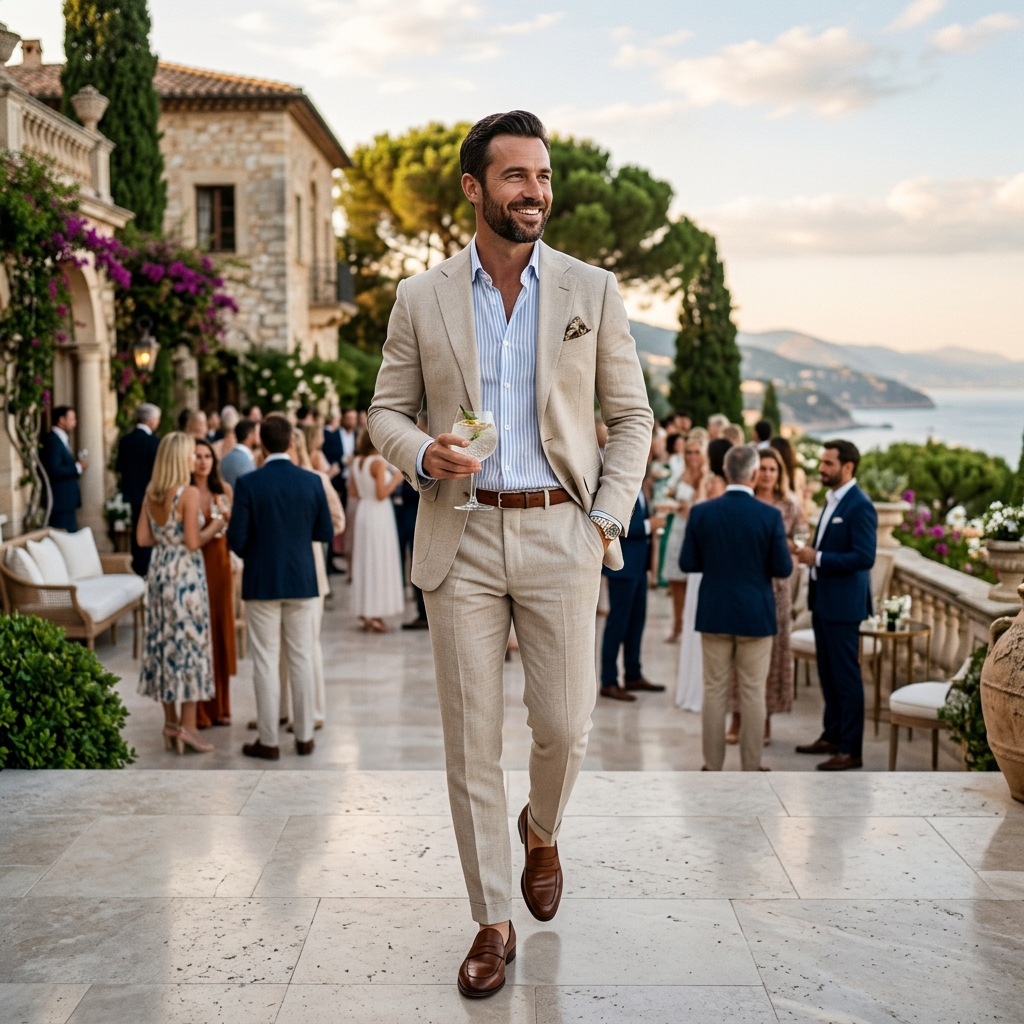
Unlined cream linen-wool jacket, pale blue pinpoint shirt (sleeves rolled once), tan trousers, no tie, brown leather loafers. This reads "intentional" not "forgot my tie."
Outfit 3: The garden party
Pale blue jacket, white linen shirt, cream trousers, cream linen pocket square, white suede loafers. Worn with the jacket unbuttoned most of the time.
Outfit 4: The Friday afternoon
Tan jacket, sage green cotton shirt, light gray trousers, no tie, woven leather belt, cognac loafers.
Outfit 5: The heat wave protocol
Navy jacket, white shirt, cream linen trousers, no tie, minimal accessories. The jacket comes off indoors.
I could continue, but you see the pattern. Each outfit changes 2-3 elements. That's how you get to 25 without repetition.
the maintenance reality that ruins most summer suits
Summer suits fail not because they're poorly made, but because men don't maintain them correctly.
Humidity is the enemy. In summer, suits absorb moisture from the air. This causes:
- Wrinkles that won't hang out
- Mildew if stored improperly
- Loss of shape in shoulders and chest
Your solution: Hang suits in a climate-controlled closet with low humidity. If you live somewhere genuinely humid (Southeast US, tropics, coastal areas), invest in a small dehumidifier for your closet. This isn't luxury—it's preservation.
Cleaning frequency matters. Summer suits need more frequent care than winter suits because:
- You sweat more (even in lightweight fabric)
- Humidity accelerates odor
- Light colors show stains immediately
Spot-clean immediately with a soft brush and mild detergent solution. Full dry cleaning should happen every 4-6 wears, not annually. This sounds excessive until you realize that sweat and humidity degrade fabric faster than anything else.
Pressing between wears is non-negotiable. A home steamer (not an iron—steamers are safer on delicate summer fabrics) should be used after every wear. Focus on the jacket front, lapels, and trouser creases. This takes 10 minutes and extends the life of the suit by years.
Storage in off-season: Use breathable garment bags, not plastic. Add cedar blocks or lavender sachets. Never use mothballs on quality fabric—they leave odor and can damage certain fibers. Hang jackets on proper wooden hangers, never wire. Fold trousers over a bar or use trouser hangers.
the fit conversation nobody has
Summer suits require slightly different fit parameters than winter suits because the fabric behaves differently.
The jacket should be slightly more relaxed than a winter suit. Summer fabrics don't have the weight to hold aggressive tailoring. You want:
- Shoulder seams sitting right at the shoulder point (not extended)
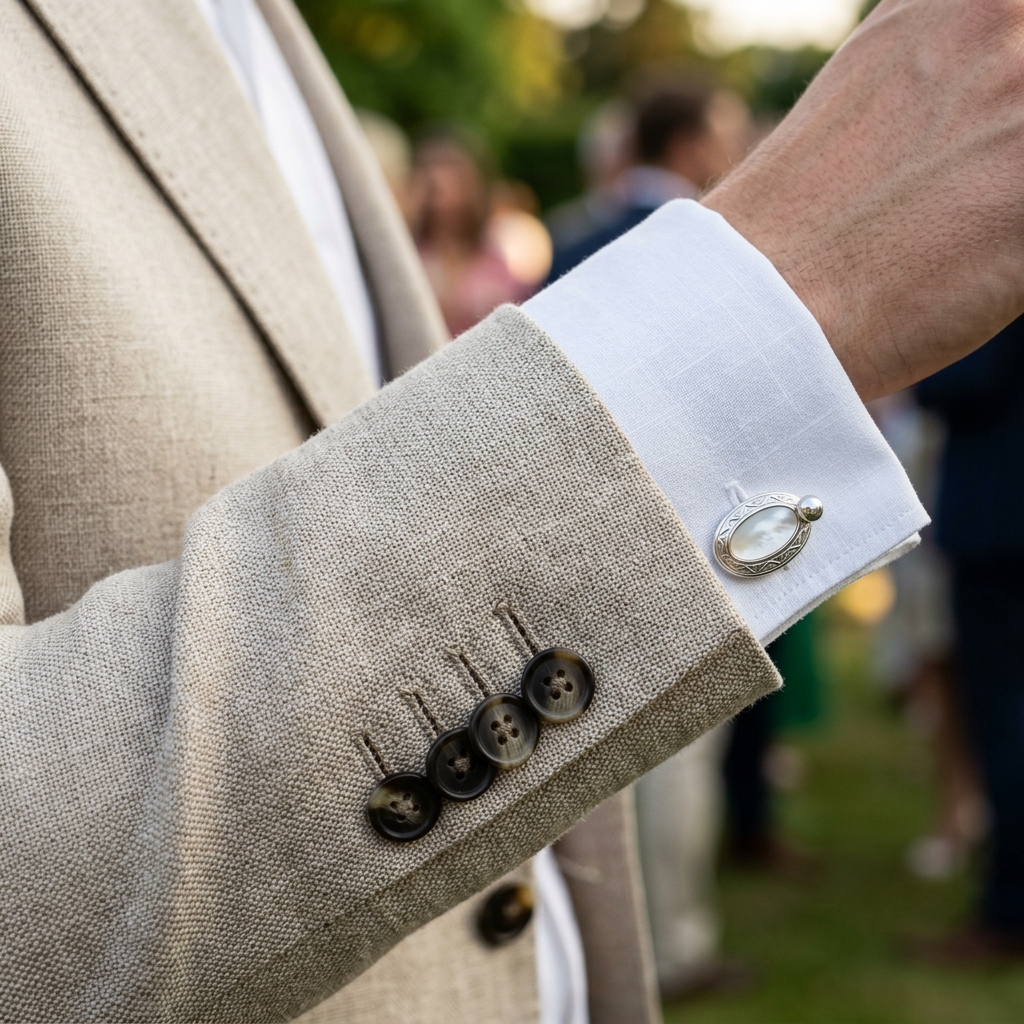
- A quarter-inch of shirt cuff showing at the wrist
- The jacket length hitting mid-knuckle when arms are at rest
- Chest room that allows a flat hand to slide in comfortably
Trousers should be slimmer but not tight. Summer heat makes any binding obvious and uncomfortable. The break at the shoe should be minimal—a slight kiss rather than a full break. This also makes the outfit look more intentional in warm weather.
Sleeve length matters more in summer because rolled sleeves are part of the aesthetic. If you're planning to roll sleeves, have them hemmed slightly shorter than usual (about a quarter-inch higher). This prevents that bunched, amateur look when rolled.
the accessories that separate competent from excellent
Most men under-accessorize summer suits. They think "less formal" means "fewer details." Wrong.
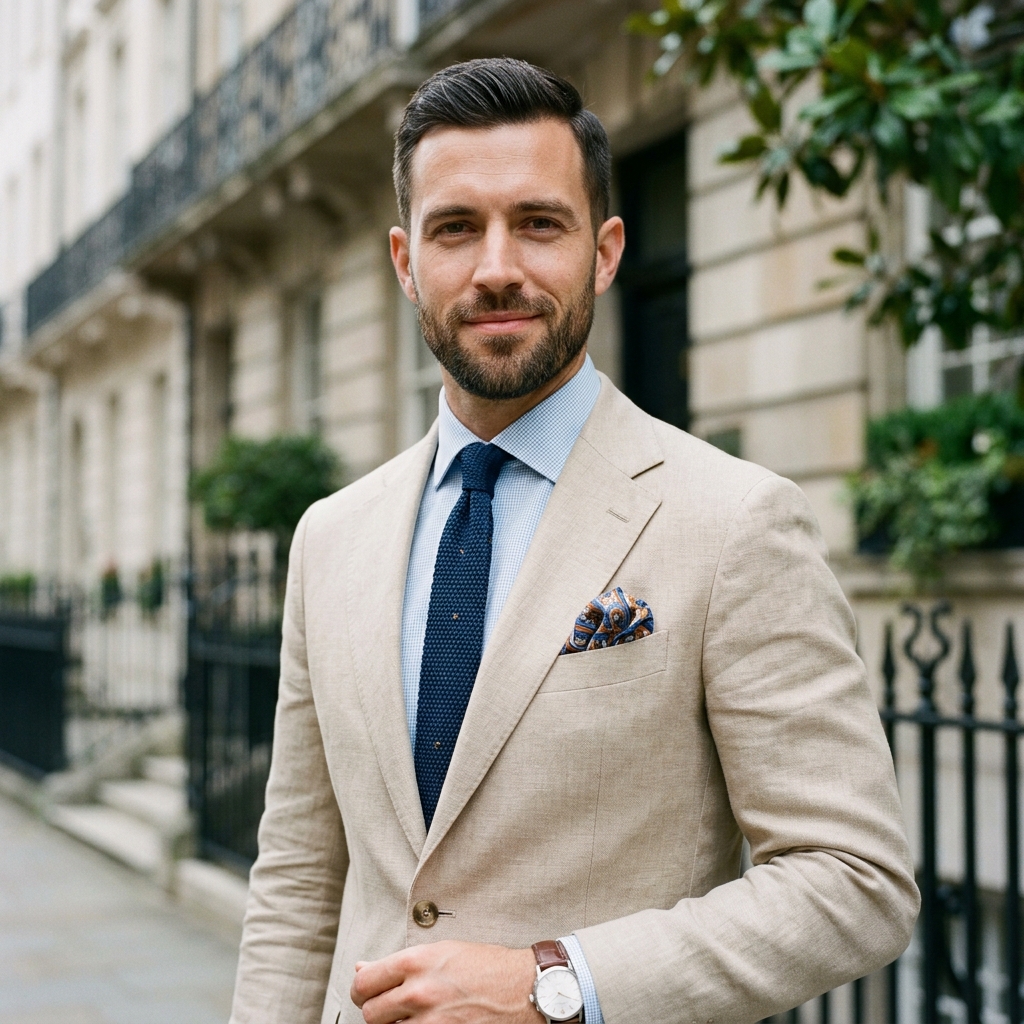
Pocket squares are essential in summer. Linen squares (not silk) in cream, pale blue, or white add visual interest without adding heat. Fold them into a simple triangle or the TV fold—nothing elaborate.
Ties should be lightweight. Knit ties in cotton or silk-linen blends are ideal. They don't retain heat, they drape better than heavy silk, and they look intentional. Skip the standard silk ties in summer unless you're in a formal setting.
Belts should be thin and unlined. A 1.25-inch leather belt in cognac or tan works better than a chunky 1.5-inch belt. Woven leather or canvas belts are excellent for casual summer suiting.
Shoes must breathe. Suede oxfords, canvas loafers, or perforated leather are better than solid leather. Avoid rubber soles in summer—leather or crepe soles look better and allow more air circulation.
Socks are overlooked. Wear thin, lightweight socks in neutral colors. Avoid heavy cotton—look for merino wool blends or lightweight cotton-linen blends. Invisible socks (no-show) work only if your shoes fit perfectly. One slip and you're showing skin, which reads as careless.
the practical daily execution
Here's what actually happens when you own 25 summer suit outfits:
Monday morning, you reach for outfit 1 (light gray jacket, white shirt, cream trousers). You wear it to work. That evening, you hang it up, steam it lightly, and it's ready for Wednesday.
Tuesday, you wear outfit 2 (cream jacket, pale blue shirt, tan trousers). Different enough that it doesn't feel repetitive.
By Friday, you're on outfit 5, and you've only worn each suit once. The rotation means nothing gets overworked, nothing needs frequent cleaning, and you always look fresh.
This is the actual benefit of having 25 outfits. It's not about variety for its own sake. It's about spacing wear so that each piece lasts longer and stays in better condition.
final thoughts on summer suiting
Summer suits work when you understand that they're not compromises. They're solutions. The best summer suit in the world won't help you if you're wearing it with heavy silk ties and dark socks in 90-degree heat. The mediocre suit will look excellent if you've thought through every element.
Start with two or three core pieces in proper summer fabrics. Build from there. Pay attention to maintenance. Roll your sleeves intentionally. Use linen pocket squares. Keep your shoes clean.
That's how you get to 25 outfits that actually work, and more importantly, that actually last.