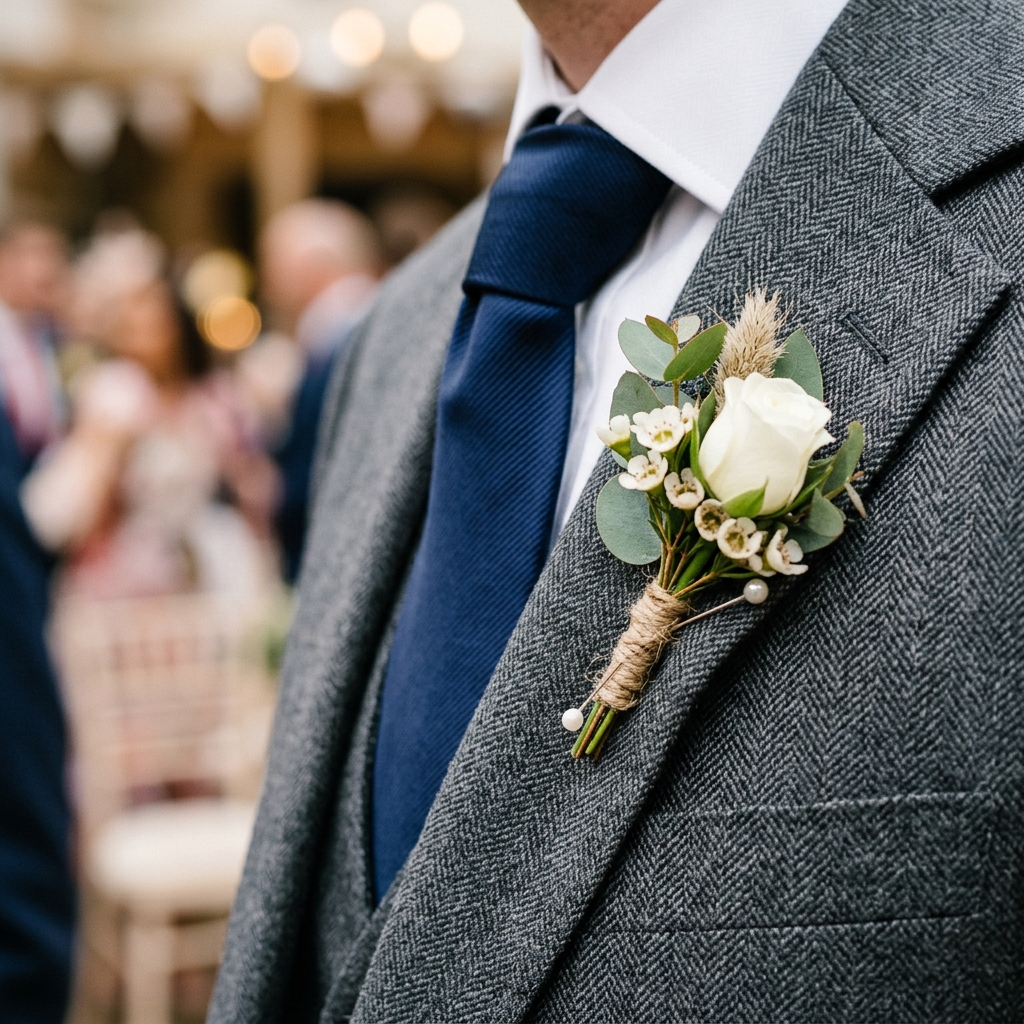
Grey has become the thinking man's wedding color. It's not the safe default—it's the deliberate choice. Unlike navy, which carries naval tradition, or black, which reads formal to the point of severity, grey offers something more interesting: flexibility, sophistication, and an honest acknowledgment that you don't need to wear the same color as everyone else at the reception.
I've dressed men for weddings across ten years, and I can tell you that the grey-suited groom or groomsman gets more compliments than the man in traditional black. That said, grey is unforgiving. The wrong shade reads dull. The wrong fabric reads cheap. The wrong fit reads like you borrowed your father's suit from 1998.
This guide covers 30 practical approaches to grey wedding attire, organized by execution method and lifestyle context. I'm focusing on what actually works, how to source it, and how to maintain it after the event.
understanding grey in wedding contexts
Grey wedding suits emerged seriously in the 1960s, when British tailors began experimenting with lighter suiting for summer ceremonies. By the 1980s, grey had become standard in European formal wear. The American market caught up slowly—we were still obsessed with navy and black through the 2000s—but grey now represents roughly 35% of formal suiting sales in the US.
The reason is practical: grey photographs better than black (less contrast loss in shadows), it's more forgiving in warm weather, and it signals that you've thought about your appearance rather than defaulted to tradition.
The challenge is that "grey" encompasses a spectrum. Charcoal grey (almost black, around 20% lightness) reads formal but risks looking like you couldn't commit to black. Mid-grey (around 40-50% lightness) is the sweet spot for most weddings. Dove grey and light grey (60%+ lightness) work only in summer ceremonies and require serious confidence in your styling.
the fabric question: why it matters more than you think
The fabric you choose determines everything about how the suit performs. I've seen men in expensive grey suiting look worse than men in affordable suiting, purely because they chose the wrong cloth.
Wool-dominant blends (85-100% wool)
This is what you want for 90% of weddings. Pure wool breathes, it holds a crease, and it recovers from wrinkles. A 100% wool suit in a proper weight (around 10-11 ounces for summer, 12-13 for spring/fall) will last decades with basic care. The downside: pure wool shows every speck of dust and requires regular dry cleaning.
I recommend wool-dominant blends that include 2-5% elastane. This gives you movement without sacrificing the formal appearance. Brands like Suitsupply use this formula consistently.
Wool-linen blends (50-70% wool, 30-50% linen)
Linen is lighter and breathes better, but it wrinkles aggressively. If your wedding is outdoors in July and you're comfortable looking slightly rumpled, this works. Otherwise, avoid it. I've seen grooms in wool-linen blends look disheveled by the ceremony's end.
Wool-silk blends (85-95% wool, 5-15% silk)
Silk adds a subtle sheen and improves drape. This is the fabric of high-end tailoring. It's also expensive and requires careful handling. For a wedding you'll wear once or twice, it's overkill unless you plan to repurpose the suit afterward.
Synthetic-heavy blends (polyester content above 30%)
Avoid these entirely. They don't breathe, they photograph with an artificial sheen, and they feel cheap against your skin. A suit is worn against your body for 12+ hours. Cheap synthetics create an uncomfortable experience.
30 grey wedding attire approaches, organized by execution
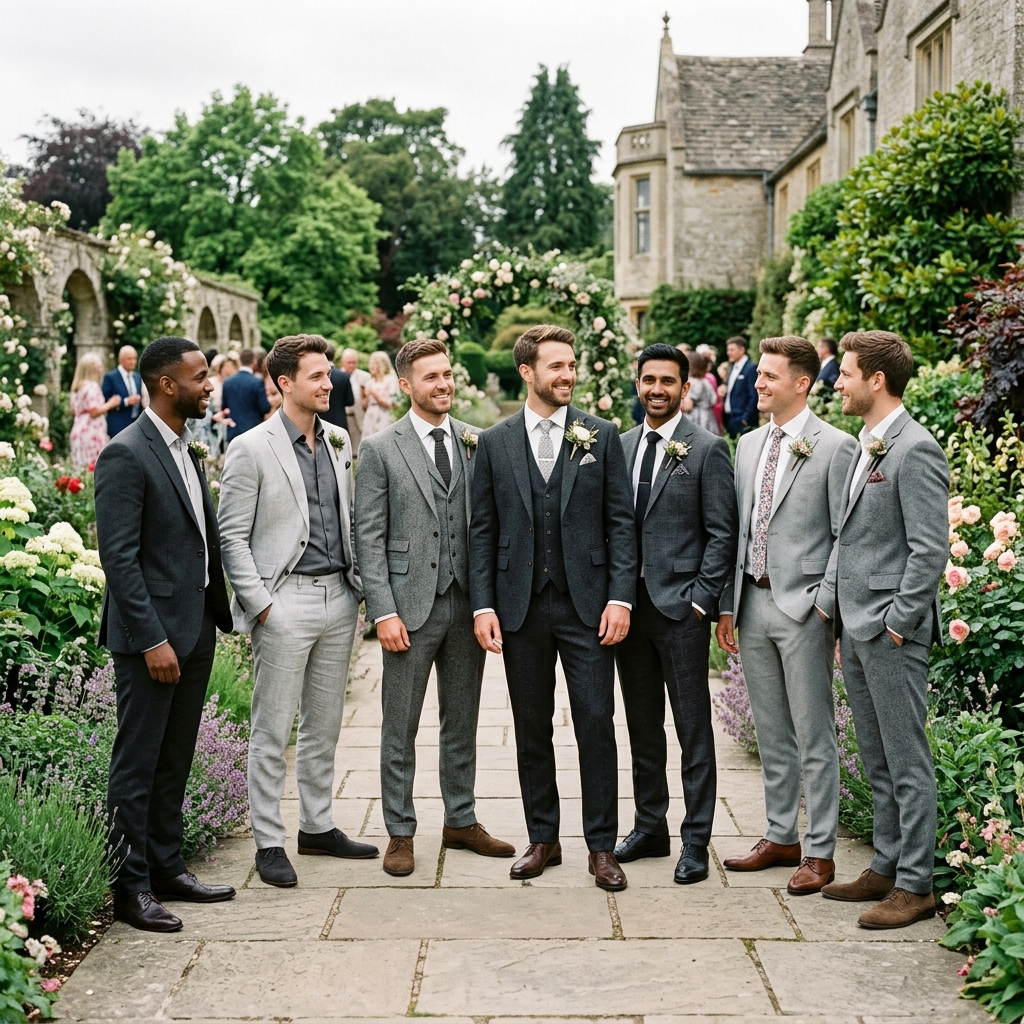
traditional grey suiting (ideas 1-8)
1. Charcoal grey three-piece suit with peak lapels
This is formal without being black-tie. The waistcoat adds visual interest and allows you to remove the jacket during the reception. Pair with a white dress shirt and a subtle silk tie in burgundy or forest green. Peak lapels (the notches point upward) read more formal than notch lapels.
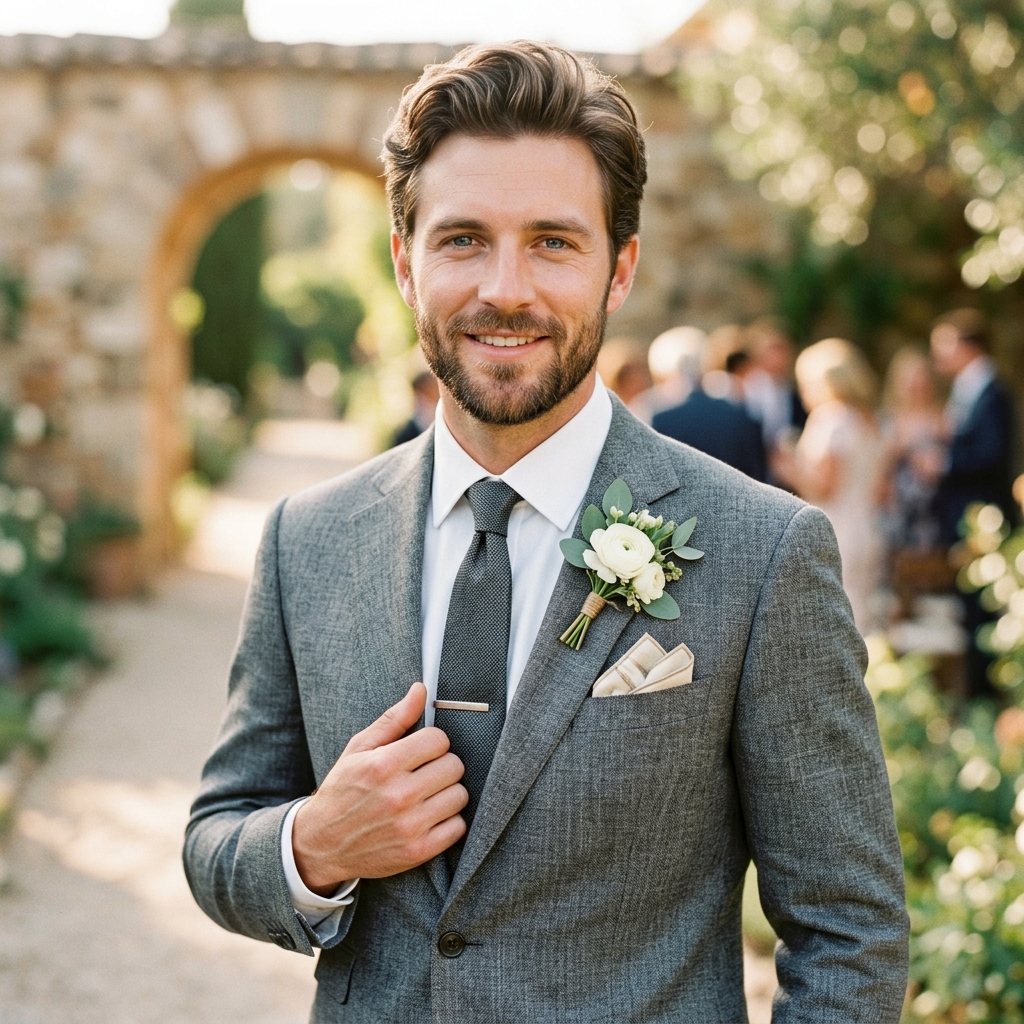
2. Mid-grey two-piece with notch lapels and a white pocket square
The most versatile approach. Notch lapels are less formal, which works well for daytime weddings. The pocket square adds personality without disrupting formality. Source this from Suit Supply, Bonobos, or a local tailor.
3. Dove grey morning coat with striped trousers
Morning coats are cut shorter and more fitted than standard jackets. They're traditional for daytime weddings and look exceptional in photographs. The striped trousers (grey with white pinstripes) complete the formal aesthetic. This requires a specialist tailor—expect to spend $800-1,500.
4. Charcoal grey suit with a shawl collar dinner jacket
The shawl collar (one continuous curve rather than peaked or notched) reads more relaxed than formal. This works for evening receptions or black-tie-optional events. Pair with a white dress shirt and a subtle bow tie.
5. Mid-grey suit with a patterned silk waistcoat
The waistcoat becomes the statement piece. Consider a subtle jacquard pattern in complementary tones. This allows you to remove the jacket and still look intentional. The pattern should be small enough to read as texture from a distance.
6. Charcoal grey suit with a burgundy velvet dinner jacket
For the man who wants to stand out. The velvet texture adds sophistication. Pair with grey wool trousers and a white shirt. This requires confidence and works best at evening receptions.
7. Light grey linen suit with a linen shirt
Summer ceremony only. The wrinkles are part of the aesthetic. Pair with canvas loafers and a lightweight linen tie in a complementary shade. This reads expensive and relaxed.
8. Grey flannel suit with a knit tie
Flannel has a subtle texture that photographs well. A knit tie (rather than silk) adds warmth and works for fall or winter ceremonies. This is less formal than a standard suit but still appropriate for casual or semi-formal weddings.
separates-based approaches (ideas 9-16)
9. Grey wool trousers with a navy blazer and grey waistcoat
The blazer-and-trousers approach allows you to wear the pieces separately after the wedding. The waistcoat ties the grey and navy together. This is practical for men who want investment pieces.
10. Grey wool trousers with a charcoal grey blazer and a patterned shirt
Skip the traditional white shirt. A subtle pattern (small check, thin stripe) in grey and white adds visual interest. Pair with a grey silk tie in a slightly darker shade.
11. Grey trousers with a grey turtleneck and a grey blazer
Monochromatic dressing in grey tones. This works for modern, minimalist weddings. The key is varying the fabrics: smooth blazer, textured turtleneck, flat-front trousers. Requires confident styling.
12. Charcoal grey trousers with a light grey shirt and a darker grey blazer
Layering different grey tones creates depth. The light shirt acts as a visual break. Add a tie in a complementary color (burgundy, forest green, or even a subtle pattern).
13. Grey wool trousers with a grey linen shirt and a grey linen blazer
Linen separates work for summer weddings. The texture variation between shirt and blazer prevents the look from feeling flat. Expect visible wrinkles—this is intentional.
14. Grey flannel trousers with a grey cashmere sweater and a grey wool blazer
For winter ceremonies. The cashmere adds luxury and warmth. Layer a white dress shirt underneath. This reads sophisticated and comfortable.
15. Grey trousers with a grey waistcoat and a white dress shirt, no jacket
The waistcoat becomes the focal point. This works for indoor ceremonies in climate-controlled spaces. Add a tie in a contrasting color to prevent the look from feeling washed out.
16. Charcoal grey trousers with a patterned blazer in grey and white
The blazer pattern (houndstooth, subtle check) prevents the outfit from feeling monotonous. Keep the shirt white and simple. This works for men who want visual interest without color.
unconventional grey approaches (ideas 17-24)
17. Grey suit with a textured knit shirt instead of a dress shirt
A fine-gauge merino wool knit in white or cream replaces the traditional dress shirt. This softens the formality while maintaining sophistication. Works for semi-formal or destination weddings.
18. Charcoal grey suit with a burgundy dress shirt
The burgundy reads as a jewel tone, not a casual color. Pair with a grey silk tie or skip the tie entirely. This works for evening receptions and men with warm skin tones.
19. Mid-grey suit with a subtle patterned shirt and a knit tie
A small-scale pattern (micro check, thin stripe) in grey and white or grey and blue. The knit tie adds texture. This approach works for men who find solid colors boring.
20. Grey suit with a grey silk shirt and a matching grey tie
Monochromatic grey requires precision. All three pieces must be in slightly different shades to prevent a flat appearance. The silk shirt adds sheen. This reads expensive and modern.
21. Charcoal grey suit with a white shirt, grey tie, and a statement pocket square
The pocket square in a contrasting color (burgundy, forest green, or even a subtle pattern) adds personality. This is how you make a traditional grey suit feel personal.
22. Light grey suit with a white linen shirt and canvas loafers
For summer ceremonies. The linen shirt wrinkles intentionally. Canvas loafers replace dress shoes. This reads relaxed and confident. Requires a venue and dress code that supports this approach.
23. Grey suit with a grey turtleneck instead of a dress shirt
Modern and slightly unconventional. Works for evening receptions and men under 40. The turtleneck must be fine-gauge merino or silk-blend to avoid looking casual.
24. Charcoal grey suit with a grey waistcoat and a white dress shirt, with a statement bow tie
The bow tie becomes the focal point. Consider a textured silk or a subtle pattern. This works for black-tie-optional events and men who want to stand out.
casual and semi-formal grey approaches (ideas 25-30)
25. Grey wool trousers with a grey oxford cloth shirt and a grey linen blazer
Oxford cloth is textured and less formal than a dress shirt. The linen blazer adds a relaxed element. This works for daytime, semi-formal weddings.
26. Grey chinos with a grey linen shirt and a grey wool blazer
Chinos are less formal than wool trousers but still appropriate for semi-formal events. The linen shirt adds texture. Add a leather belt and canvas loafers.
27. Grey wool trousers with a grey cashmere sweater and a grey wool cardigan
Layering creates visual interest. The cardigan acts as a jacket. This works for fall or winter ceremonies in relaxed settings.
28. Light grey suit with a white linen shirt and white canvas sneakers
For ultra-casual or destination weddings. The sneakers replace dress shoes. This reads intentional rather than underdressed. Requires confidence.
29. Grey wool trousers with a grey henley and a grey linen overshirt
The henley replaces a dress shirt. The overshirt acts as a jacket. This works for very casual weddings or rehearsal dinners.
30. Charcoal grey suit with a grey crew-neck sweater layered under the jacket
The sweater replaces the dress shirt. This adds warmth and texture. Works for winter ceremonies. Keep the tie minimal or skip it entirely.
fit, alterations, and the reality of tailoring
A $300 suit that fits perfectly looks better than a $2,000 suit that doesn't. This is non-negotiable.
The jacket should hit at the base of your thumb when your arms hang naturally. The shoulders should sit at your actual shoulder point—not drooping, not pulling. The chest should have about one inch of give when buttoned. The sleeves should show about half an inch of shirt cuff.
Trousers should break slightly at the top of your shoe (a half-break) and have a 16-17 inch opening at the hem for a modern fit. The rise should sit at your natural waist, not your hips.
Budget $100-200 for alterations. A good tailor can adjust jacket length, sleeve length, and trouser break. They cannot significantly change shoulder width or chest width—if those are wrong, the suit is wrong.
fabric care and maintenance after the wedding
A grey suit will show dust and require regular brushing. Use a soft-bristled suit brush after each wear. This removes surface dust and helps the fabric recover from wrinkles.
Dry clean only when necessary—ideally once per season or after visible staining. Over-cleaning breaks down fibers. Between cleanings, hang the suit in a well-ventilated closet. Use wooden hangers, not plastic.
For minor wrinkles, use a garment steamer rather than an iron. Steamers are gentler on formal fabrics.
Store the suit in a breathable garment bag during off-season. Avoid plastic bags, which trap moisture.
final thoughts on grey wedding suiting
Grey works because it's honest. It doesn't pretend to be something it isn't. It doesn't hide behind tradition or convention. It's a color that says you've thought about what you're wearing and why.
The 30 approaches above cover most contexts. Your choice depends on the wedding's formality, the season, your body type, and your confidence level with unconventional styling. Start with the basics (ideas 1-8) if you're unsure. Move toward the separates-based approaches (ideas 9-16) if you want investment pieces. Explore the unconventional approaches (ideas 17-24) only if you're comfortable standing out.
The most important decision isn't the shade or the fabric. It's the fit. Get that right, and everything else follows.