40 greatest men's summer fashion ideas: the complete guide to dressing sharply in heat
There's a tendency to think summer gives you license to stop trying. It doesn't. If anything, the reduced number of garments available makes each decision more visible. You don't have a coat to hide behind. Every piece earns its place.
The men who look sharp in summer have figured out the same three things: fabric discipline, proportion control, and footwear judgment. Those are the variables. Everything else—color, accessories, specific pieces—sits on top of that foundation.
fabric discipline: the non-negotiable
Heat reveals fabric quality. A cheap linen shirt and an expensive one look identical in a product photo. On a 32-degree afternoon, they perform completely differently.
What breathes:
100% linen: The benchmark. Stone-washed linen is even better for casual summer dressing—it's softer than dry-finished linen, wrinkles less aggressively, and has a texture that reads as high-quality without the stiffness. Linen wrinkles. If you can't make peace with that, linen isn't your fabric.
Seersucker: The puckered cotton weave creates micro air channels that dramatically improve breathability compared to flat cotton. Long associated with American South and traditional prep, it's broadly applicable. A seersucker blazer over shorts is one of the most underrated smart-casual summer combinations.
Chambray: A soft, loosely woven cotton that reads like a lighter version of denim. Not as breathable as linen but far superior to regular cotton poplin. The slightly hazy texture makes it look deliberately casual.
High thread count oxford cloth: Counterintuitively, some thicker weave oxfords breathe better than thin popoins because the weave structure allows air circulation. A proper Oxford Cloth Button Down in genuine oxford weave performs better in moderate heat than many "summer" fabrics.
What doesn't work:
Polyester, regardless of what the tag says about moisture-wicking properties. Synthetics work for athletic contexts because they're designed for acute sweat during exercise, then removal. For all-day wear in a social context, they trap bacteria and accumulate odor in ways natural fabrics don't.
Regular poplin cotton in anything heavier than 80 thread count sits against the skin in heat rather than allowing air to circulate.
proportions in summer: fit changes when layers disappear
In winter, a slightly imprecise fit disappears under layering. In summer, it's the whole picture.
Shirts: Should sit slightly relaxed through the chest and torso—not boxy, not fitted. The additional ease (half an inch to an inch beyond a winter fitted shirt) allows air circulation and prevents the fabric from clinging when you sweat.
Shorts: Hit at or just above the knee. This is an inseam of approximately 9–10 inches for most men, though it varies by torso length. Anything shorter reads as purely casual; anything longer creates the visual effect of cutting the leg at its widest point, which makes legs appear shorter.
Trousers: If wearing full-length trousers, go for a slightly wider leg than your winter instinct. Straight-leg or slightly wide-leg linen trousers in summer look intentional and elegant. Very slim trousers trap heat and movement in ways that feel uncomfortable by midday.
Footwear: Matches the lightness of the overall outfit. Heavy leather boots look incongruous with linen. The footwear signals the register.
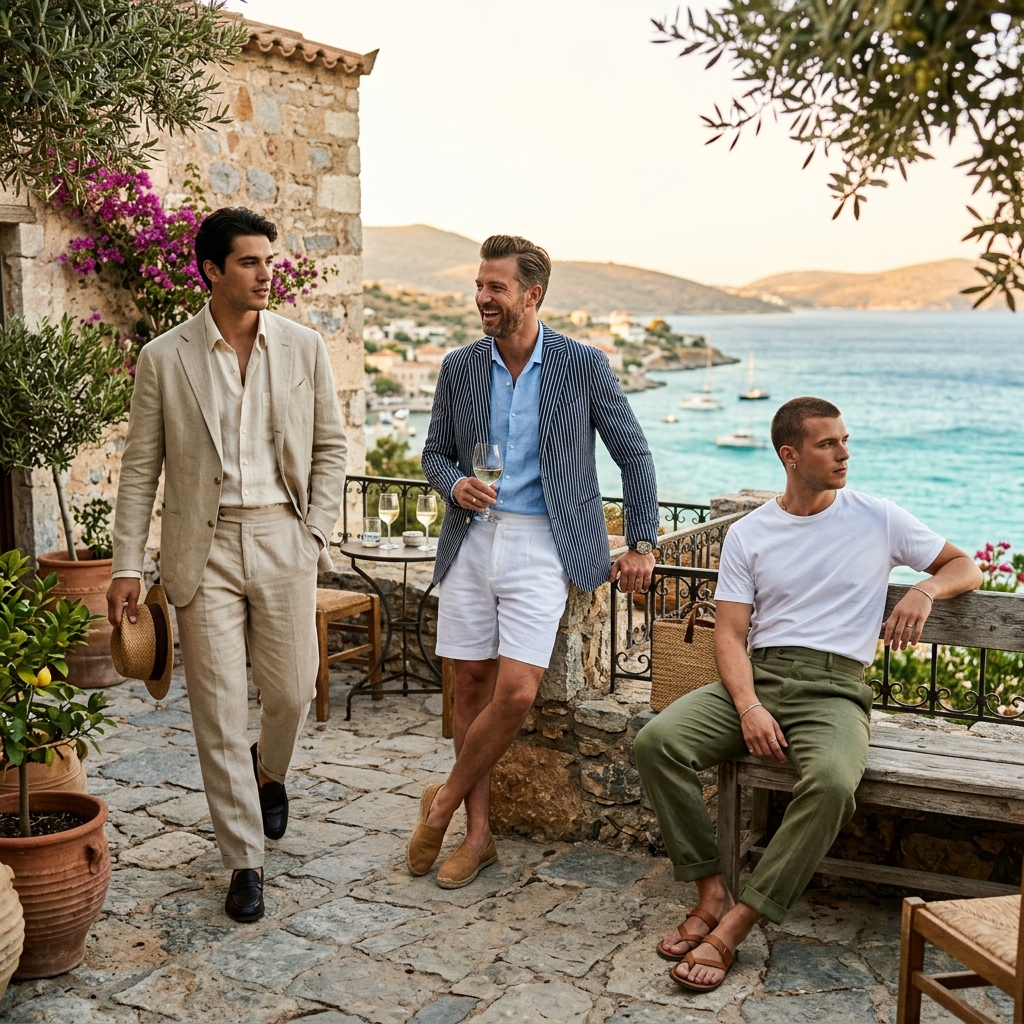
the complete summer outfit system
tier 1: casual daily
The workhorse of summer dressing. Built around shorts and a T-shirt, executed with enough intention to look good rather than accidental.
- T-shirt: heavyweight (250+ GSM), pre-shrunk, well-fitted. White, off-white, black, or a single neutral tone. Not paper-thin, not boxy.
- Shorts: tailored cut in chino fabric or lightweight cotton twill. Sand, stone, navy, or a subtle pattern. Above the knee.
- Footwear: clean leather sneakers, loafers, or canvas shoes. Not athletic shoes unless you're exercising.
The critical metric: does each individual piece make sense? A cheap T-shirt destroys this combination regardless of what else you do.
tier 2: smart-casual
The most useful register in summer because it covers so many contexts—dinner, events, daytime meetings, casual social situations.
- Camp collar or regular-collar short-sleeve button shirt in linen, chambray, or cotton. Subtle print or solid.
- Slim or straight-leg chino trousers in a neutral—stone, sand, pale olive, or white.
- Suede loafers, leather loafers, or quality leather sneakers sockless.
Optional additions: a very lightweight, unstructured linen blazer elevates this combination to something that works at a wedding or a business lunch.
tier 3: formal summer
The territory of summer weddings, garden parties, and professional events.
- A lightweight suit in 100% linen or a cotton-linen blend. Colors that work: pale gray, dusty sage, mid-blue, warm stone.
- A white or pale-colored shirt in a lightweight fabric.
- Open collar or a very lightweight, untextured tie.
- Leather Oxford shoes or suede monk straps. Not loafers unless the event is genuinely relaxed.
The linen suit wrinkles. This is expected. A linen suit that doesn't wrinkle is either not linen or hasn't been worn anywhere warm. Lean into it.
color intelligence for summer
Why light colors work technically: Light colors (white, cream, pale gray, pale pastels) reflect solar radiation. Dark colors absorb it. The temperature difference at the skin level is measurable.
Palette that reads as considered:
Foundation: two or three neutral tones that work together. White + sand + stone. Cream + pale olive. Navy + white + blue.
Accent: one color that has personality—terracotta, rust, dusty rose, sage, or a muted mustard.
Patterns: Summer patterns should be small in scale. Thin stripes (not wide rugby stripes), small gingham (micro-check, not large check), subtle textures. Large, bold patterns require either a very specific aesthetic direction (resort wear, vintage-influenced) or read as unthorough.
The monochrome summer approach: Tonal dressing—different shades of one color family—is one of the easiest ways to look deliberately put-together in summer. An off-white linen shirt with cream chinos and stone-colored loafers creates a unified palette that reads as intentional.
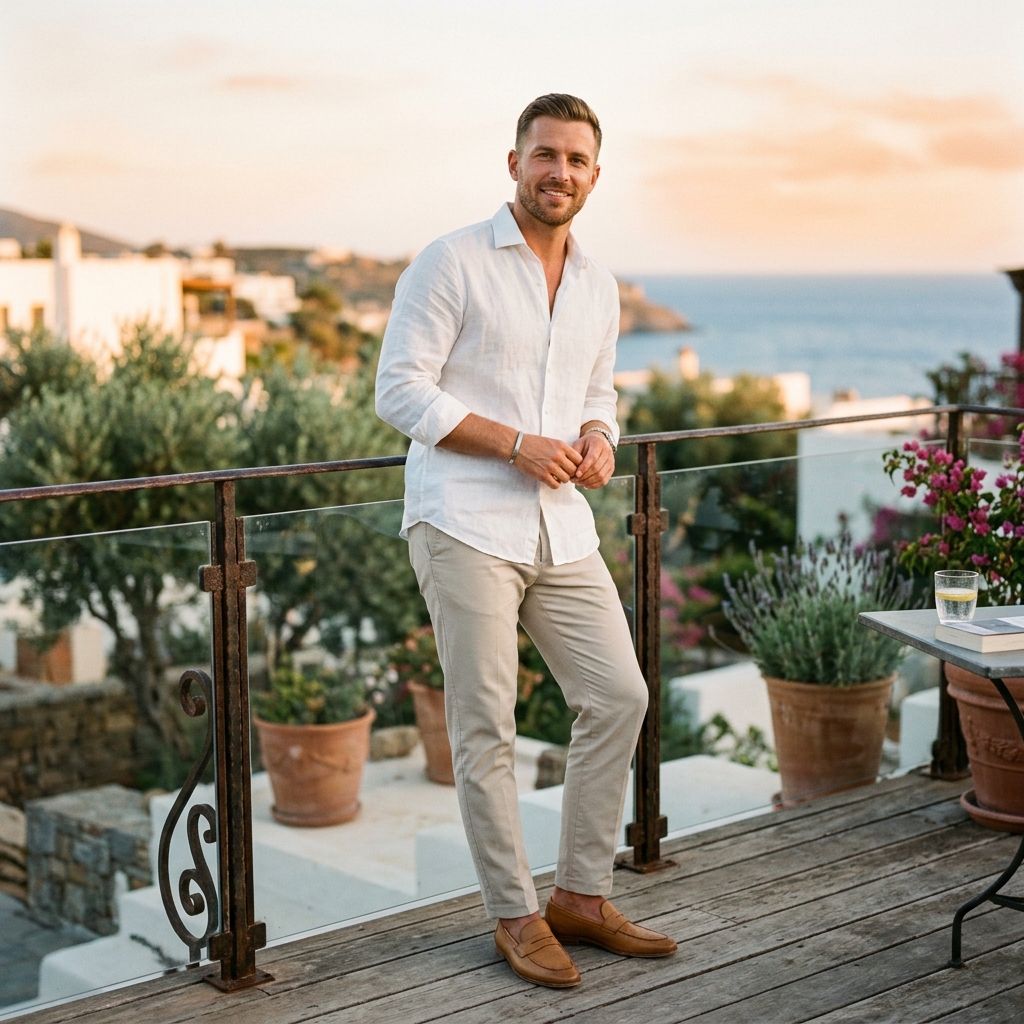
the accessories brief
Summer accessories should reduce, not add to, the visual complexity.
Sunglasses: Invest properly here. A quality pair of sunglasses (not trend-driven fast fashion ones) adds immediate credibility to any summer outfit. Classic frames—aviators, wayfarers, simple round acetate—last longer than novelty shapes. Polarized and UV400 protection are baseline requirements.
Watch: Switch strap materials in summer. Leather straps retain heat and moisture against the wrist. A NATO fabric strap or a rubber strap keeps the watch wearable in heat without the discomfort.
Belts: If your shorts or trousers don't stay up without a belt, get better-fitting ones. A belt worn primarily as a visual accessory in summer adds weight without purpose. If you need it structurally, match it to your shoes.
Jewelry: One or two pieces maximum. A simple chain, a single ring, a leather or beaded bracelet. Beyond two pieces, you're creating visual noise rather than visual interest.
A bag or tote: A structured tote or canvas carryall is more functionally appropriate in summer than a leather bag. Leather gets hot and sweaty. A quality canvas tote—not a branded promotional bag—handles sun, beach, and casual use without degrading.
grooming adjustments for summer
Hair: Shorter cuts perform better in heat. If you're committed to medium or long hair, embrace the texture—don't fight the humidity and sweat. Products that hold in heat are matte formulas: clays, pastes, and light creams rather than wax or oil-based pomades.
Beard: A shorter beard is significantly more comfortable in summer heat. If you keep a beard, trim it shorter and wash it independently (not just with shampoo runoff) because sweat accumulates and creates odor.
Skin: Daily SPF application—not just for beach days. Sun protection reduces both immediate burn and long-term skin damage. A lightweight SPF moisturizer takes 45 seconds and doesn't affect the appearance of skin.
Deodorant: Switch to a stronger formula in summer and apply to clean, dry skin. Many deodorant failures are application failures rather than product failures.
what separates good from great in summer
The gap between looking fine in summer and looking genuinely sharp is smaller than most men think. It's not about buying new pieces—it's about editing ruthlessly.
Identify two or three combinations that work well based on your actual lifestyle, and execute those combinations perfectly. Well-maintained pieces, proper fit, appropriate footwear. The men who look better in summer than you do aren't doing more—they're doing less, with more precision.
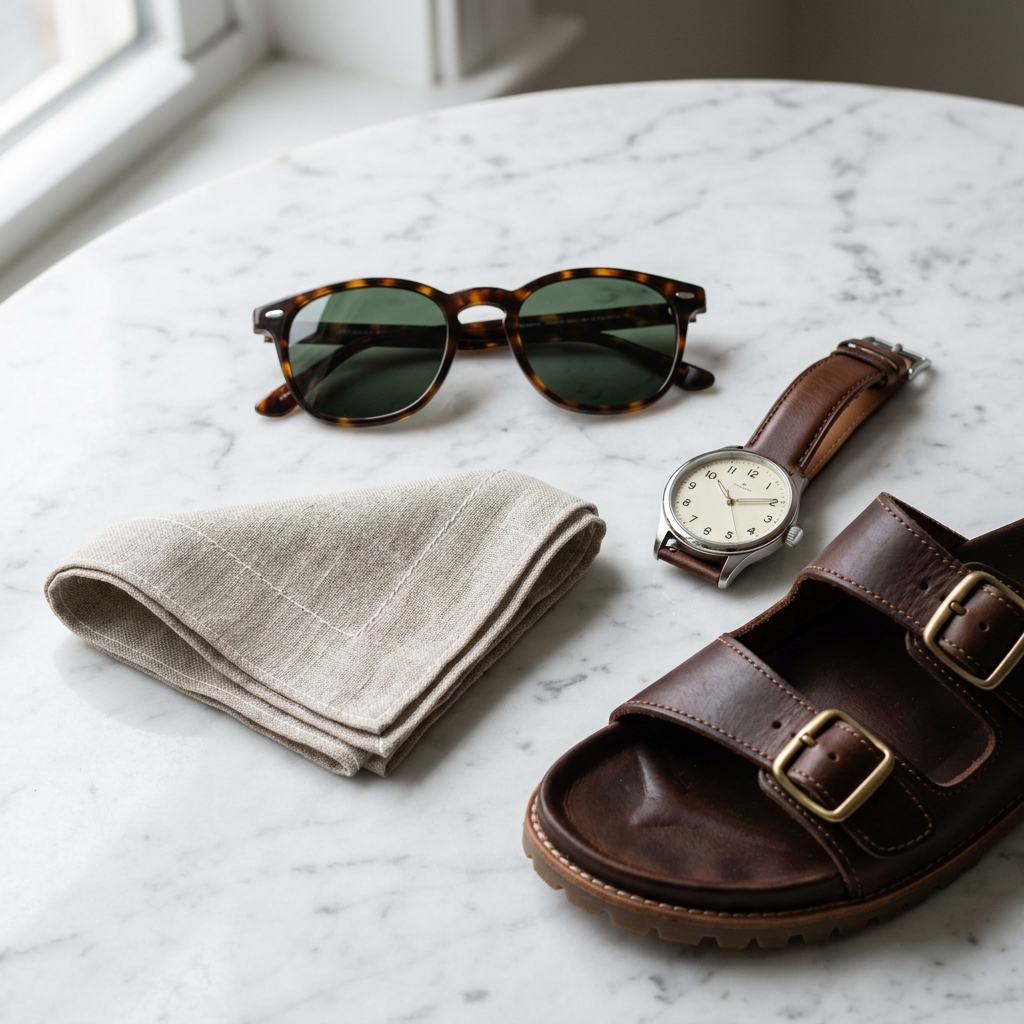
Start with fabric. Get the fabric right and everything else becomes significantly easier. A mediocre outfit in great linen looks better than a well-considered outfit in synthetic "summer" fabric. That's the unfair but real truth of heat dressing. The material does half your work.